
Global passenger demand for air travel declined 0.8% year-on-year in August 2026, as a sharp downturn in Middle Eastern markets interrupted the sector’s recovery, according to data from the International Air Transport Association (IATA).

The International Air Transport Association (IATA) will host its fourth World Sustainability Symposium in Brussels on October 13-14, 2026, bringing together aviation, energy, finance and government leaders to advance policies supporting aviation’s net-zero emissions goal by 2050.

Global air passenger demand rose 0.2% in July 2026, according to the International Air Transport Association (IATA) , despite a slight decline in international traffic. Domestic demand increased 0.6%, while global capacity grew 0.3%.

The International Air Transport Association (IATA) is encouraging airlines to adopt more strategic payment approaches as evolving customer expectations, expanding payment methods, and modern retailing trends increase the importance of efficient transaction systems, cost control, and revenue protection.
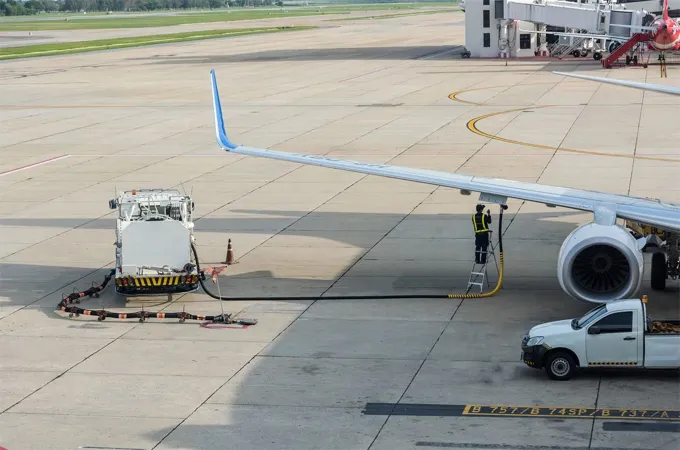
Data and industry collaboration are becoming increasingly important tools for airlines seeking to reduce fuel consumption as rising energy prices put further pressure on profitability, according to Stuart Fox, Director, Flight and Operations at the International Air Transport Association (IATA).

SAL Logistics Services, Saudi Arabia’s national leader in cargo handling, logistics and supply chain management, has received the International Air Transport Association (IATA) Security Management System (SeMS) Level 1 certification.

Global air passenger demand fell 1.7% year-on-year in June 2026, driven by weaker domestic markets and Middle East pressures, while international traffic showed resilience excluding the region, according to the latest International Air Transport Association (IATA) data.

The African Airlines Association (AFRAA), the Airlines Association of Southern Africa (AASA), and the International Air Transport Association (IATA) urged African States to implement Advance Passenger Information (API) and Passenger Name Record (PNR) systems in accordance with International Civil Aviation Organisation (ICAO) standards and global best practices.

The International Air Transport Association (IATA), the Civil Air Navigation Services Organisation (CANSO), and Airports Council International (ACI) have launched a global initiative aimed at reducing runway incursions and improving aviation safety.

The International Air Transport Association (IATA) has appointed Saadia Zahidi as its next Director General, effective November 1, 2026, making her the organisation’s ninth chief executive and the first woman to hold the role.