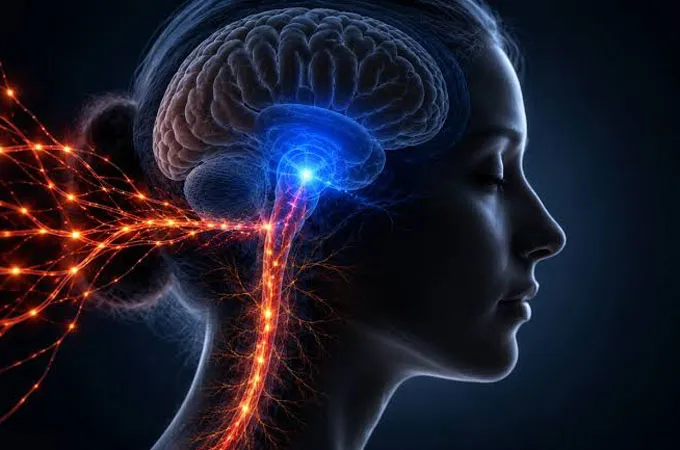
A team of scientists at Washington University School of Medicine in St. Louis has identified a neural mechanism capable of switching off chronic neuropathic pain caused by nerve damage.
The discovery centres on mu opioid receptors located within the locus coeruleus, a brain region that helps regulate stress and alertness.
Researchers found that activating these specific receptors functions as a molecular brake, suppressing hyperactive pain pathways and reversing hypersensitivity.
By directly targeting localised receptors in the brain's pain center rather than administering systemic opioids across the entire body, this approach promises to yield highly targeted therapies that relieve severe pain while eliminating side effects and addiction risks.
“Millions of adults live with chronic neuropathic pain caused by nerve damage,” said Jordan McCall, PhD, an associate professor in the Center for Clinical Pharmacology in the WashU Medicine Department of Anesthesiology and the study’s senior author.
“The pain is difficult to treat, and traditional opioid medications bind to receptors throughout the entire body and brain, often leading to side effects, tolerance and addiction risk. Understanding how localized receptors in the locus coeruleus act as gatekeepers could lead to more targeted, effective pain therapies with fewer risks,” added MacCall.
The WashU team found that deep at the base of the brain, a tiny cluster of nerve cells serves as the body’s natural pain reliever, dialing down pain signals traveling up the spinal cord. But nerve damage can flip this system into a hyperactive engine for chronic pain.
Now, researchers at Washington University School of Medicine in St. Louis have figured out why that switch flips, and how to shut it off.
They identified, in mice, that certain receptors that reside on the surface of cells in the brain’s main alert and stress center act as biological brakes on pain. Previously known to influence stress in this region of the brain, these receptors also can turn off the pain engine to relieve chronic neuropathic pain following nerve injury.
The study, published on August 17 in Current Biology, opens new doors for developing therapies that specifically target this region of the brain, known as the locus coeruleus, to reduce chronic pain.-TradeArabia News Service