Oil prices climbed on Monday as markets reacted to US President Donald Trump's threat of further action against Iran and set a Tuesday evening deadline linked to the reopening of the Strait of Hormuz.

An oil tanker loaded with Iraqi crude was seen passing through the Strait of Hormuz close to the Iranian coast a day after Iran said Iraq was exempt from any restrictions to transit the vital sea route, data from LSEG and Kpler showed.

The eight OPEC+ countries, namely the UAE, Saudi Arabia, Russia, Iraq, Kuwait, Kazakhstan, Algeria and Oman, have announced an adjustment to oil production levels, reaffirming their joint commitment to supporting stability in global oil markets, said a report.

Oil prices continued to climb on Thursday with no sign of easing, as markets priced in a prolonged supply squeeze from the Middle East following stalled negotiations and firm signals from Donald Trump that the blockade on Iran will remain in place.

Oil prices could rise to $120–$130 a barrel in the near term, with a risk of climbing above $150 if supply flows through the Strait of Hormuz remain disrupted into mid-May, according to a JP Morgan note cited by Reuters.
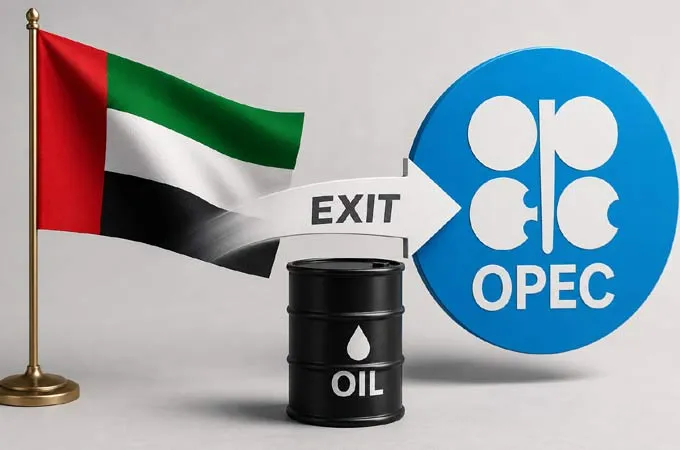
The United Arab Emirates’ planned exit from OPEC and OPEC+ from May 2026 is expected to have limited immediate impact on oil markets in the near term but could weaken the group’s supply management over time, HSBC said, while OPEC+ sources signalled the alliance would remain broadly intact.

Eni signed a programmatic agreement with the Venezuelan Ministry of Hydrocarbons and the state-owned company PDVSA to relaunch oil activities, specifically at Junin-5 (PDVSA 60 per cent, Eni 40 per cent), located in the Orinoco Belt, a heavy oil field containing 35 billion barrels of certified oil in place.
In a shock move poised to rattle global oil markets, the UAE has announced it will exit the Organisation of the Petroleum Exporting Countries and its wider Opec+ grouping, effective May 1, 2026.

The UAE’s decision to exit Opec and Opec+ marks a significant turning point in global oil markets, said a leading market analyst, highlighting shifting geopolitical dynamics and evolving supply expectations. The UAE is leaving the alliance effective May 1, ending nearly six decades of membership.

Global oil prices climbed further on Monday, underscoring mounting concern over the energy crisis triggered by the US-Iran conflict and shipping disruptions in the Strait of Hormuz.