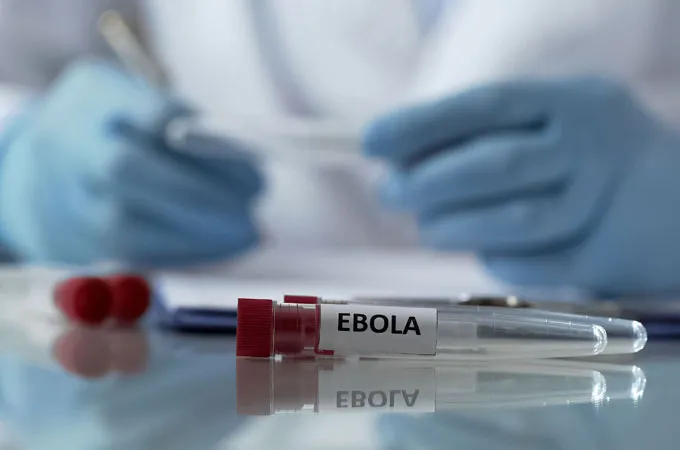
World Health Organisation (WHO) has announced that efforts are advancing to improve treatment and develop the world’s first vaccine for the Bundibugyo species of Ebola as deaths and cases rise in the largest-ever outbreak on record in the Democratic Republic of the Congo (DRC).
Compared to previous Ebola outbreaks, trials started more quickly this time as protocols had been written before the current one was declared in DRC in mid-May, said Vasee Moorthy, the Acting Lead of WHO’s R&D Blueprint, a global platform for research and development collaboration to respond to epidemics and pandemics.
Results may be months away, but the race is on to develop the world’s first vaccine for Ebola, stated the top official.
According to WHO, there have been 3,748 cases, including 1,657 deaths and 708 recoveries, as of August 1.
"Despite ongoing efforts, there are still no proven safe and efficacious treatment, preventive or vaccination options for the Bundibugyo species of the Ebola virus," Dr Moorthy told reporters in Geneva.
However, it would likely still be several months before more definite conclusions could be drawn from the ongoing trials, he said.
A vaccine trial in the United Kingdom entered phase one on July 24, with another to begin in Canada in coming days, said Dr Moorthy.
Both trials are being conducted on ferrets and monkeys, after which results would be analysed by WHO before deciding on whether to move to the subsequent phase.
New data has also emerged in animal studies on the licensed vaccine Ervebo, targeting a different Ebola strain, according to WHO.
The UN health agency’s technical advisory group convened last Friday and is expected to publish recommendations later this week.