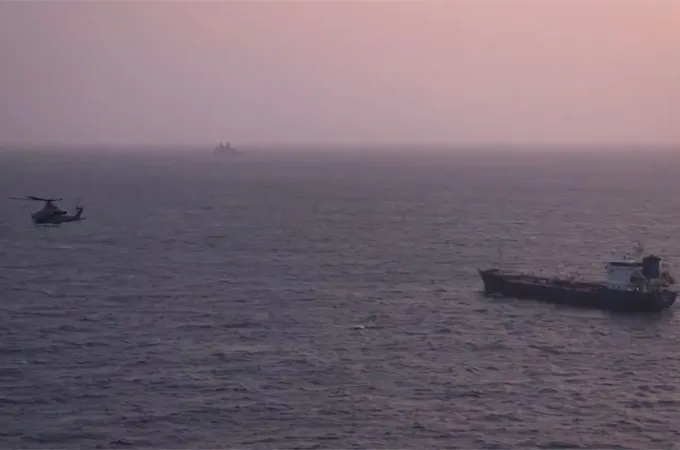
Uncertainty over the future of the Strait of Hormuz deepened on Saturday as the United States and Iran traded conflicting claims over control of the strategic waterway, while commercial shipping remained severely disrupted and fresh attacks added to mounting concerns over the security of Gulf trade.
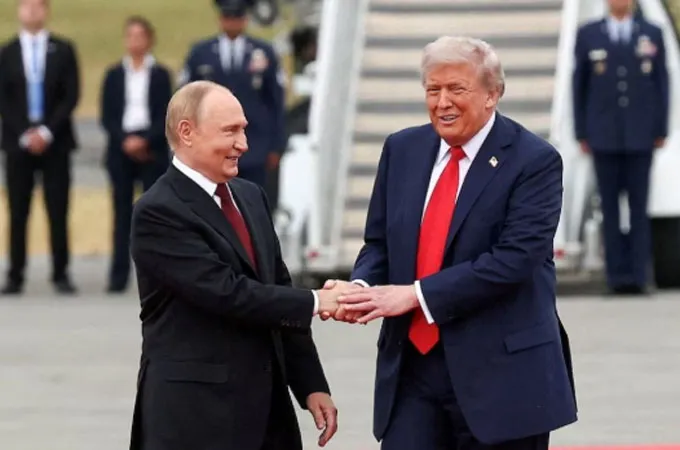
Iran said the strait would remain under its control until Washington accepted what Tehran described as its defeat in the conflict, while President Donald Trump warned Americans to prepare for continued high fuel prices and accused Iran of being “very evil”.
Iranian Deputy Foreign Minister Kazem Gharibabadi said Tehran would determine when the waterway would be opened or closed, rejecting what he described as US “fantasies” about the conflict.
The comments came as there was little visible progress towards peace talks, with Iran’s foreign minister saying Tehran had yet to decide whether to resume negotiations with Washington.
The competing claims have left the status of one of the world's most important oil shipping routes unclear. Trump has said the United States could declare the strait US territory after the war, while Tehran has insisted that the waterway cannot simply be seized.
The uncertainty is having a direct impact on shipping. Tanker traffic through the strait remains heavily affected, disrupting a route through which a significant share of global oil supplies normally passes and keeping pressure on energy markets.
UAE vessel attacked
The latest escalation came with an attack on a vessel affiliated with Abu Dhabi National Oil Company (ADNOC) while it was transiting the Strait of Hormuz on Friday night, according to the UAE Foreign Ministry.
Abu Dhabi blamed Iran for the attack, calling it a “flagrant violation” of international law. The ministry said no crew members were injured.
The UAE accused Iran's Islamic Revolutionary Guard Corps of using the strait as a means of “economic coercion and blackmail” and described attacks on commercial shipping as a direct threat to regional security.
The incident adds to a series of attacks and confrontations involving commercial vessels since the conflict began, further complicating efforts to restore normal shipping through the waterway.
Shipping disruption spreads
The shipping crisis is also spreading beyond the Strait of Hormuz. In Yemen, the strategic port of Mokha has suspended operations following repeated attacks by Iran-backed Houthi militants, the port's director said on Saturday.
More than 25 missiles have struck the port in recent days, killing seven people and causing an estimated $16 million in losses, according to the director.
The attacks threaten to further disrupt maritime trade along another critical regional shipping route, adding to the pressure on operators already facing heightened risks in the Gulf and Red Sea.
Qatar, meanwhile, denied an Iranian claim that it was holding three Iranian airmen captured after their aircraft were shot down earlier in the conflict. An Iranian military commander had alleged that pilots from two Iranian aircraft had been held by Qatar for months.