US President Donald Trump on Thursday said he had cancelled planned military strikes against Iran after negotiations reached what he described as the highest levels of Iran's leadership, raising hopes of a breakthrough agreement that could end days of fighting and reopen the Strait of Hormuz.
In a dramatic shift from earlier threats of further military action, Trump said a comprehensive settlement was close and suggested a formal signing ceremony could take place within days, potentially attended by Vice President JD Vance in Europe. The announcement came after several days of escalating hostilities that had raised fears of a wider regional conflict involving Gulf states and global energy supplies.
"Based on the fact that discussions with the Islamic Republic of Iran have been brought to the highest level of Iranian leadership and approved, I have, as President of the United States of America, cancelled the scheduled strikes and bombings against Iran this evening," Trump said in a post on Truth Social.
He added that discussions and final details had been approved "in both concept and great detail" by all parties involved, including the United States, Israel, Saudi Arabia, the UAE, Qatar, Turkey, Pakistan, Bahrain, Kuwait, Jordan and Egypt.
Trump said a US naval blockade on Iran would remain in place until the agreement is finalized, adding that the time and venue for a signing ceremony would be announced shortly.
The announcement marked a sharp turnaround from Trump's earlier rhetoric on Thursday, when he threatened to launch fresh attacks on Iran and warned that Washington could seize the country's vital energy infrastructure, including Kharg Island, which handles around 90% of Iran's crude oil exports.
Despite Trump's optimism, Tehran signalled that a final agreement has not yet been reached.
Iran's foreign ministry spokesperson, quoted by state media, said no final decision had been made on any deal, although "a large portion of the text had already been finalized." The spokesperson also accused Washington of taking shifting positions during the negotiations.
The conflicting messages highlighted the uncertainty surrounding diplomatic efforts even as both sides appeared eager to avoid a prolonged conflict.
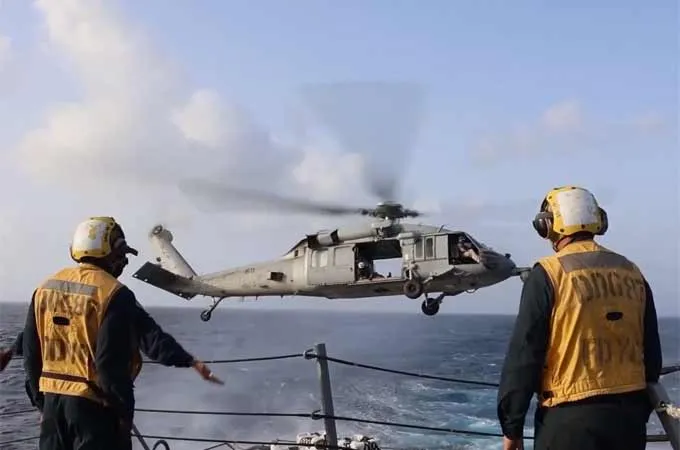
The latest escalation began after Trump blamed Iran for the downing of a US Apache helicopter near the Strait of Hormuz. Since then, the United States has carried out multiple rounds of airstrikes across Iran, while Tehran has launched retaliatory attacks against U.S. military facilities in Gulf countries.
The conflict has raised alarm across the region over the possibility of a broader war that could disrupt energy exports from the Gulf and threaten global oil supplies.
US Central Command said American forces launched another wave of strikes shortly before 1 am local time on Thursday, targeting sites in southern Iran. Iranian media reported explosions near Qeshm Island close to the Strait of Hormuz, as well as in Bandar Abbas, Minab and Sirik.
The United States has also intensified pressure on Iran's oil exports. CENTCOM said it struck three tankers in the Gulf of Oman this week that were allegedly involved in transporting Iranian oil.
India said three Indian crew members were killed in one of the strikes on Wednesday, becoming the first known seafarers to die during the U.S.-led campaign aimed at enforcing a blockade on Iranian oil shipments.
Iranian officials responded angrily to Trump's earlier threats against Kharg Island.
Ebrahim Azizi, head of the Iranian parliament's National Security and Foreign Policy Commission, warned that Iran would deliver a "firm, crushing, painful, and regret-inducing response" to any attempt to seize or attack the island.
"Iran and all its territory, including Kharg Island, are fully prepared," Azizi was quoted as saying by Iranian media.
Iranian parliamentary speaker and chief negotiator Mohammad Bagher Ghalibaf also warned Washington against becoming trapped in an "endless quagmire," saying that impulsive decisions could destabilize energy markets and dramatically worsen the conflict.
Meanwhile, Iranian state media reported that Tehran may consider companies linked to billionaire Elon Musk as legitimate military targets in the region, accusing Musk-related businesses, including Starlink, of supporting US military operations.