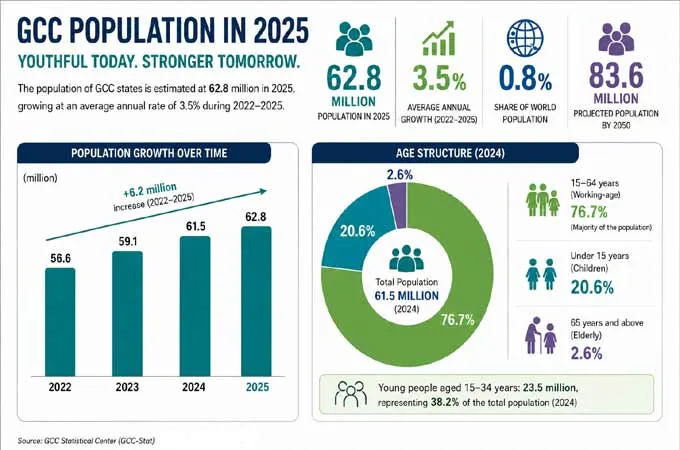
The population of the Gulf Cooperation Council (GCC) states is estimated to have reached around 62.8 million in 2025, an average annual growth rate of 3.5% during the 2022-2025 period, according to data issued by the GCC Statistical Center (GCC-Stat).
The population increased from 56.6 million in 2022 to 59.1 million in 2023 and 61.5 million in 2024, registering an increase of 6.2 million people during the 2022-2025 period.
The data showed that the GCC states account for around 0.8% of the world’s population. Projections indicate that the region’s population will continue to grow, reaching around 83.6 million by 2050, an increase of approximately 33.61% compared with 2025.
The bulletin noted that the GCC states continue to have a youthful demographic structure. In 2024, the region’s population stood at around 61.5 million, including 23.5 million young people aged 15-34, representing 38.2% of the total population.
The working-age population, aged 15-64, accounted for 76.7% of the total population, compared with 20.6% for children under the age of 15. Older persons aged 65 and above represented only 2.6%, reflecting the continued youthful nature of the GCC’s demographic structure.
The indicators also showed that the sex ratio across the GCC states stood at 168 males for every 100 females in 2024, while population density reached around 25.5 people per square kilometre.
Regarding the demographic dependency ratio, the bulletin showed that the total dependency ratio stood at 30.4 dependants for every 100 working-age people in 2024. This comprised 27.0 child dependants and 3.4 older dependants for every 100 working-age people.
The figures indicate that children account for a significantly larger share of the dependency burden than older persons, reflecting the region’s youthful population structure. However, the old-age dependency ratio is expected to rise gradually in the future amid anticipated demographic changes.
The bulletin added that the continued high proportion of working-age people, who represent more than three-quarters of the population, provides an important foundation for supporting economic growth and enhancing productivity.
It also underlined the importance of investing in young people and empowering them as the principal drivers of development across the GCC states.