US President Donald Trump threatened to “annihilate” Iran if Tehran fails to reach a deal with Washington, while at the same time signalling that a diplomatic settlement could be within reach after US and Iranian representatives held lengthy talks on the sidelines of the United Nations General Assembly.

The United States carried out a fresh wave of strikes against Iranian military targets on Tuesday, while Iran retaliated with missile attacks targeting US-linked positions and activating air defences across several Gulf states.
The Saudi Ministry of Foreign Affairs has condemned Iran's targeting of the Saudi tanker Sidr while it was transiting the Strait of Hormuz, which resulted in fatalities among the crew.
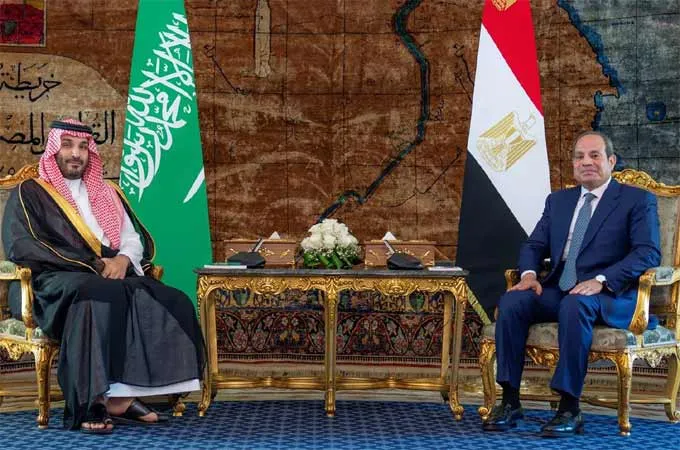
Saudi Arabia said its air defences intercepted and destroyed a Houthi drone south of Makkah before it could enter the prohibited airspace over the holy city, as the Kingdom faced a widening campaign of attacks by the Iran-aligned Yemeni group.

Oil prices rose further on Tuesday as renewed Houthi attacks on Saudi Arabia added to growing concerns over energy supplies, with Brent crude gaining $1.58 to $107.30 a barrel and US West Texas Intermediate (WTI) rising $1.64 to $103.

Regional diplomatic efforts to ease the crisis around the Strait of Hormuz appeared to stall on Monday after a meeting between Iran and other Gulf countries was postponed, as fresh attacks on shipping and Saudi Arabia's closure of a key oil pipeline heightened concerns over global energy supplies.

The BRICS group of nations unanimously adopted a joint declaration during its annual summit in New Delhi, expressing "deep concern" over the war in the Middle East and urged maximum restraint, advocating for a "multilateral approach" that respects national viewpoints.
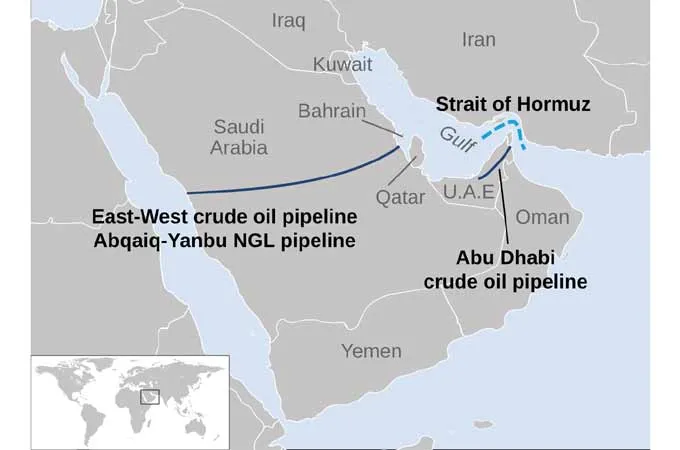
Saudi Arabia has shut down its East-West pipeline temporarily after the vital oil conduit came under aerial attack in the widening Middle East war, threatening to send energy prices even higher, said media reports. This 1,200-km pipeline had helped the kingdom bypass a shipping logjam in the Strait of Hormuz.

Oil prices rose on Tuesday as renewed military tensions between the United States and Iran revived concerns that the conflict could continue to disrupt crude supplies from the Middle East.

Iran and Oman have signalled that they are close to reaching an agreement on arrangements for commercial navigation through the Strait of Hormuz, raising hopes of a breakthrough in the crisis that has disrupted one of the world's most important energy corridors.