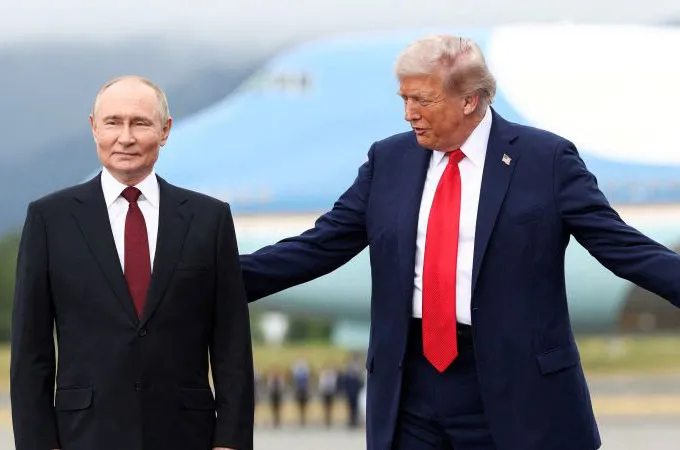
Talks aimed at ending the Iran war could resume in Pakistan within the next two days, US President Donald Trump said on Tuesday, raising cautious hopes for a breakthrough even as a fragile ceasefire nears its expiry in the coming days.
The renewed diplomatic push follows the collapse of weekend negotiations in Islamabad, which prompted Washington to impose a blockade on Iranian ports, escalating tensions while keeping the door open for further engagement.
In remarks reported by the New York Post, Trump indicated that progress could be imminent, urging close attention to developments. “You should stay there, really, because something could be happening over the next two days, and we're more inclined to go there,” he said, suggesting a possible return to talks in Pakistan.
Officials from Pakistan, Iran and Gulf countries also pointed to the likelihood of negotiations resuming later this week, although an Iranian source said no firm date had been finalised.
US Vice President JD Vance said the administration was seeking a broader understanding with Tehran, describing Trump’s goal as a potential “grand bargain,” while acknowledging deep-rooted mistrust between the two sides. “You are not going to solve that problem overnight,” he said at an event in Georgia.
Despite sharp rhetoric from Iran over the US blockade, indications that diplomacy may continue helped ease concerns in global oil markets, with benchmark prices slipping below $100 a barrel.
Some vessels cross Strait of Hormuz
On the ground, the first full day of the US naval blockade showed limited disruption to shipping through the Strait of Hormuz. At least eight vessels, including three linked to Iran, transited the waterway on Tuesday, according to shipping data. The Iran-linked tankers were not bound for Iranian ports and were therefore unaffected by the blockade.
The blockade, announced by Trump on Sunday following the failed Islamabad talks, has nevertheless added to uncertainty for shipping companies, oil producers and insurers. Industry sources said traffic through the strait remains well below pre-conflict levels, when more than 130 vessels crossed daily before the war began on February 28.
US Central Command said that during the first 24 hours of the blockade, six vessels complied with instructions from U.S. forces to turn back and re-enter Iranian ports, while no ships were attacked. Shipping sources said vessels would be diverted rather than targeted, with U.S. warships positioned outside the strait in the Gulf of Oman.
War-risk insurance costs have so far remained steady since the blockade was imposed, though they continue to run into hundreds of thousands of dollars per week, with coverage typically reassessed every 48 hours.
With the ceasefire deadline approaching, the prospect of talks resuming has provided a measure of optimism, though officials on all sides caution that any deal remains uncertain after weeks of conflict and repeated setbacks in negotiations.