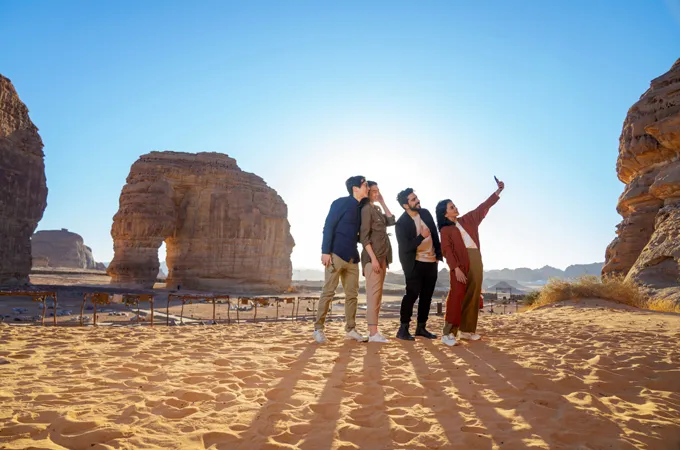
Saudi Arabia’s tourism, hospitality, and events sectors have transformed under Vision 2030. By 2025, tourism contributed 5% of GDP, attracted 123 million visitors, generated SAR300 billion ($80 billion), and supported strong non-oil economic growth.

Oman's tourism sector continued growth in 2025, with gross domestic product (GDP) contribution reaching OMR 1.135 billion ($3 billion), up 3.7% from 2024's OMR 1.095 billion.

Oman signed an MoU with the Global Sustainable Tourism Council (GSTC), with the Ministry joining as a government body representing Omani tourist destinations, aiming to strengthen sustainable tourism practices and international collaboration.

The Ajman Department of Tourism, Culture and Media has announced the launch of a comprehensive package of incentives aimed at supporting tourism activities, attracting investments, and enhancing the competitiveness of the tourism sector in the northern emirate.

Oman and Thailand are stepping up efforts to forge a more strategic tourism partnership, with both countries exploring a roadmap that blends sustainability, high-value travel and stronger private-sector collaboration to elevate their global appeal.

Bhutan will launch the Bhutan International Travel Mart (BITM) 2026 to strengthen its global tourism position. The inaugural event will be held in Thimphu from June 11 to 13, 2026, bringing international stakeholders together.

Oman Tourism Development Company (Omran) has invited qualified specialised and experienced contractors to submit bids for the design and construction of the main building and associated facilities for the Majlis Al Jinn Cave Development Project.

Ethiopia has unveiled an ambitious national tourism strategy aimed at positioning the country among Africa's leading emerging destinations, while simultaneously advancing a landmark project to construct the continent's largest international airport.

Jeddah is witnessing a tourism surge while hosting the knockout stages of the AFC Champions League Elite Finals Jeddah 2026, running until April 25, with strong attendance from fans across Asia.

The US remained the largest Travel & Tourism market in the world in 2025 but is losing market share according to the World Travel & Tourism Council’s (WTTC) latest Economic Impact Research.