The Saudi economy is proving resilient in the face of the war in the Middle East thanks to strong fundamentals and diversified logistical and oil infrastructure, said an International Monetary Fund (IMF) mission statement.
The war has nonetheless disrupted its momentum, curtailing oil exports and weighing on non-oil activity and confidence, said the statement issued by an (IMF) staff team, led by Azim Sadikov, which visited Riyadh from April 28 to May 13, 2026 to conduct discussions for the 2026 Article IV consultation.
The mission will submit a report to the IMF Executive Board for discussion in July 2026.
The geopolitical situation remains fluid, with uncertainty closely tied to the duration of disruptions. Contingent on maritime shipping through the Strait of Hormuz normalising over the coming months, the mission’s outlook is for a near-term recovery. A prolonged and intensified conflict could however weigh on medium-term growth and investment prospects, it said.
The mission supports the authorities’ efforts to contain the impact of the conflict, including operational and regulatory measures to facilitate the rerouting of shipments. Given the resilience so far, policies should continue to preserve macroeconomic and financial stability, with any targeted fiscal response accommodated primarily through spending reprioritization, it said.
Sustained Vision 2030 reforms needed
The conflict underscores that reinforcing resilience will require sustaining Vision 2030 reforms to address impediments to diversification and private sector growth, alongside medium-term fiscal consolidation to ensure adequate savings for future generations, said the statement.
“The Saudi economy entered 2026 with strong momentum. GDP expanded by 4.5 percent in 2025, supported by the unwinding of OPEC+ production cuts and robust non-oil activity driven by domestic demand. Labour market conditions remained favourable, while inflation eased to below 2 percent," said Sadikov in the statement.
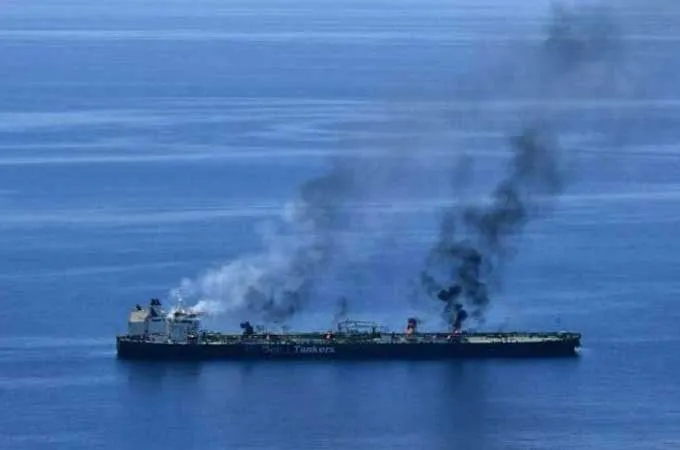
“The conflict and the ensuing curtailment of maritime traffic through the Strait of Hormuz have disrupted trade, weighing on the oil and non-oil sectors. Nonetheless, the Saudi economy is demonstrating agility and resilience, supported by robust and diversified infrastructure and the authorities’ concerted efforts to redirect shipments and ease logistical bottlenecks. A prompt rerouting of oil through the East-West pipeline and Red Sea ports, combined with Aramco’s overseas inventories, has helped limit the drop in oil deliveries. High-frequency indicators point to some stabilization in non-oil activity in April following a likely contraction in March. Moreover, Saudi Arabia's strong fundamentals—low government debt, ample reserves, and a large sovereign wealth fund—provide important buffers.
“The geopolitical situation remains fluid, with high uncertainty and downside risks. The main risk is an escalation of the conflict, which could further impair shipping routes, damage energy infrastructure with associated output losses, and heighten uncertainty and financial sector risks. Beyond near-term effects, a prolonged conflict could erode investor confidence and weaken medium-term growth and diversification prospects.
“Assuming maritime shipments through the Strait of Hormuz normalize in the coming months, a recovery could take hold, with growth this year notably lower but holding up at about 2 percent. Non-oil activity would be supported by domestic demand, underpinned by stable public employment, government spending, and the steady execution of private and public capital projects. Average inflation is projected to increase to about 2.3 percent as higher shipping and insurance costs add upward pressure on prices. Higher oil prices are expected to offset volume losses, generating a windfall that would reduce the current account and fiscal deficits in 2026.
“The mission supports the authorities’ efforts to contain the economic impact of the conflict and preserve macroeconomic and financial stability.
“Given the economy’s resilience so far, the mission considers that a modest reduction in the non-oil primary deficit in 2026 remains appropriate, with spending reprioritization as the first line of action to accommodate any fiscal response to the conflict. Should the shock prove more prolonged, Saudi Arabia has the space to loosen the fiscal stance to cushion the economy, with support to affected businesses and households that should be temporary, targeted, and transparent. As the economy normalizes, an ambitious medium-term fiscal consolidation supported by reforms to strengthen fiscal frameworks will be needed to boost savings for future generations, anchored on non-oil revenue mobilization and spending rationalization, including through the completion of an energy subsidy reform while protecting the vulnerable," he said.
“The peg to the US dollar provides a credible monetary policy anchor and helps underpin financial stability, particularly in the current environment of heightened uncertainty. The banking sector is well-positioned to weather the shock, supported by strong capital and liquidity buffers. The mission welcomes SAMA’s efforts to step up the monitoring of liquidity, credit conditions, and asset quality. It also supports SAMA's decision to proceed with the implementation of the 100 basis points countercyclical capital buffer, its proactive approach to containing risks from FX borrowing, and continued progress in strengthening its resolution and emergency liquidity assistance frameworks," the statement said.
“Ten years since its launch, Vision 2030 reforms have helped strengthen institutions and improve policymaking, boosting economic performance and reducing dependence on oil. Sustaining the reform momentum to remove remaining impediments to diversification and to expand the role of the private sector will be key to maintaining strong growth prospects for the medium term. In this regard, the PIF's recalibrated 2026–30 strategy, with its shift toward more selective capital allocation and greater private-sector crowding-in, is a welcome development. Looking ahead, priorities include improving the business environment, deepening capital markets, supporting small and medium enterprises, aligning education with labor market needs, strengthening governance, and scaling AI adoption while mitigating associated risks. - TradeArabia News Service