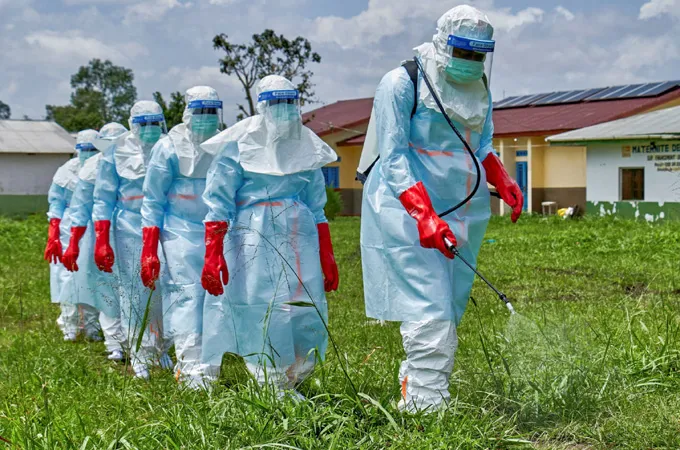
The Ebola outbreak in the Democratic Republic of the Congo (DRC) has intensified, with the number of suspected cases crossing 1,000 and neighbouring Uganda imposing emergency border restrictions amid fears of wider regional spread.
The Congolese government said 1,077 suspected Ebola cases, including 246 deaths, have been reported since the outbreak began in Ituri province near the borders with Uganda and South Sudan. Laboratory tests have confirmed 121 infections, including 17 deaths.
Health officials and the World Health Organisation (WHO) believe the real number of infections could be significantly higher, as the outbreak is believed to have circulated undetected for several weeks before being officially identified.
The outbreak involves the rare Bundibugyo strain of Ebola, which has now spread into Uganda. Ugandan authorities have confirmed seven cases, including the death of a man in Kampala.
Uganda has ordered the immediate closure of its border with the DRC following concerns that infected patients crossed into the country before the outbreak was officially declared on May 15. The move was announced by the national Ebola task force headed by Vice President Jessica Alupo.
Authorities said several Ugandan health workers had been exposed to infected Congolese patients, prompting heightened containment measures and intensified health screenings.
Several neighbouring countries have stepped up surveillance measures at airports and border posts, while health agencies are expanding contact tracing, vaccination campaigns and emergency response operations.