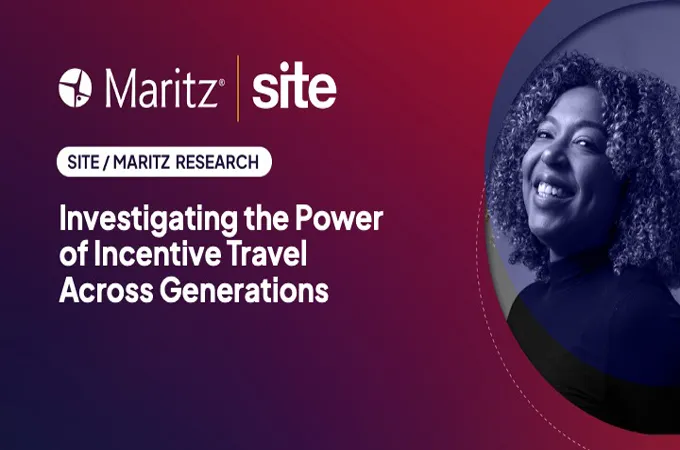
SITE, the Society for Incentive Travel Excellence, and Maritz have released new research showing that incentive travel remains the most powerful non-cash motivator across all generations, even as workforce expectations and programme design are rapidly evolving.
The study, Investigating the Power of Incentive Travel
Across Generations, finds that individual travel is rated as the most
motivating reward by 61% of respondents, with group travel following at 50%,
both outperforming cash, gift cards, points, and recognition-based incentives.
Among employees who earned incentive trips in the past three
years, 89% said they were more likely to stay with their employer, 89% reported
stronger loyalty to the sponsoring company, and 93% were motivated to earn
future trips, highlighting a strong return on investment for employers.
The research also shows a shift in who is earning incentive
travel.
Based on 1,000 US respondents, the typical qualifier is no
longer primarily sales-driven but increasingly operational and technical, with
60% working in operations or technology and fewer than 10% in sales.
Most earn under $150,000 annually, and fewer than 10% work
remotely.
Generational findings challenge assumptions about younger
workers. Gen Z participants were highly active, with 40% having won four or
more trips in three years.
However, they were less likely to value group travel or feel
motivated by recognition, indicating different expectations for reward design.
The study concludes that while incentive travel remains
highly effective across generations, programmes must evolve.
Key recommendations
include offering flexible guest options, prioritising new destinations,
embedding stronger recognition elements, and designing trips of five nights or
more with experiential themes.
It also urges
companies to broaden eligibility beyond traditional sales roles to reflect a
more diverse, modern workforce.
Responding to the headline results, Annette Gregg, CEO of
SITE commented: “This research confirms that travel is not under threat from
cash. If anything, it is the other way around - cash is under threat from
travel. Incentive travel remains the dominant non-cash motivator across every
generation.”
Sarah Kiefer, Vice President, Brand at Maritz said: “This
data matters because it moves the conversation beyond opinions and gut
assumptions. Incentive travel isn’t just a nice reward. It’s a real driver of
retention, loyalty and future performance. These findings give programme owners a
strong business case which reinforces something we see all the time — the
emotional side matters. When more than half of people say a group travel
experience feels like an achievement, it’s clear the impact goes beyond the trip
to create deeper connections within the organisation.”
“The next generation of incentive travel will need to be
more intentional, more flexible and more inclusive. Guest choice, first-time
destinations, built-in recognition moments and experiences that reflect a
broader workforce are not ‘nice to have’ design details. They are the factors
that determine whether a trip feels personal, motivating and worth pursuing,”
added Kiefer. “The message from the research is clear: incentive travel works,
but the best-performing programmes will be those designed around current and
future qualifiers, not who the industry designed for in the past.”
Gregg adds: “This research gives our industry a more
sophisticated and more compelling story to tell. Incentive travel continues to
outperform other non-cash rewards across every generation, but the data also
shows that programme design has to evolve. The workforce being motivated by
travel today is broader, more operationally focused and more multi-generational
than many traditional models assume. That creates a major opportunity for
buyers, DMCs, agencies, destinations and incentive professionals to build
programmes that are more inclusive, more intentional and more effective. Most
importantly, it gives the industry the evidence it needs to defend incentive
travel in the C-suite, not as a discretionary reward, but as a strategic tool
for motivation, loyalty and performance.”
Jonathan Richards, president of the SITE Foundation
concludes: “SITE Foundation is committed to funding research that
advances the incentive travel industry and gives professionals the evidence
they need to demonstrate value. This study moves the conversation beyond
anecdotes, showing how incentive travel motivates a changing workforce and how
programmes can be designed to deliver stronger outcomes for participants,
businesses and the wider industry.”
The research was undertaken by SITE and Maritz as equal research partners, supported by Hilton and the SITE Foundation. -TradeArabia News Service