More than 40 airlines are currently operating through Dubai International Airport (DXB), apart from the Dubai-based Emirates and flydubai, Dubai Airports said.

Jeju Air, Jin Air and other Korean budget airlines cut 900 round-trip flights and introduced emergency measures as Middle East tensions pushed jet fuel prices sharply higher, with further flight reductions expected in coming months.

British Airways said it will reduce services across key Middle East routes when operations resume, citing continued uncertainty over regional airspace. Flights to Dubai, Doha and Tel Aviv will be cut to one daily service from July 1, while Riyadh frequencies will fall from two daily flights to one from mid-May. Jeddah is being dropped from the network altogether.
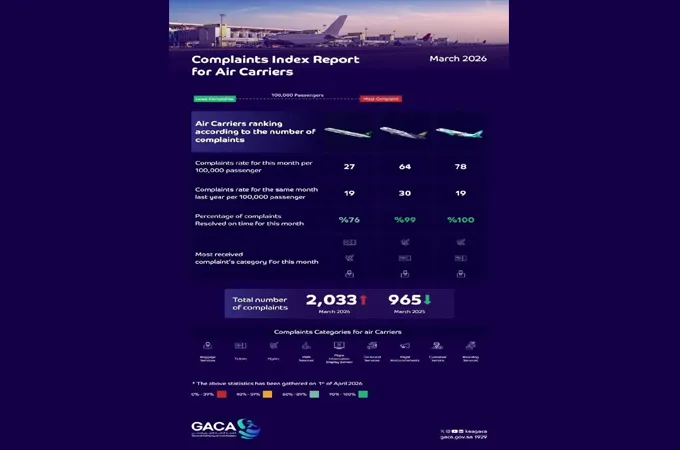
Saudi Arabia’s General Authority of Civil Aviation (GACA) released its March 2026 classification index for airlines and airports based on passenger complaints, reporting a total of 2,033 complaints filed against airlines during the month.

Dubai has restricted foreign airlines to just one daily flight to its airports until May 31 due to the Iran crisis, a Reuters report said citing a Federation of Indian Airlines (FIA) letter.

Global airlines reported a 5.9% rise in international revenue passenger kilometres (RPK) in January over last year, with Middle Eastern carriers outpacing most regions with a 83.2% load factor despite a broader slowdown in growth at the start of the year, according to a report by IATA.

Global airlines are raising ticket prices, cutting some services and reviewing schedules as soaring jet fuel costs linked to the Middle East conflict squeeze margins, while widespread flight disruptions continue to hit passenger traffic and tourism demand worldwide.

More than 1.4 million passengers used UAE airports between March 1–12, according to the UAE GCAA. National carriers are restoring operations, reaching 44.6% of overall activity compared with operational levels before the current regional tensions.

Aviation across the Gulf and beyond descended into turmoil after US and Israeli strikes on Iran triggered retaliatory missile and drone attacks across the region, forcing several Gulf states to shut or restrict their airspace and suspend commercial flights.

Global air cargo demand rose in the first full week of February, as freighter capacity from Central and South America normalised after the peak of Valentine’s Day flower shipments and airlines reduced capacity from parts of Greater China ahead of Lunar New Year, said a report.