Despite electrification rates of almost 98 per cent, Latin America continues to face significant disparities in energy access, particularly between urban and rural communities.
Remote areas in the Amazon basin and Andean highlands remain
underserved, creating opportunities for decentralised renewable energy (DRE)
solutions such as solar systems with battery storage and micro-hydropower.
The International Renewable Energy Agency (Irena), Global
Energy Alliance and Practical Action recently brought together participants
from Bolivia, Brazil, Colombia, Ecuador and Peru in Peru for a knowledge
exchange workshop focused on using renewable energy to support rural
livelihoods.
Held under the Global Initiative on Transitioning Remote
Communities to Renewable Energy, the three-day workshop examined how clean
power can support productive activities including agriculture, agro-processing,
irrigation, cold storage, carpentry and other forms of local manufacturing.
Participants highlighted that providing electricity alone
does not automatically deliver economic transformation.
Renewable energy systems need to be integrated into local
value chains and supported by technical assistance, skills development and
enabling public policies to translate electricity access into sustainable
economic opportunities.
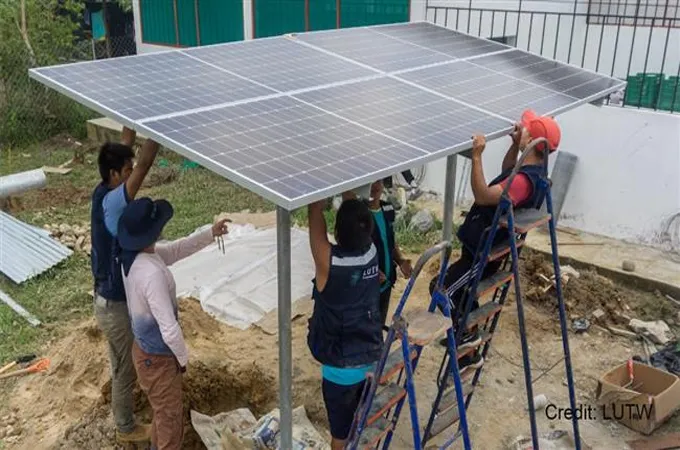
One example presented was a solar-powered plantain
processing facility in the indigenous community of Soledad, Peru.
The project uses 56 rooftop solar panels connected to
battery storage, replacing diesel generators and reducing operating costs and
emissions.
With a capacity of 32.66 kilowatt-peak, the system provides
reliable electricity for productive activities, including the processing of
plantains into dehydrated chips for export to European markets.
The facility has become an important source of sustainable
income for about 240 indigenous families.
Another example came from Ecuador’s Amazon, where
solar-powered boats are improving mobility for communities in Achuar territory.
Previously dependent on imported gasoline, residents can now
use solar-powered vessels to travel along rivers for education, commercial
activities, access to urban centres and rainforest monitoring.
Solar charging stations also provide electricity for
lighting and internet services in indigenous villages, helping reduce reliance
on fossil fuels while improving connectivity and livelihoods.
However, workshop participants noted that renewable energy
development in remote communities remains heavily focused on solar, with
relatively limited attention given to micro-hydropower despite Latin America’s
significant hydropower potential.
Wind energy also received limited attention, prompting calls
for greater diversification of renewable technologies.
Expanding the range of clean energy solutions could improve
the resilience of rural energy systems while supporting different local
economic and environmental conditions.
The workshop also identified limited private-sector
participation as a barrier to scaling renewable energy projects in rural areas.
Participants said governments have an important role in
creating investment incentives and financing mechanisms that can encourage
private-sector involvement and more sustainable partnership models.
The discussions underscored that closing Latin America’s
remaining energy access gap will require more than expanding infrastructure.
Linking renewable electricity with local economic activities, community needs, skills development and supportive policies will be critical to ensuring that clean energy delivers lasting social and economic benefits. -OGN/TradeArabia News Service