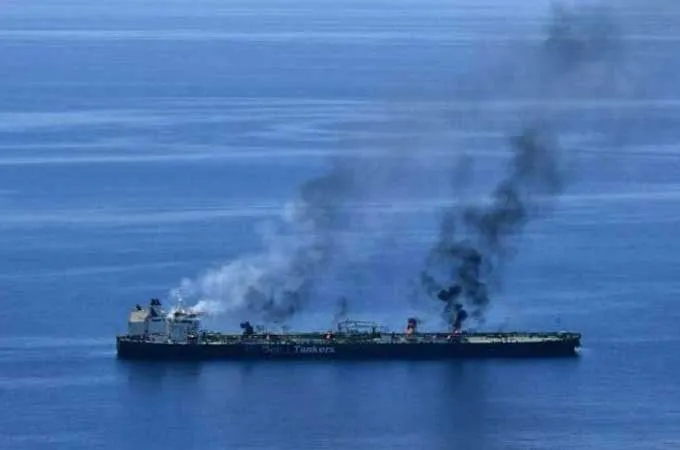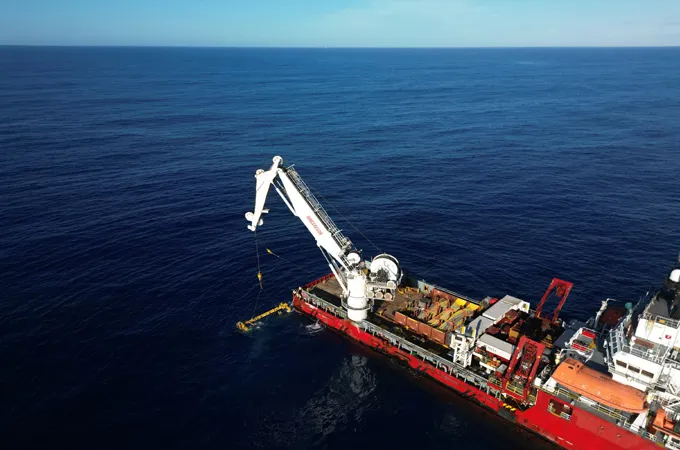
US President Donald Trump has threatened "major military punishment" against Iran and Yemen's Houthi movement after two Saudi oil tankers were attacked in the Red Sea, as fears of a widening threat to global shipping pushed oil prices above $100 a barrel for the first time since May.
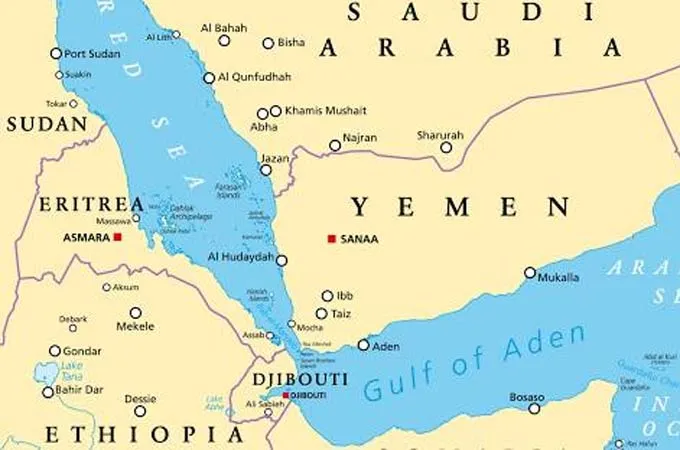
The attacks have raised concerns that the conflict could spread beyond the Strait of Hormuz to the Bab al-Mandab Strait at the southern entrance to the Red Sea, putting two of the world's most strategically important oil and trade routes under simultaneous pressure.
Brent crude surged more than 6% on Thursday and remained above $100 a barrel on Friday as traders reacted to the prospect of further disruption to energy supplies and maritime trade.
In a post on his Truth Social platform, Trump blamed Iran for the attacks and warned of direct military retaliation if further strikes occur.
"A year ago the United States of America attacked, very powerfully, the Houthis, for their interference with commerce and trade, by shooting at ships. Since that time, and during our conflict with Iran, they have acted very responsibly.
"Unfortunately, now they are starting up again, shooting at two Saudi Arabian ships last night. Please let this TRUTH serve to represent that if they do this again, the US will hold Iran responsible, in that the Houthis are a Surrogate and/or Proxy of Iran, and major military punishment will be inflicted upon Iran and, of course, the Houthis, themselves, who I am very disappointed with in that they have, until now, acted very professionally and smart."
He also said frozen Iranian assets will be used to pay for the damage caused by Iranian attacks on ships.
"Please let this statement serve to represent, until further notice, that from this point forth, any and all damages done to Ships, Cargo, or anything related thereto, will be paid for by Iranian Money that the United States has in its possession, and controls. These damages may be very substantial but, nevertheless, this is the fair and equitable thing to do."
Iran swiftly rejected Trump's proposal to use frozen Iranian assets to compensate shipping losses.
Foreign Minister Abbas Araghchi said confiscating another country's assets to settle future claims would set a dangerous precedent.
"Those who celebrate or profit from such funds should remember: once governments normalize confiscation, no one's assets are safe," Araghchi said on X. "Ensuing chaos will not be pretty or peaceful."
The latest exchange came as the United States continued military operations against Iran. US Central Command (CENTCOM) said its forces had completed a 13th consecutive night of strikes targeting Iranian military command centres, drone storage sites, communications networks, coastal surveillance systems and maritime assets aimed at reducing threats to commercial shipping in the Strait of Hormuz.
CENTCOM said commercial vessels continue to transit the waterway with US military support despite recent attacks by Iran's Revolutionary Guards.
The escalation has now expanded security concerns to the Red Sea, where the Houthis have threatened shipping linked to Saudi Arabia and Western interests after striking two Saudi oil tankers. The Bab al-Mandab Strait carries about 12% of global trade and is a critical gateway connecting the Red Sea with the Gulf of Aden and the Indian Ocean.
The renewed attacks have already prompted higher war-risk insurance premiums, with some vessels altering course or delaying voyages. Maritime analysts say shipping through the Red Sea had only begun recovering after months of disruption, but the latest attacks risk reversing that trend. Even before the latest escalation, Suez Canal traffic remained well below pre-crisis levels as many shipowners continued routing vessels around the Cape of Good Hope because of security concerns.
The attacks have added a new layer of uncertainty to global energy markets, coming as exports through the Strait of Hormuz remain under pressure. With risks now extending to both of the Middle East's key maritime chokepoints, traders fear further disruptions to oil supplies and higher freight costs if hostilities continue to escalate.
Meanwhile, diplomatic efforts showed little sign of progress. According to The New York Times, Iran rejected a US-backed ceasefire proposal presented through Iraq, saying it was not interested in a temporary arrangement that left unresolved the question of control over the Strait of Hormuz.