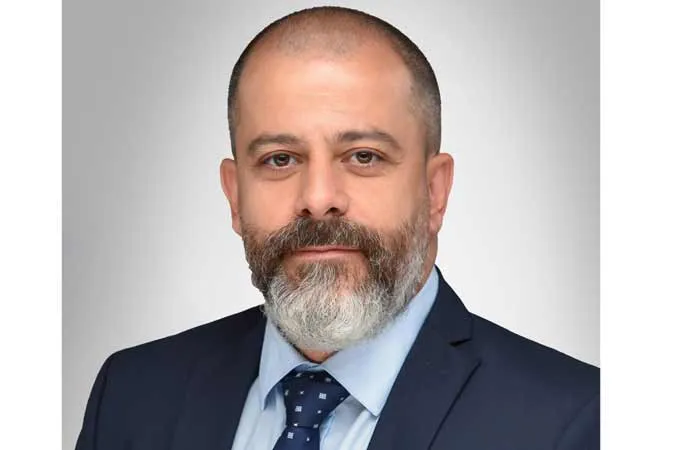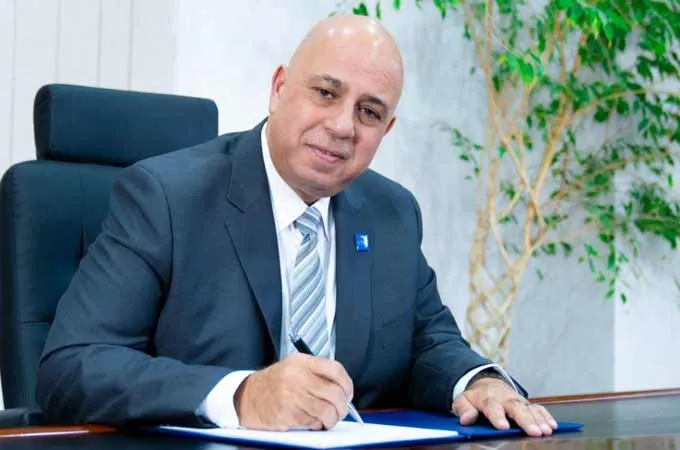
Wael Gad, CEO of Bawan Engineering Group (UTEC), views the future of industrial manufacturing from a broader perspective, where relevance is earned not only by the equipment produced but also by the expertise that supports it long after it enters operation.
In his view, manufacturers are increasingly expected to act as lifecycle partners, guiding clients through design, concept proofing, manufacturing, installation, testing, commissioning, and maintenance of the product over its lifetime, including all required upgrades.
This shift is unfolding at a pivotal moment for Saudi Arabia’s infrastructure and energy landscape.
Vision 2030
“Vision 2030 is raising the scale and ambition of development across the country, and it’s changing how asset owners think about the partners they rely on in power, transport, digital infrastructure, and urban projects,” says Gad.
According to a Saudi Arabia infrastructure market report, major investments across transport, energy, residential, and commercial sectors are accelerating the Kingdom’s diversification goals while raising expectations around delivery capability.
Gad notes that as a result, project owners increasingly look for partners who can contribute throughout the full operational life of an asset from early design coordination to long-term performance support.
Interconnected system
The impact of this shift becomes clearer when examining the complexity of today’s national projects. According to Gad, gigaprojects in the country illustrate how infrastructure functions as an interconnected system rather than a collection of standalone installations. “Power networks must simultaneously support mixed‑use developments, industrial zones, data‑heavy operations, and renewable‑energy integration,” he explains. “As these requirements expand, so do expectations around technical partnership.”
Gad notes that hardware remains essential, but clients now place equal importance on continuity in execution, governance, and service capability. He adds, “The true measure of engineering value is how consistently an asset performs over time, and that requires a relationship built around continuity, expertise, and trust.”
This need for sustained performance is especially visible in the Kingdom’s digital transformation. A Saudi Arabia data center market report notes that the sector was valued at $1.6 billion in 2024 and is projected to reach $5.3 billion by 2032, driven by smart‑city development, cloud adoption, and major investments in hyperscale capacity.
Data center expansion
As data center expansion accelerates, Gad observes a parallel rise in the need for power resilience, thermal management, modular infrastructure, and long‑term service strategies. In his view, companies in this sector are increasingly recognizing that electrical infrastructure must be delivered as an ongoing service rather than treated as a one‑time product.
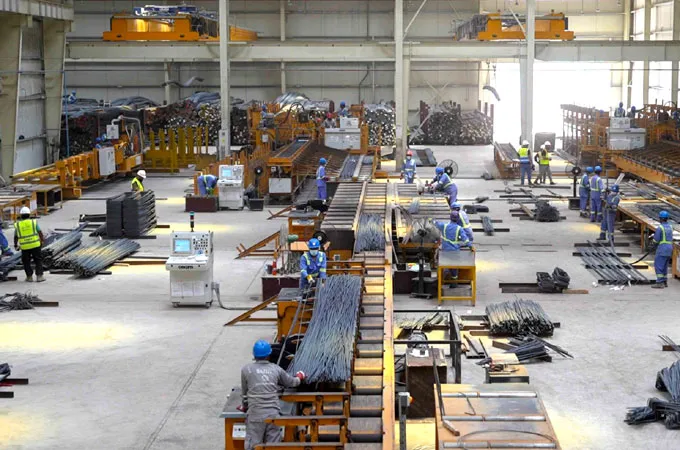
Amid this landscape, Gad has positioned UTEC around a solutions‑led model that extends far beyond manufacturing. While the company’s industrial capabilities across transformers, substations, switchgear, and modular data centers remain essential, its role has expanded into that of a full infrastructure partner. UTEC supports installation, testing, commissioning, preventive maintenance, retrofits, upgrades, engineering modifications, and turnkey project execution. This integrated model is designed to reflect the evolving needs of clients managing assets with long operational horizons.
The strength of this positioning, according to Gad, lies in UTEC’s presence across every stage of the asset lifecycle. In a market where project timelines are compressed and performance expectations remain high, he stresses that long-term technical support becomes a strategic advantage. “Procurement is only the beginning of a much larger journey that includes deployment readiness, field performance, operational continuity, and future scalability,” Gad states. Under his leadership, UTEC has evolved into a partner that aims to support clients through each of these phases with technical depth and consistent delivery.
This philosophy aligns with the broader national shift from vision to disciplined execution. There is a clear move toward measurable delivery, repeatable outcomes, and systems designed to perform under demanding conditions. Gad’s leadership reflects this same principle.
“Execution gains meaning when it continues to deliver value long after commissioning,” he says. “Clients increasingly value partners who remain engaged as systems evolve, expand, and adapt to new demands.”
Strong team needed
Gad emphasises that building an organisation capable of delivering this model requires more than expanding service offerings. It depends on teams with strong technical expertise and reliable field execution. He argues that as service operations extend across multiple sectors and project sites, leadership must establish structures that maintain quality, responsiveness, and consistency. This may include engineering governance, standardized operating procedures, and a culture where technical accountability is shared across functions. For a customer‑driven organisation, reliability may be achieved through disciplined coordination between manufacturing excellence and field performance.
People remain at the centre of this evolution. Gad’s leadership philosophy emphasises that lasting transformation takes hold when responsibility sits with those closest to the work. He notes that engineers, technicians, site teams, and service specialists collectively shape the client experience.
“Sustainable progress begins when the people closest to the work see themselves as stewards of the outcome,” Gad says. “Ownership turns process into performance and service into partnership.” This mindset continues to guide how UTEC strengthens its service capabilities while keeping pace with the Kingdom’s expanding infrastructure landscape.
Trust naturally becomes a core element of this model. In large-scale infrastructure programs, Gad notes that long-term client relationships are built through consistency, transparency, and confidence in delivery. “A services‑led strategy reinforces this dynamic because it extends engagement across the full operational life of an asset. Through maintenance support, system upgrades, and ongoing technical advisory, partnerships deepen as systems mature,” Gad remarks.
As Saudi Arabia moves further into what Gad describes as the delivery‑intensive phase of Vision 2030, he notes that the role of power‑equipment companies appears to be shifting. In his view, the opportunity is no longer limited to providing infrastructure but increasingly involves supporting its sustained performance over time.
Gad sees UTEC’s trajectory as aligning with this broader market direction, where engineering capability, long‑term service, and durable partnership are becoming more central to how companies position themselves in the Kingdom’s next chapter of growth.