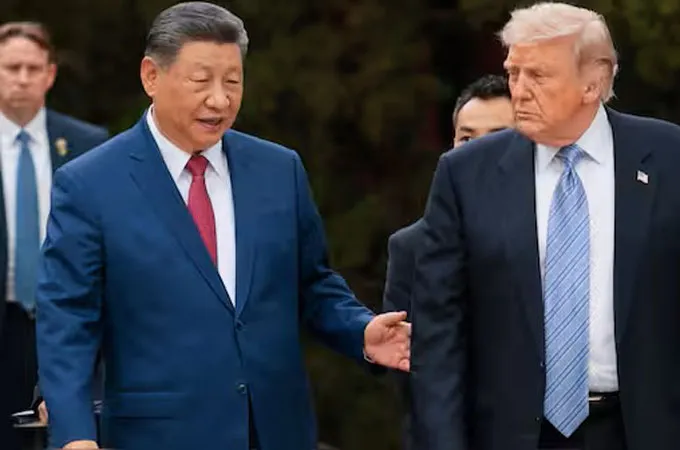
US President Donald Trump said his patience with Iran was running out and that Chinese President Xi Jinping had agreed during their talks in Beijing that Tehran must reopen the Strait of Hormuz.
Trump said later that he was considering whether to lift sanctions on Chinese oil companies buying Iranian oil imposed by Washington ahead of his trip to China, reported Reuters.
But his comments gave little indication of whether Beijing might use its influence with Tehran to end a conflict it said should never have started.
"We've settled a lot of different problems that other people wouldn't have been able to settle," Trump said on Friday after he met Xi in Beijing on the second day of talks which included the Iran war, Taiwan, trade and other issues.
Xi did not comment on his discussions with Trump about Iran, although China's foreign ministry issued a blunt statement outlining Beijing's frustration with the Iran war.
"This conflict, which should never have happened, has no reason to continue," the ministry said.
As global energy markets remain under pressure due to the ongoing US-Iran conflict, Iranian foreign minister Abbas Araghchi has said that Tehran is interested in continuing energy business with India, reported Hindustan Times.
Araghchi further highlighted the Iranians' lack of trust in the US. He said that Tehran has “no trust” in the US and is only interested in negotiations if Washington is serious.
Meanwhile, India signed a strategic agreement with the UAE for the supply of Liquefied Petroleum Gas (LPG) aimed at cushioning the impac.
The agreement holds significance as India is the world’s second-largest importer of LPG, making stable supplies critical during a period of geopolitical uncertainty. The pact was signed during Prime Minister Narendra Modi’s brief two-hour visit to the UAE.
Meanwhile, Trump said Friday that he will make a decision over the next few days about lifting sanctions on Chinese oil companies that buy Iranian oil, reported CNBC.
Earlier this year, Washington looked to cut off revenue streams to Iran as part of a "maximum pressure" campaign imposed by Trump, weeks before the war with Iran began.
In April, the US sanctioned several independent refineries, known as "teapots," found importing Iranian oil, including one of China's largest, Hengli Petrochemical (Dalian) Refinery.
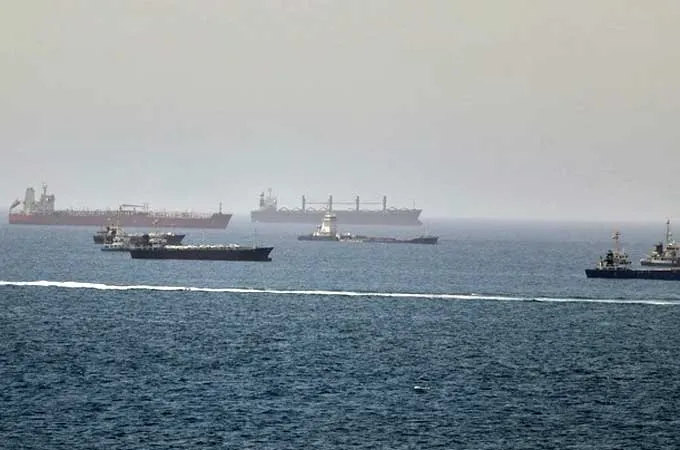
Iranian crude is usually transported to Chinese teapot refineries using a "shadow fleet" of tankers, which use deceptive tactics, such as disabling tracking systems and forging registration, to avoid detection, said the CNBC report.
Many shipments involve multiple ship-to-ship transfers, sometimes using scrapped vessels that are no longer in operation, often in the Persian Gulf or the Strait of Malacca, to obscure their origins.
Following the president's visit to China, Trump was asked on Friday whether he would consider lifting the sanctions.
"Well, we talked about that, and I'm going to make a decision over the next few days," Trump told reporters aboard Air Force One.
The US and China made strides in strengthening the bilateral relationship during Trump's closely watched visit. The two world leaders discussed everything from the Iran war to trade. However, talk of chip export controls was notably left out of the talks, while US access to critical and rare earth minerals remains uncertain.
Trump told reporters Friday that he refused to directly answer Chinese President Xi Jinping when asked if the US would defend Taiwan if it were attacked by China.
He also expressed frustration with Iran on progress towards a peace deal, said the report.
The president said the US is on board with Iran suspending its nuclear program for 20 years, but there needed to be a "level of guarantee" to that commitment, it added.