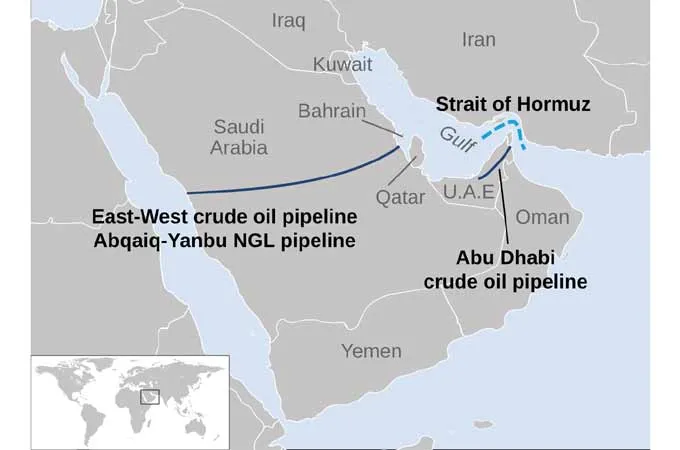
Tensions have escalated again in the Strait of Hormuz after Iran announced on Saturday that it had reimposed restrictions and effectively closed the strategic waterway, amid media eports that at least two commercial vessels were fired upon while attempting to transit the strait.
The development followed a brief period of relative calm after US President Donald Trump said on Friday that the passage had been fully reopened to commercial shipping.
Iran on Saturday stated that it was tightening control over the Strait of Hormuz, warning mariners that the energy lifeline was again closed, as shipping sources said at least two vessels reported coming under fire while trying to transit the waterway, reported Reuters.
Tehran said it was responding to a continued US blockade of Iranian ports, calling it a violation of their ceasefire, while Supreme Leader Mojtaba Khamenei said Iran's navy was ready to inflict "new bitter defeats" on its enemies.
Iran’s Supreme National Security Council, the country’s top security body, has said on state TV that Tehran is "determined to enforce monitoring and control over transit through the Strait of Hormuz until the definitive end of the war and the establishment of lasting peace in the region," reported BBC.
This will be done by collecting full information from vessels passing through, issuing transit certificates, and requiring payment of service fees for "security, safety, and environmental protection services", it stated.
Tehran’s renewed tough messaging injected fresh uncertainty around the Iran conflict, raising the risk that oil and gas shipments through the Strait could remain disrupted just as Washington weighs whether to extend the fragile ceasefire.
Some merchant vessels received radio messages from Iran’s navy saying no ships were allowed through the waterway, maritime security and shipping sources said, reversing signs earlier in the day that traffic might resume.
At least two vessels reported being hit by gunfire as they attempted to cross the strait, the sources said. A tanker and a container ship have both reported attacks off the coast of Oman, sai the BBC report citing the UK Maritime Trade Operations Centre.
Two Indian ships were “forced back west out of the Strait of Hormuz” by the navy of Iran’s Islamic Revolutionary Guards Corps (IRGC), according to tanker monitoring service data on Saturday.
The report is based on two Channel 16 (VHF 156.8 MHz) recordings — the international maritime distress and calling channel - TankerTrackers said on the US social media company X.
"Firing was involved. One of the vessels is an Indian-flagged VLCC supertanker carrying 2 million barrels of Iraqi oil," it added.
Hours earlier, US President Donald Trump had cited "some pretty good news" about Iran, declining to elaborate. But he also said fighting might resume without a peace deal by Wednesday, when the two-week ceasefire expires.
Iran had announced its temporary reopening of the Strait of Hormuz following a separate US-brokered 10-day ceasefire agreement on Thursday between Israel and Lebanon. Israel invaded parts of southern Lebanon after the Iran-allied Hezbollah militant group joined the fighting in early March.
But on Saturday Iran's armed forces command said transit through the strait had reverted to a state of strict Iranian military control, citing what it described as repeated US violations and acts of “piracy” under the guise of a blockade.
The spokesperson said Iran had earlier agreed, “in good faith,” to the managed passage of a limited number of oil tankers and commercial vessels following negotiations, but said continued US actions had forced Tehran to restore tighter controls on shipping through the strategic chokepoint.
US blockade an act of piracy
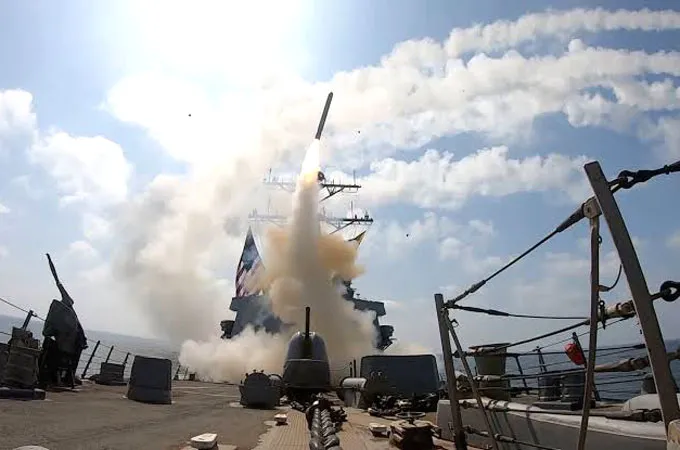
US Central Command said in a statement that American forces were enforcing a maritime blockade of Iran, but did not comment on the latest Iranian actions.
Despite the initial movement of ships, Iran's deputy foreign minister, Saeed Khatibzadeh, said no date had been set for the next round of negotiations, adding that a framework of understanding must be agreed first.
Asked about reports Tehran had closed the Strait, he said that the Americans had violated the terms of the ceasefire, and so "there will be repercussions for them".
Pressure for a way out of the war has mounted as Trump’s fellow Republicans defend narrow majorities in Congress in the November midterm elections with US gasoline prices high, inflation rising and his own approval ratings down.
"It seems to be going very well in the Middle East with Iran," Trump told reporters on Air Force One while returning to Washington from Phoenix, Arizona, on Friday. "We're negotiating over the weekend. I expect things to go well. Many of these things have been negotiated and agreed to.
"The main thing is that Iran will not have a nuclear weapon. You cannot let Iran have a nuclear weapon, and that supersedes everything else."
But in sharp contrast, Trump also said he might end the ceasefire with Iran unless a long-term deal to end the war was agreed before it expires on Wednesday, adding that a U.S. blockade of Iranian ports would continue.