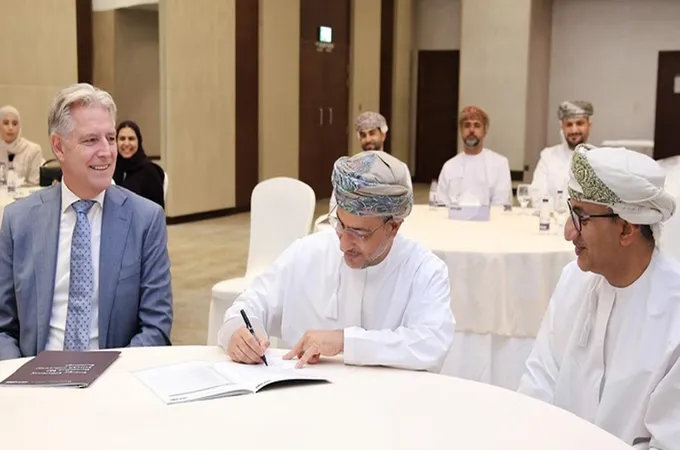
Sohar Port and Freezone, in collaboration with Oman’s Ministry of Energy and Minerals, launched the Energy Efficiency Guideline for Industrial Buildings at Sohar Port and Freezone under the patronage of Mohsin Al Hadrami, Undersecretary of the Ministry of Energy and Minerals.
The guideline provides
a practical framework to support industrial investors in improving energy use
efficiency, reducing operational costs, and enhancing performance efficiency
within the industrial and logistics ecosystem of Sohar Port and Freezone.
Serving as a technical
reference, the guideline offers a precise and structured methodology enabling
investors and operators to assess performance, identify sources of waste, and
implement facility-specific improvement measures, reported Oman News Agency.
It also includes a set
of key performance indicators (KPIs) related to building efficiency, covering
cooling degrees, energy consumption rates, water heating energy intensity, and
the performance of lighting, HVAC (heating, ventilation, and air conditioning)
systems.
This supports more
efficient operational and investment decision-making.
The guideline is based
on a set of internationally recognised standards, including ASHRAE 90.1 (Energy
Efficiency in Buildings), ASHRAE 105 (Standard Method of Determining and
Reporting Building Energy Performance), the IPMVP (International Performance
Measurement and Verification Protocol), and ISO 6946 (Building components and
building elements — Thermal resistance and thermal transmittance — Calculation
methods).
The guideline also
aligns with Oman Building Code and the regulatory framework for occupational
safety and health measures in Oman pursuant to Ministerial Decision No.
286/2008.
Furthermore, it
supports the targets of Oman Vision 2040, particularly those related to
enhancing industrial productivity, diversifying the economy, and improving
infrastructure efficiency.
The launch of this guideline by Sohar Port and Freezone reinforces its ongoing efforts to promote and advance sustainable industrial development, enhance sector competitiveness, and attract investments in line with the requirements of low-carbon markets.