Indian Prime Minister Narendra Modi has intensified diplomatic engagement with Iran and Gulf leaders to safeguard maritime security amid escalating West Asia tensions and disruptions in the Strait of Hormuz, said media reports.
Modi’s calls stressed protecting global trade routes, condemning attacks on critical infrastructure, and ensuring freedom of navigation. The stakes are high for India, which relies heavily on these sea lanes for energy imports and faces economic risks from prolonged instability.
Modi on Saturday spoke with Iran’s President Masoud Pezeshkian, conveying greetings on the occasion of Eid and Nowruz while discussing the evolving situation in West Asia, reported the Times of India.
This marks the second telephonic conversation between the Prime Minister and Iran’s President since the onset of the conflict in West Asia on February 28.
During the conversation, the Prime Minister flagged concerns over recent attacks targeting key infrastructure in the region, saying he “condemned attacks on critical infrastructure in the region, which threaten regional stability and disrupt global supply chains.”
The PM had also raised the safety and security of Indian nationals and the “need for unhindered transit of goods and energy”, noting that these remain India’s “top priorities”.
Talks with Bahrain king
A day earlier, Modi held a telephonic conversation with Bahrain's His Majesty King Hamad bin Isa Al Khalifa, during which the two leaders discussed the evolving situation in the Middle East, condemned attacks on critical infrastructure and emphasised the need to ensure secure maritime routes, reported BNA.
Prime Minister extended Eid Al Fitr greetings, wishing continued progress and prosperity for the Kingdom of Bahrain and its people.
He also condemned the Iranian attacks on the Kingdom of Bahrain, emphasising India’s full support for Bahrain’s security and stability and its rejection of actions that threaten regional peace and security, stated the report.
The Prime Minister said that India would contribute to efforts to ensure the safety of maritime navigation in the Strait of Hormuz.
His Majesty the King stated that the Kingdom of Bahrain would also contribute to international efforts to secure navigation in the Strait, supporting maritime security and ensuring the uninterrupted flow of global trade, said the BNA report.
In a post on X, the Prime Minister said he had a “fruitful discussion” with the Bahraini monarch and conveyed warm greetings on Eid al-Fitr to him and the people of Bahrain.
Modi and King Hamad underscored that such actions have far-reaching consequences, particularly for global food, fuel and fertiliser security.
The leaders reiterated the importance of maintaining freedom of navigation and ensuring that key shipping lanes remain open and secure, a matter of significant concern for countries dependent on energy imports and trade routes passing through the region.
Attack on energy infrastructure condemned
The conversations with both Pezeshkian and King Hamad comes amid heightened tensions in the West Asian region, with both sides expressing concern over attacks targeting energy and civilian infrastructure.
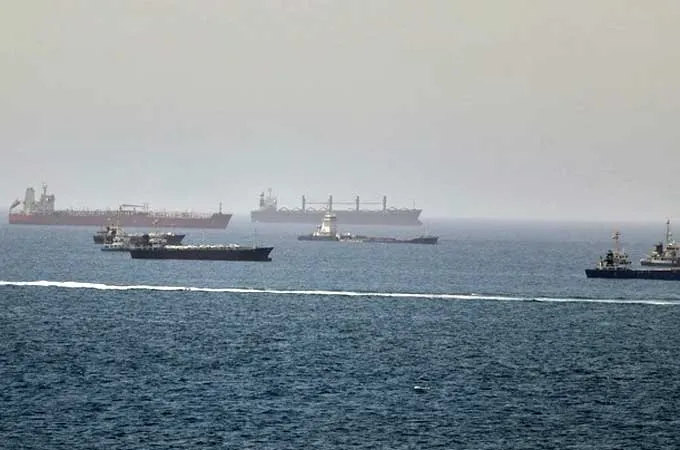
The Prime Minister’s concerns on keeping shipping lanes secure comes as more than 20 Indian vessels remain stranded in the Persian Gulf region, with traffic through the Strait of Hormuz largely disrupted.
In a rare development last week, two Indian-flagged LPG carriers – Shivalik and Nanda Devi – carrying 92,712 metric tonnes of LPG, successfully transited the strait.
External affairs minister S Jaishankar has said India does not have a “blanket arrangement” with Iran for the passage of Indian-flagged vessels, noting that “every ship movement is an individual happening.”
Jaishankar has also held multiple conversations with his Iranian counterpart Seyed Abbas Araghchi to discuss the escalating situation.
Pezeshkian on Saturday conveyed to PM Modi that any path to resolving the ongoing conflict in West Asia hinges on the US and Israel first ending their military actions, while also pitching for a larger role for BRICS in stabilising the region.
Pointing to India’s rotating presidency of BRICS, he urged the grouping to play an “independent role in halting aggression against Iran and in safeguarding regional and global stability."