The European Council and European Parliament have reached a provisional agreement to accelerate permitting procedures for renewable energy projects, electricity grids and energy storage facilities, in a move aimed at strengthening energy security, reducing delays and supporting the EU’s transition towards climate neutrality.
The agreement completes the permitting directive, the first half of the European Grids Package, which seeks to modernise and expand the bloc’s energy infrastructure.
The package is a key component of the ‘One
Europe, One Market’ roadmap, designed to strengthen competitiveness and lower
energy prices.
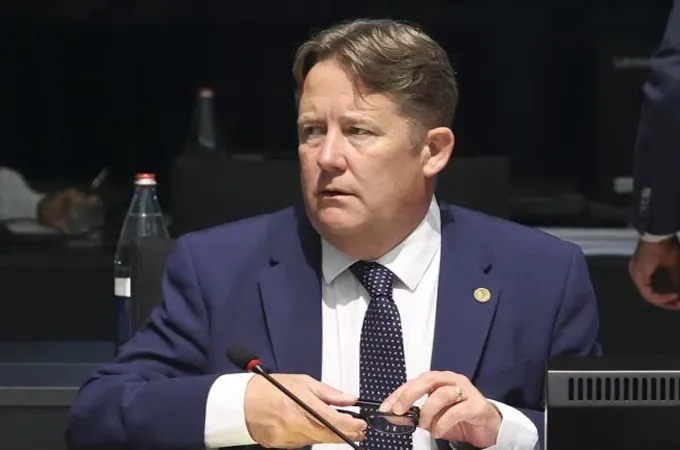
Darragh O’Brien, Ireland’s Minister for Climate, Energy and
the Environment, said: “Faster, streamlined permitting will help accelerate
electrification in Europe. We need grid infrastructure for clean, affordable,
and homegrown energy and to break our dependence on imported fossil fuels.
Successfully concluding the permitting directive follows months of
interinstitutional negotiations, and this agreement represents one of the most
significant legislative milestones in the EU’s energy agenda. I am proud of
Ireland’s role in concluding this cornerstone file during our presidency.”
Under the provisional agreement, permitting procedures will be simplified, made more transparent and subject to shorter approval and grid-connection deadlines.
The measures cover renewable energy projects, energy
storage facilities, electric vehicle charging stations and new electricity and
gas infrastructure.
Member states will also be able to designate renewable energy and electricity grid projects as being of overriding public interest, helping prioritise their deployment.
However, governments retain discretion not
to apply this principle where security, defence or cultural heritage interests
are concerned.
To address administrative bottlenecks, member states may
introduce tacit approval provisions, allowing a lack of response from
authorities during intermediate permitting stages to count as approval.
The agreement also promotes digitalisation through single
digital portals or interconnected platforms, providing applicants with a
central access point for submitting and tracking permit applications.
Public engagement forms another part of the directive, with
provisions encouraging dialogue through independent facilitators and fair
benefit-sharing for communities hosting renewable energy projects with
installed capacities exceeding 7 MW.
The provisional agreement must now be endorsed by the Council and Parliament before formal adoption following legal and linguistic revision. Member states will then have 18 months to incorporate the directive into national legislation. -OGN/TradeArabia News Service