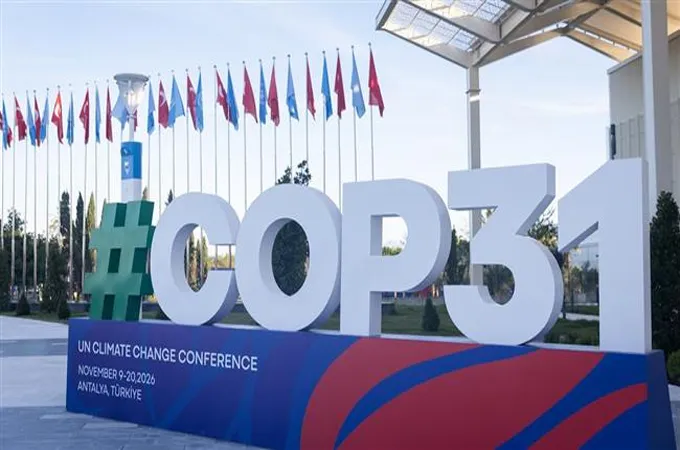
Four governments have announced an additional $200 million in contributions to the Global Environment Facility (GEF) family of funds at the UN Climate Change Conference (COP31) in Antalya, Türkiye, to strengthen climate action, biodiversity protection and pollution reduction, while expanding adaptation finance for vulnerable countries.
The new pledges will support the GEF Trust Fund through its
ninth replenishment (GEF-9), alongside dedicated adaptation funding through the
Least Developed Countries Fund (LDCF) and the Special Climate Change Fund
(SCCF).
Denmark and the Republic of Korea announced contributions of
DKK 800 million and SDR 4.5 million, respectively, to GEF-9, bringing total
pledges to more than $4.5 billion for the 2026–2030 funding period.
Meanwhile, Belgium pledged EUR 50 million and Germany EUR 18
million to the LDCF and SCCF. These represent the first contributions to the
two adaptation funds since the GEF Programming Strategy on Adaptation to
Climate Change for 2026–2030 took effect on July 1, launching their GEF-9
resource mobilisation efforts.
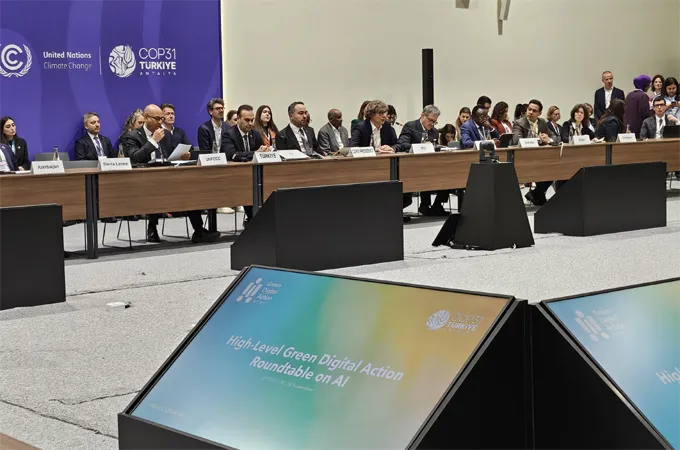
The announcements were made at a high-level event involving
the COP31 and incoming COP32 presidencies, governments contributing to and
receiving GEF funding, the United Nations Framework Convention on Climate
Change (UNFCCC), implementing partners and private-sector representatives.
Japan, the Netherlands, Nigeria, Norway and Spain also
reaffirmed their support for adaptation finance through the GEF's dedicated
adaptation funds.
Diego Mesa Puyo, GEF CEO and Chairperson, said: “The GEF is
critical in helping countries turn their climate and environmental commitments
into financeable projects in the ground,” said Diego Mesa Puyo, GEF CEO and
Chairperson. “Our focus is to integrate environmental action and development
priorities, catalyze greater private finance alongside public investment, and
deliver lasting results faster and at scale. For the LDCF and SCCF, this means
providing predictable and stable financial support so the most vulnerable
countries can turn adaptation priorities into practical action.”
Mesa Puyo added: “Around COP31, there are calls for a new
chapter of climate finance that delivers long-term solutions for the planet –
the GEF is 100% committed to supporting this goal and helping countries build
more resilient and sustainable economies for all,”
UN Climate Change Executive Secretary Simon Stiell welcomed
the contributions, highlighting the importance of predictable funding for
countries most exposed to climate impacts.
"I welcome these pledges and thank Belgium and Germany
for their contributions to the LDCF and SCCF, and Denmark and the Republic of
Korea for their contributions to the ninth replenishment of the GEF Trust Fund.
At a time when climate finance is under pressure, these pledges send an
encouraging signal to other contributors. This is an important step towards
securing predictable climate finance, particularly for the most vulnerable
countries. Grant finance remains essential to protecting lives, livelihoods,
and development gains. As efforts to secure further funding for the LDCF and
SCCF continue, I urge others to step forward and help sustain and scale up this
vital support to meet developing countries’ growing needs," Simon Stiell,
UN Climate Change Executive Secretary, said.
GEF-9 to strengthen integrated environmental investment
The GEF-9 programming directions, approved earlier this
year, aim to expand integrated environmental solutions, increase blended
finance, strengthen government-wide and society-wide approaches, and improve
institutional effectiveness.
At least 80% of GEF-9 resources are expected to generate
climate benefits, reflecting the integration of climate objectives across
investments in biodiversity, land, water and pollution management.
Denmark's contribution of DKK 800 million, equivalent to
approximately EUR 107 million, reflects its commitment to international
environmental cooperation and support for vulnerable countries.
Samira Nawa, Minister of Climate, Energy and Utilities of
Denmark, said: "The Global Environment Facility plays a key role in
advancing global climate action, protecting biodiversity, and tackling
pollution. At a time of growing environmental challenges, it is more important
than ever with ambitious multilateral cooperation and strong international
partnerships. The Global Environment Facility reflects key Danish priorities:
mobilizing finance for people and planet, with a strong focus on the most
vulnerable countries, particularly the Least Developed Countries and Small
Island Developing States. Denmark is therefore pleased to announce a planned
contribution of DKK 800 million (approximately EUR 107 million),"
The GEF Trust Fund, LDCF and SCCF operate through separate
financing arrangements. While the Trust Fund receives contributions through
regular replenishment cycles, the two adaptation funds depend on voluntary
contributions from governments outside the main replenishment process.
Adaptation funding targets vulnerable countries
Established in 2001 under the UNFCCC, the LDCF and SCCF
provide dedicated financial support for climate adaptation in developing
countries.
The LDCF provides grant-based assistance to 44 Least
Developed Countries (LDCs), helping them address climate vulnerabilities and
implement national adaptation priorities.
The SCCF supports 29 Small Island Developing States (SIDS)
that are not classified as LDCs. It also finances innovation, technology
development and private-sector approaches, including blended finance.
Since their establishment, the two funds have provided
nearly $3 billion for more than 580 adaptation projects, which are expected to
directly benefit over 100 million people.
Belgium's EUR 50 million pledge to the LDCF forms part of
its wider commitment to environmental protection and climate resilience.
François Dumont, Special Envoy for Climate and Environment
of Belgium, said: “In support of global environmental action and climate
resilience, Belgium is pledging 80 million EUR to the GEF and 50 million EUR to
the LDCF for 2026-2029. This reflects our commitment to protecting
biodiversity, restoring ecosystems, safeguarding the global environment, and
helping the most vulnerable countries adapt to the impacts of climate
change,"
Germany's proposed EUR 18 million contribution comprises EUR
10 million for the LDCF and EUR 8 million for the SCCF. However, the funding
remains subject to approval by the German Bundestag.
Birgit Pickel, Director-General for Sustainable Development
and Climate at Germany's Federal Ministry for Economic Cooperation and
Development, said: “Germany is working to improve access to finance for the
most vulnerable countries so they can meet their adaptation needs and protect
lives and livelihoods. To support this effort, the German Government has
proposed additional contributions of 10 million euros to the Least Developed
Countries Fund and 8 million euros to the Special Climate Change Fund to the
German Bundestag. Both contributions remain subject to parliamentary approval,
and we hope to finalize them by the next GEF Council meeting in January,"
Further funding mobilisation expected ahead of COP32
The contributions announced in Antalya provide an initial
foundation for the next resource mobilisation phase for the LDCF and SCCF.
The GEF intends to build on the pledges through continued
engagement with existing and prospective contributors, with efforts expected to
continue towards COP32 in Addis Ababa.
The broader objective is to secure more predictable and
sustained adaptation finance for developing countries facing increasing climate
risks, while strengthening the integration of climate action with biodiversity
conservation, ecosystem restoration and pollution reduction.
The latest commitments also highlight the role of multilateral funding institutions in translating international environmental and climate commitments into practical projects, particularly in countries with limited financial resources and high exposure to climate impacts. -OGN/TradeArabia News Service