Google has signed a power purchase agreement (PPA) with Quaise Energy to purchase 50 megawatts (MW) of superhot geothermal electricity from Project Obsidian, the company’s development in Central Oregon, US.
The agreement is expected to support Google’s existing data
centre operations in The Dalles, Oregon, while accelerating the commercial
development of superhot geothermal energy.
Power deliveries could begin as early as 2030, providing
Google with reliable, carbon-free electricity to support its data centre
operations and regional communities.
The partnership is also expected to deliver economic
benefits for local consumers and businesses while strengthening electricity
supply and protecting the environment.
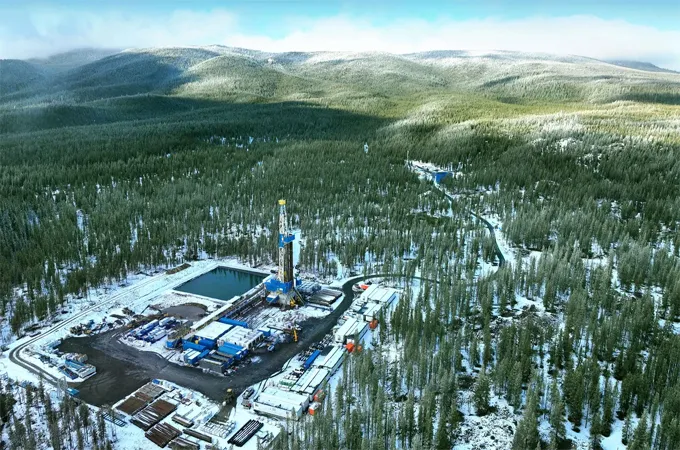
The initial development phase of Project Obsidian will use
conventional drilling technology to access superhot geothermal resources at
commercial scale.
According to Quaise, superhot geothermal energy uses the
Earth's natural heat and can generate up to 10 times more clean electricity per
well than traditional geothermal systems.
The second phase is expected to become the world's first
deployment of millimeter wave drilling, a technology designed to access
superhot geothermal conditions that remain difficult to reach using
conventional drilling methods.
Quaise Energy CEO and President Carlos Araque said: “We
started Quaise to make the Earth's most abundant energy source universally
accessible — and this agreement marks a critical next step, not just for Quaise
but for the entire clean energy sector," said Carlos Araque, CEO and
President of Quaise Energy. “Together with Google, we are building the
commercial foundation for superhot geothermal and cementing the United States
as the global leader in geothermal power.”
Unlike conventional geothermal systems, which generally
depend on naturally occurring underground hot water reservoirs with
temperatures rarely exceeding 600°F, Quaise is developing Enhanced Geothermal
Systems (EGS) capable of operating under superhot conditions.
The technology is expected to enable utility-scale
geothermal projects to compete with some of today's most efficient power
plants.
The company is also advancing millimeter wave drilling
technology, which can be integrated with existing drilling rigs to reach
deeper, hotter underground resources more economically.
Google's expanding clean energy commitments
The agreement builds on Google's investments in clean energy
and its support for geothermal technologies.
Between 2010 and 2025, Google signed more than 240
agreements to purchase nearly 35GW of new clean energy, including more than
29GW across 148 projects in North America.
As electricity demand increases across the US, the company
says it remains committed to supporting affordable, reliable and accessible
energy for households and businesses.
Google also said it pays for 100% of the electricity
consumed by its data centres and covers infrastructure requirements directly associated
with its growth.
In Oregon, Google's three data centre campuses have already
achieved 83% carbon-free energy. Meanwhile, residents within Northern Wasco
County People's Utility District's service territory have the third-lowest
electricity rates in the state.
The latest partnership is intended to extend Google's
geothermal energy commitments while helping establish superhot geothermal as a
cost-effective electricity source for Oregon's residents and businesses.
Lucia Tian, Head of Advanced Energy Technologies at Google,
said: “Google data centers are long-term investments in the communities we call
home,” said Lucia Tian, Head of Advanced Energy Technologies at Google. “This
collaboration with Quaise on superhot geothermal will help fuel local economic
growth while helping to build a more robust and affordable energy future for
Oregon.”
Google has operated in Oregon since 2006, when it
established its first owned-and-operated data centre in The Dalles. Over the
past two decades, the company has invested more than $7 billion in the state
and has become the largest taxpayer in Wasco County in recent years.
In 2025, Google's activities supported an estimated $9.3
billion in economic activity involving tens of thousands of Oregon businesses,
nonprofits, publishers, creators and developers.
Project Obsidian expected to create jobs and investment
The agreement marks another milestone for Quaise Energy
following its $180 million Series B financing round in August 2026, which
included a $35 million investment from Nabors Industries.
Project Obsidian is expected to generate significant
economic opportunities for Central Oregon, supporting between 200 and 400 jobs
during construction and creating more than 50 permanent, high-skilled positions
in engineering and operations.
The development is also expected to establish the region as
a centre for superhot geothermal energy development. Associated grid upgrades
could strengthen electricity reliability for local consumers, while royalties
from electricity sales are expected to provide long-term economic benefits.
Quaise said technologies demonstrated at Project Obsidian
could help reduce development costs for future superhot geothermal projects
across the US, where substantial underground heat resources remain inaccessible
using conventional drilling methods.
The project therefore represents a step towards expanding geothermal electricity generation while providing additional clean, dependable power to meet growing demand from data centres and other energy-intensive industries. -OGN/TradeArabia News Service