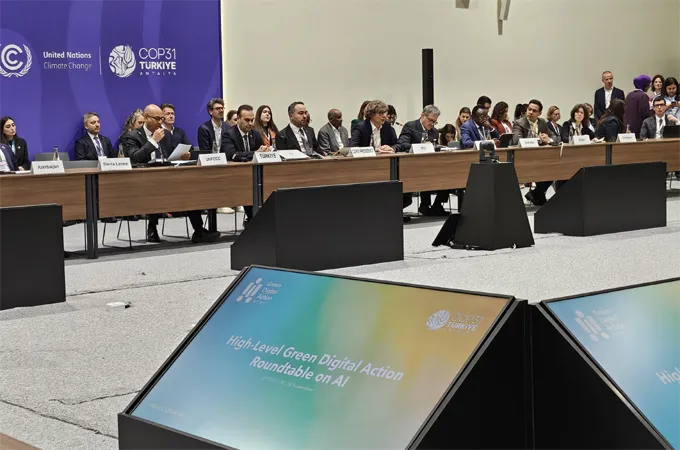
Calls for artificial intelligence (AI) development to align with climate action and renewable energy objectives gained momentum at COP31 in Türkiye, as growing electricity demand from data centres highlights the need for sustainable energy solutions.
The 2026 Antalya AI Pledge aims to translate knowledge,
data, standards and best practices into voluntary commitments covering how AI
is designed, procured, powered, deployed, measured and managed in support of
climate and sustainable development goals.
The International Renewable Energy Agency (IRENA) has
supported the initiative, contributed to its development and is working with
the International Telecommunication Union (ITU) and other partners to address
challenges linked to power system transformation.
IRENA highlighted two priority areas: electricity system
transformation and the sustainable development of data centres.
As power systems incorporate increasing shares of variable
renewable energy, battery storage, electric vehicles and flexible demand, their
operation is becoming more complex. Digitalisation and AI are therefore
increasingly important for improving efficiency and ensuring secure, affordable
and renewable-based electricity supplies.
Data centres also require greater attention to energy
efficiency, cooling systems, equipment management and circularity. However,
IRENA stressed that even highly efficient facilities can have significant climate
impacts when powered by carbon-intensive electricity.
The agency said that powering data centres with zero- and
low-emission energy should prioritise renewable sources. Its World Energy
Transition Outlook 2026 highlights renewables as an increasingly
cost-competitive solution for meeting rising electricity demand, supported by
investment in grids and greater system flexibility.
The Antalya AI Pledge is expected to provide a framework for
greater transparency and accountability by establishing green data-centre
requirements that can translate broad sustainability commitments into
measurable action.
IRENA also emphasised that AI and data centres should not be
viewed solely as additional sources of electricity demand. Through effective
planning, location and operation, they could become active participants in
electricity systems.
Flexible computing workloads, energy storage and intelligent
energy management could enable data centres to adjust consumption in response
to periods of high renewable generation or local grid constraints. Such
measures could help improve system flexibility and support the integration of
renewable electricity.
IRENA said it would continue working with its member
countries, the ITU and industry stakeholders to develop practical solutions and
support implementation of the pledge.
The agency's upcoming Assembly in January 2027 is also expected to feature ministerial discussions on AI and power system transformation, within broader international efforts to accelerate electrification and advance the global energy transition. -OGN/TradeArabia News Service