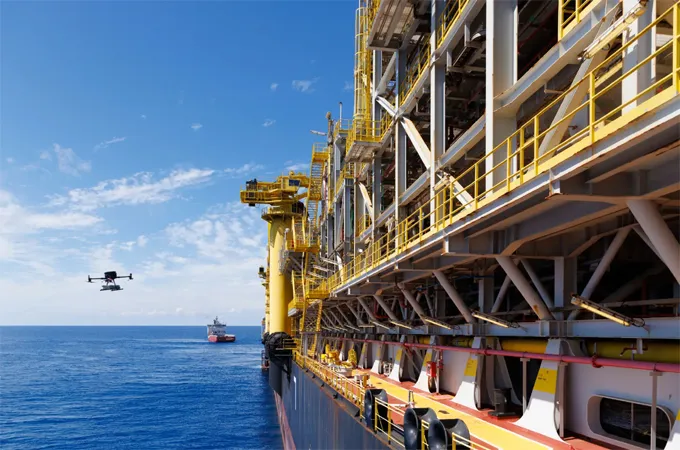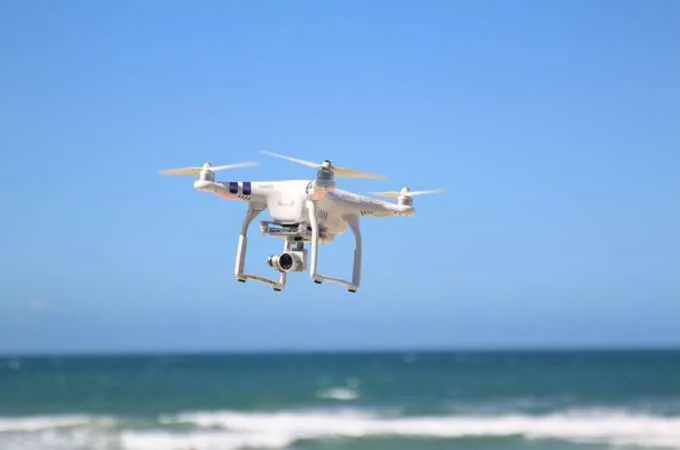
The offshore drone industry is advancing
quickly, with UAVs increasingly capable of handling inspection, monitoring, and
logistics missions miles from shore.
That expanding capability is driving growing
investment in the technology, with the oil and gas drone market projected to
surpass $56 billion by 2030. But reaching that
potential depends on solving one of the industry’s biggest operational hurdles:
safe, reliable drone recovery.
Unlike on land, where a drone can return to a
fixed point or divert elsewhere, offshore missions often require aircraft to
land on vessels that are pitching, rolling, and moving with the sea. As
operators push UAVs farther from shore and into longer missions, reliably
getting them back onboard becomes a critical part of whether those operations
can scale at all. WaiV
Robotics, a maritime robotics company that recently emerged from
stealth with $7.5 million in seed funding, is approaching this problem through
the vessel side.
Rather than adapting the aircraft to
compensate for everything happening beneath it, WaiV shifts the challenge of
recovery onto the landing platform. Radar, LiDAR and day cameras feed a
real-time picture of how the drone and vessel are moving relative to one
another, while the AI anticipates the best moment to bring the aircraft down
and takes over the sticks for the final descent. Once it touches down, a
catch-lock-release mechanism secures the aircraft by its skids.
The value of stabilisation becomes clearer as
conditions of the sea become more demanding. Recent research into autonomous drone landings on
floating platforms found that in slight-to-moderate seas with waves up to 2.5
meters, drones met the study’s landing criteria in fewer than 60 percent of
attempts. At sea, where there may be no alternative landing point nearby, those
final meters can be the difference between a safe return and a lost aircraft.
WaiV addresses this gap by creating a landing
surface that can compensate for changing conditions at sea. Since the system
requires no hardware or software modifications to the aircraft, it can work
across existing drone fleets or enable Drone replacement at any time. That
flexibility matters in offshore energy, where smaller drones may inspect flare
stacks or hard-to-reach equipment, while larger aircraft can carry sensors,
tools, or supplies between assets. The system currently supports aircraft up to
25 kg, with plans to expand to versions capable of recovering larger and
heavier drones up to 100 kg and 300 kg in the future.
Jonny Carni, CEO and Founder of WaiV Robotics,
explains: Our system was designed to remove traditional deployment constraints,
allowing fleets to operate as mobile launch and recovery hubs that ensure
reliable and safe UAV operations. Without a dependable way to launch and
recover at sea, large-scale deployment doesn’t work. Our goal is to remove that
constraint and make drone operations viable from virtually any vessel and
enable cost-effective operations and greater efficiency.”
The company recently validated that approach
during a two-day open-sea trial off the shore of Galveston, Texas, where drones
completed dozens of autonomous takeoffs and landings under changing offshore
conditions. Operations continued after dark, with the system guiding aircraft
back to the vessel without natural light and testing autonomous recovery under
the low-visibility conditions that traditionally make maritime landings more
difficult.
As offshore energy moves farther from shore,
the value of autonomous drones will depend on whether the surrounding
infrastructure can become autonomous too. Drones that can inspect, monitor, and
eventually transport equipment across offshore assets are only as useful as
their ability to return safely. For offshore autonomy to work at scale, drones
cannot just be ready when the sea cooperates; they need to be ready when they
don’t.