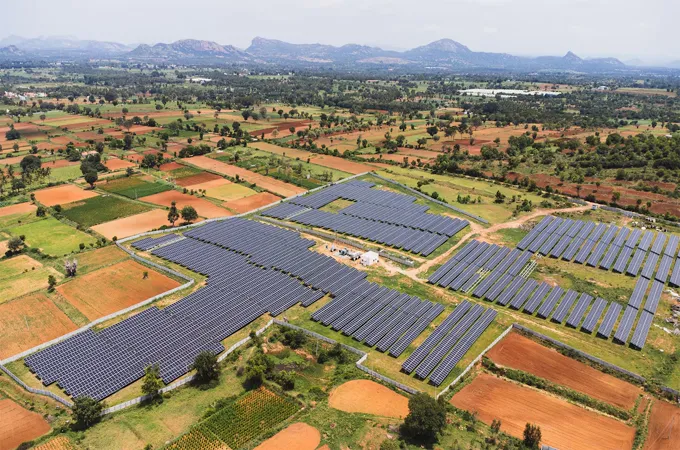
India is emerging as a major force in global renewable energy markets, with rapid growth in renewable electricity reducing fuel import dependence and creating opportunities in domestic manufacturing, according to the International Energy Agency’s (IEA) India Renewable Energy Market Report 2026.
Launched at the Bharat Renewable Energy Summit in New Delhi, the report reveals that India’s renewable power capacity has almost quadrupled over the past decade, surpassing 300 gigawatts (GW) in 2026.
India is now the world’s second-fastest-growing renewables market and the second-largest manufacturer of solar photovoltaic (PV) modules.
It also achieved its target of 50 per cent non-fossil installed power capacity
in 2025, five years ahead of schedule.
Renewables are delivering significant energy security benefits. Renewable electricity helped India save more than $100 billion in coal and natural gas import costs between 2011 and 2025, with cumulative savings expected to more than double by 2030.
Without solar PV, wind and bioenergy capacity added since 2010, coal imports in
2025 would have been around 110 million tonnes higher.
India’s renewable
power capacity is forecast to reach approximately 530 GW by 2030, with solar PV
accounting for more than 80 per cent of new additions.
“India’s renewables
expansion is delivering major benefits for its energy security at a time of
heightened uncertainty in global energy markets,” said IEA Executive Director
Fatih Birol. He highlighted the importance of consistent policies in reducing
renewable energy costs and attracting investment, noting that India’s
experience offers valuable lessons for other emerging economies.
“India’s emergence as
a new giant of renewable energy reflects the progress we have made in recent
years,” said India Minister of New and Renewable Energy Pralhad Joshi,
highlighting efforts to strengthen domestic manufacturing, mobilise investment
and expand transmission infrastructure to support future growth.
The report also credits competitive auctions for helping India achieve some of the world’s lowest solar PV generation costs and establish leadership in hybrid renewable energy projects.
Growth is further supported by rooftop solar, corporate
electricity procurement and expanding domestic manufacturing.
However, sustaining momentum will require greater investment in electricity grids, energy storage and system flexibility, alongside improved utility finances and fewer project delays.
Addressing these challenges could accelerate renewable capacity deployment by more than 20 per cent over 2026-2030, the IEA finds. -OGN/TradeArabia News Service