US Secretary of State Marco Rubio will meet with Bahrain officials on Thursday on the final leg of a trip to the Middle East where he has sought to sell the Trump administration's preliminary Iran accord to skeptical Gulf Arab allies.
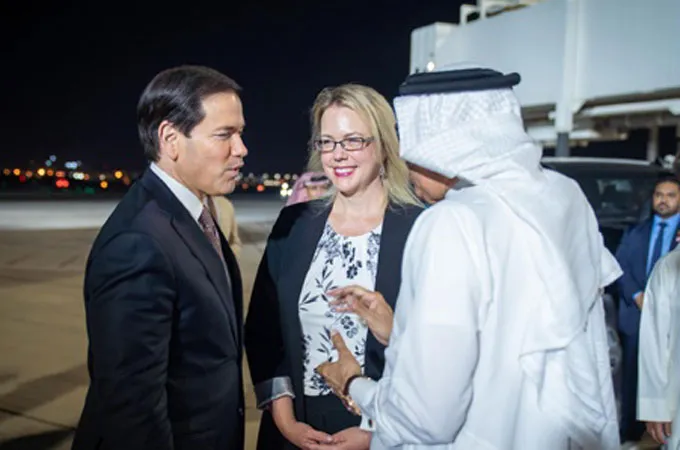
Upon arrival at Bahrain International Airport last night, Rubio and the accompanying delegation were received by Dr. Abdullatif bin Rashid Al Zayani, Minister of Foreign Affairs; Stephanie Hallett, Ambassador of the US to the Kingdom of Bahrain; and a number of Foreign Ministry officials, reported BNA.
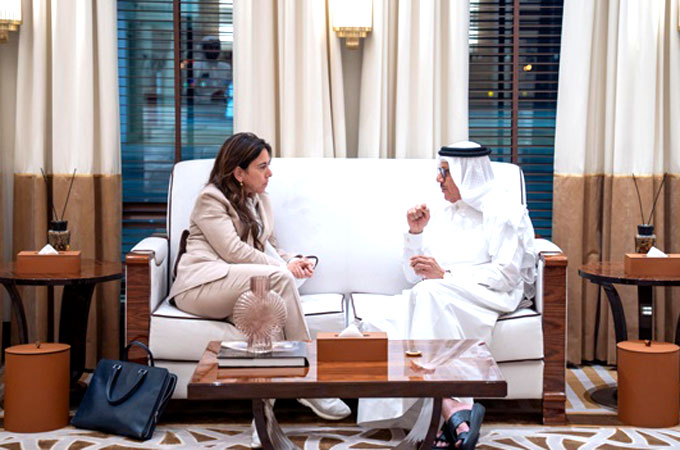
More GCC leaders are expected at the meeting. Prince Faisal bin Farhan Al Saud, Minister of Foreign Affairs of the Kingdom of Saudi Arabia, arrived last night in the kingdom to join the talks in addition to Lana Nusseibeh, the UAE's Minister of State at the Ministry of Foreign Affairs.
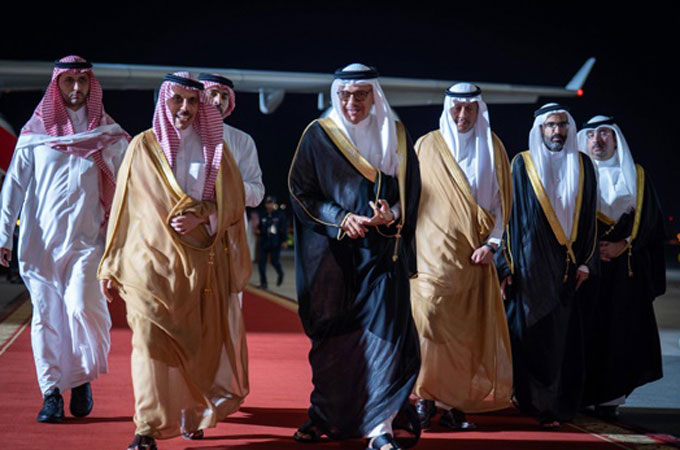
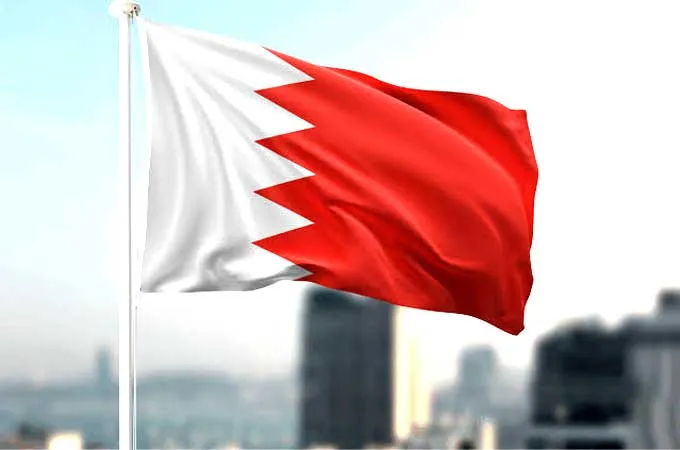
Bahrain has welcomed the visit of Rubio to the kingdom as part of a regional tour, as well as his participation in the GCC-US ministerial meeting to be held here today.
The meeting comes as part of joint efforts to strengthen the strategic partnership between the two sides and their continued efforts to enhance regional security and stability.
In a statement, the Foreign Ministry highlighted Bahrain’s pride in its longstanding friendship and close strategic partnership with the US, reaffirming its commitment to further advancing these relations under the Comprehensive Security Integration and Prosperity Agreement (C-SIPA) signed between the two countries.
The ministry said such efforts serve their shared interests, strengthen regional and international security and stability, and reflect the depth of the historical friendship between the two nations.
The ministry also renewed its support for and appreciation of the initiatives of US President Donald Trump to resolve conflicts in the region and around the world through understanding, dialogue and peaceful means, said the BNA report.
The ministry further reiterated that Bahrain welcomes the signing of the memorandum of understanding between the US and Iran, and the ongoing efforts to achieve a peaceful and sustainable resolution of the Iranian crisis through dialogue and diplomacy.
The ministry said such a resolution should ensure Iran’s adherence to the principles of good neighbourliness, respect for the sovereignty of states and non-interference in their internal affairs, refraining from the use or threat of force, ending support for terrorist proxies and militias, and guaranteeing freedom of maritime navigation in the Strait of Hormuz, as well as the stability of international trade and global energy and food supplies, in accordance with international law and the Charter of the United Nations.
It added that these efforts would contribute to strengthening security, stability, peaceful coexistence and prosperity for the peoples of the region and the world.