Global utilities and major power equipment manufacturers have pledged coordinated action to ease mounting supply chain pressures that are slowing the expansion of electricity grids worldwide.
The commitment,
announced by members of the Utilities for Net Zero Alliance (UNEZA), focuses on
harmonising fragmented equipment standards and improving demand visibility as
global electrification accelerates.
UNEZA members, which
include some of the world’s largest utilities, are expected to require nearly
90,000 kilometres of transmission cable by 2030, more than twice the Earth’s
circumference, and over 270 high-voltage transformers.
Current manufacturing
capacity is unable to meet this surge in demand, with transformer delivery
times now exceeding three years.
Industry leaders say
bottlenecks in production and raw materials have become a key barrier to the
speed and cost of grid development.
The statement was
issued on the sidelines of London Climate Action Week following a high-level
roundtable co-hosted by UNEZA and the Global Clean Power Alliance, with support
from the International Renewable Energy Agency and climate leadership bodies.
UNEZA operates under
the guidance of international climate organisations and brings together 85
member utilities globally.
At COP30, the alliance
raised its annual clean energy investment target to $148 billion and launched a
supply chain delivery mechanism focused on pooled procurement.
Its current project
pipeline exceeds $1 trillion through 2030, including major transmission
infrastructure requirements such as overhead and underground cables,
transformers, and substations.
To address challenges,
UNEZA members agreed on five priority actions, including publishing annual
demand forecasts, harmonising technical standards, supporting pooled
procurement, developing unified specifications, and advancing joint innovation
programmes.
The initiative aims to
reduce procurement risks, stimulate manufacturing investment, and accelerate
delivery of critical grid infrastructure.
UNEZA said the roadmap
will continue to be developed ahead of COP31, in collaboration with governments
and industry partners, to strengthen global energy security and support the
transition to clean power systems.
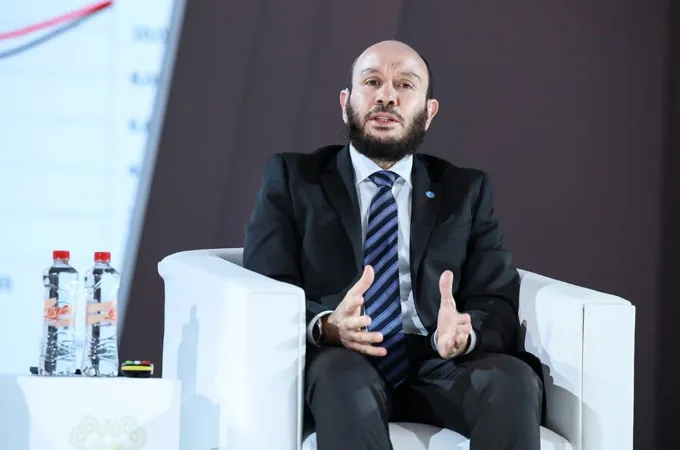
Khalifa Al Mheiri -
Chief Strategy & Investment Officer, TAQA Transmission, said: "As
a utility investing in the next generation of electricity networks, TAQA
recognises that delivering the energy transition at the pace the world requires
depends not only on investment, but on our ability to strengthen and modernise
global supply chains. Through UNEZA, utilities are taking practical action to
improve coordination, harmonise technical approaches and explore pooled
procurement models that provide greater certainty for suppliers while helping
utilities deliver critical infrastructure faster, more efficiently and at lower
cost. Collaboration across the value chain will be fundamental to building
resilient electricity systems that support long-term energy security and
net-zero ambitions.”
Francesco La Camera,
Director-General of the International Renewable Energy Agency (IRENA)
said: “We have spent the past decade proving that renewables can be
deployed at scale. That case is made. The challenge now is ensuring grids and
supply chains keep pace to deliver clean power reliably to homes, industries
and communities. As electrification takes center stage in the next phase of the
transition, with IRENA calling for a global electrification target of 35% by
2035, resilient supply chains will be essential. Initiatives such as the
Utilities for Net Zero Alliance and the Global Clean Power Alliance show the
value of governments, utilities and industry working together to accelerate
progress while enhancing energy security and system resilience.”