The Middle East and North Africa (Mena) region is emerging as a major global hub for clean industrial investment, with 84 announced projects representing around $642 billion in potential spending across clean fuels, fertilisers, steel and aluminium, according to a report by Mission Possible Partnership and the Industrial Transition Accelerator.
The report, Clean Industry Rising: the foundation of
resilient value chains, highlights accelerating momentum in global clean
industrial financing, with 19 projects worth $43 billion reaching final
investment decision in the past six months—double the pace of a year earlier.
It notes that clean
production is scaling rapidly in energy-intensive sectors such as aviation
fuels, shipping fuels and metals, amid rising energy volatility and trade
fragmentation.
Within Mena, several countries are playing distinct roles.
Egypt leads by project count with 25 projects worth $108.5
billion, concentrated around the Suez Canal Economic Zone, the Gulf of Suez and
Damietta.
Oman has the largest committed pipeline value at $271
billion across 19 projects, including a green ammonia facility in Duqm that has
already reached final investment decision.
In Saudi Arabia, the Neom Green Hydrogen Project—developed
with Air Products and Acwa Power—is a flagship 1.2 million-tonne clean ammonia
initiative.
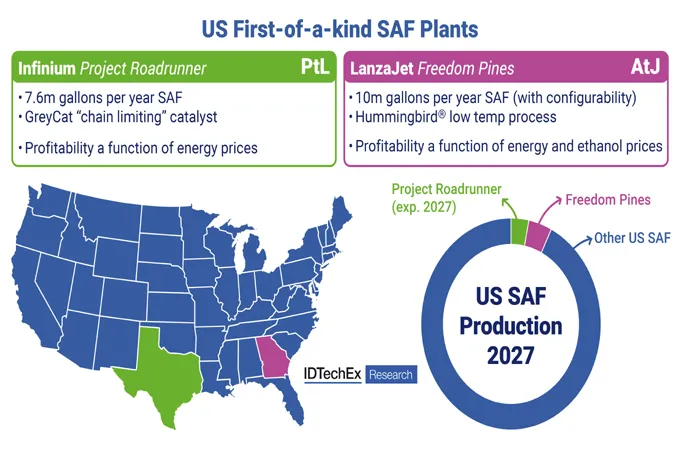
The UAE is advancing sustainable aviation fuel projects in
Abu Dhabi and Fujairah.
Clean fuels, particularly sustainable aviation fuel and
green ammonia, are emerging as early regional advantages, with multiple
projects reaching final investment decision in recent months.
The region’s geography and infrastructure also position it
as a key exporter of clean commodities via global trade routes such as the Suez
Canal.
The report emphasises that deeper trade partnerships,
stronger demand signals and expanded public-private financing will be essential
to sustain momentum and scale the region’s clean industrial transformation.
Faustine Delasalle, CEO of Mission Possible Partnership and
Executive Director of the Industrial Transition Accelerator, said: “Clean
industry is rising because the world has changed. In an increasingly fragmented
and unstable environment, fossil-fuel dependence has shown time and again to
mean exposure to price shocks, supply disruption, and economic crises, while
continuing to fuel the climate crisis and its own compounding impacts.
Countries that build cleaner industrial systems can gain greater control over
the essentials of their economies: energy, food, materials, and industrial
goods that underpin every dimension of people’s lives.”
James Schofield, Deputy Director, ITA, said: “We are seeing double the pace of final investment decisions globally. Most of these are in China, and evidence points to the continued rise of the new industrial sunbelt. We can also see that supportive policy can help investment into clean industry - particularly SAF - and that clean trade partnerships between countries with complementary strengths could offer greater resilience, competitiveness, and industrial growth.” -OGN/TradeArabia News Service