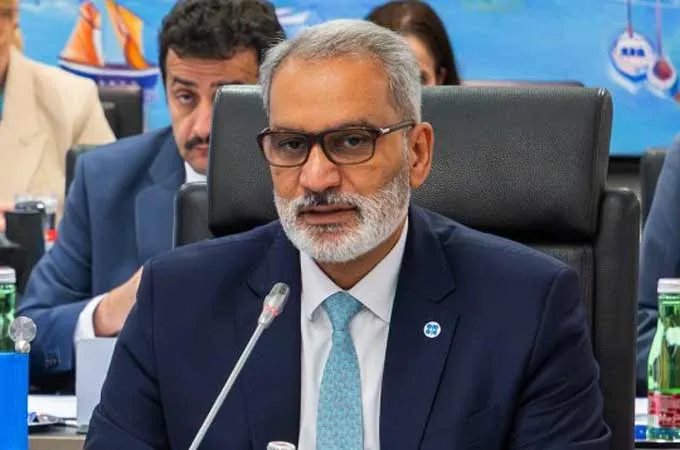
Despite ongoing disruption to oil flows through the Strait of Hormuz and continued uncertainty surrounding the conflict involving Iran, OPEC has maintained its forecast for global oil demand growth, citing no evidence of a slowdown in consumption.
Speaking at the St. Petersburg International Economic Forum on Thursday, OPEC Secretary General Haitham Al-Ghais said the organisation continues to expect global oil demand to increase by 1.2 million barrels per day this year.
"Despite all the commentary out there that oil demand is declining, we have not registered signs of that yet," Al-Ghais said. "We still see robust demand growth at 1.2 million barrels a day for this year."
Al-Ghais also stressed the importance of sustained investment in the oil sector, arguing that long-term energy planning should not be influenced by temporary geopolitical disruptions.
"We need to invest well ahead of time to be prepared for the demand that we see in the future," he said, adding that investment decisions should not be driven by "one-off events" occurring in different parts of the world.
His comments come as energy markets continue to grapple with the consequences of the conflict that has severely disrupted shipping through the Strait of Hormuz, one of the world's most important oil transit routes. The near-total closure of the waterway stranded more than 13 million barrels per day of crude and petroleum products within the Gulf, forcing some producers to curb output and contributing to supply shortages in importing countries.
While tanker traffic through the strait remains well below pre-conflict levels, shipping analysts say crude exports are gradually finding alternative ways to reach international markets. Data from firms including LSEG, Kpler and Vortexa suggest a growing number of vessels are transiting the region without publicly broadcasting their locations, a practice known as "going dark".
According to Vortexa, about 65 per cent of loaded tankers leaving the Gulf in May operated with their Automatic Identification Systems (AIS) switched off during part of their journey, highlighting the increasingly opaque nature of oil trade flows in the region.