Amid a rapidly shifting global landscape defined by geopolitical uncertainty, climate change and tech disruption, Generative AI and innovation-led 'Engine 2' business models are emerging as major drivers of resilience across the region, says a new study.

The UAE’s economy is expected to grow by 4.8% in 2025 and the growth rate will rise to about 5% in 2026, according to the International Monetary Fund (IMF).

The global Islamic finance industry maintained a strong growth trajectory in 2025, with total assets reaching $6.5 trillion, up 9% year-on-year. Growth was supported by the continued expansion in Islamic banking, record sukuk issuance, strong Islamic fund performance, and new regulatory frameworks.
Dubai’s economy reached AED473 billion ($129 billion) in the first half of 2026, driven by strong performance across key sectors, including financial and insurance services, healthcare, information and communication, and construction.
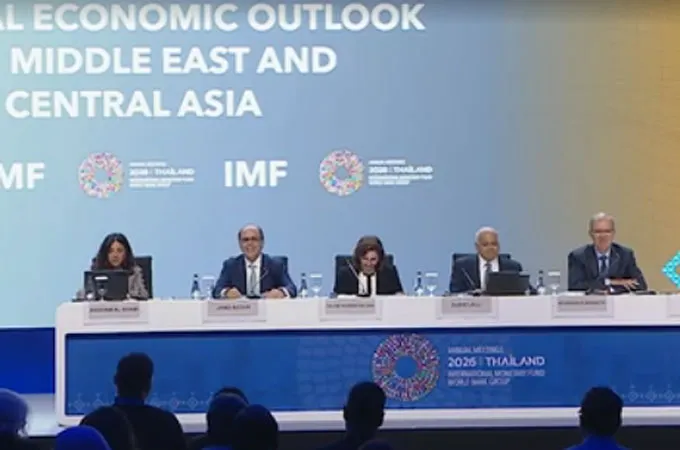
The Middle East, North Africa and Pakistan are poised for a sharp economic recovery in 2027, with growth projected to reach 6.6 per cent after a war-induced contraction this year, although the International Monetary Fund (IMF) has warned that the rebound will be uneven and depend heavily on the restoration of energy production and trade.

The UAE’s net wealth is forecast to reach $6 trillion by 2030, with a CAGR of 10.6%, according to Boston Consulting Group’s (BCG) Global Wealth Report 2026: The Great Reordering.
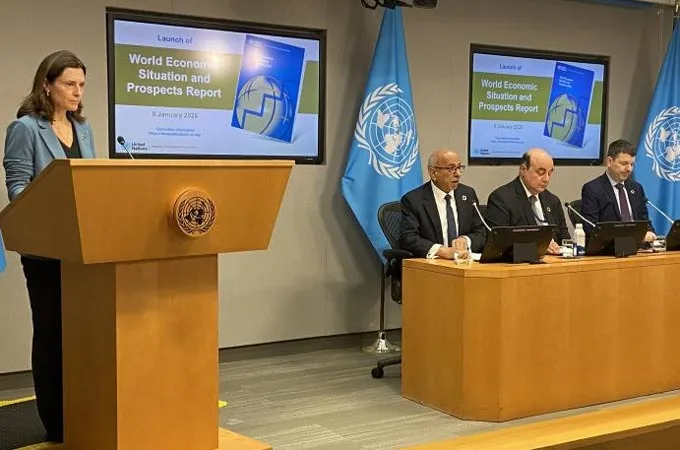
Global economic output is forecast to grow by 2.7 per cent in 2026, slightly below the 2.8 per cent estimated for 2025 and well below the pre-pandemic average of 3.2 per cent, according to the World Economic Situation and Prospects 2026, released by the United Nations on Thursday.

BCD Global, a leading Indian multinational group with interests in real estate development, construction and finance, has announced its foray into the Middle East, naming Dubai as its regional headquarters as it accelerates its next phase of global growth.

Bahrain has recorded real economic growth of 4% at constant prices and 4.5% at current prices during the third quarter of 2025 on an annual basis, said a report. The kingdom's non-oil GDP surged by 3.1% at constant prices and 4.9 % at current prices for the three-month period.

Saudi banks’ credit profiles remain solid, with financial metrics displaying lower sensitivity to economic downturns than most GCC peers, underpinned by still-high government spending, ongoing economic diversification, said Fitch Ratings in a new report.