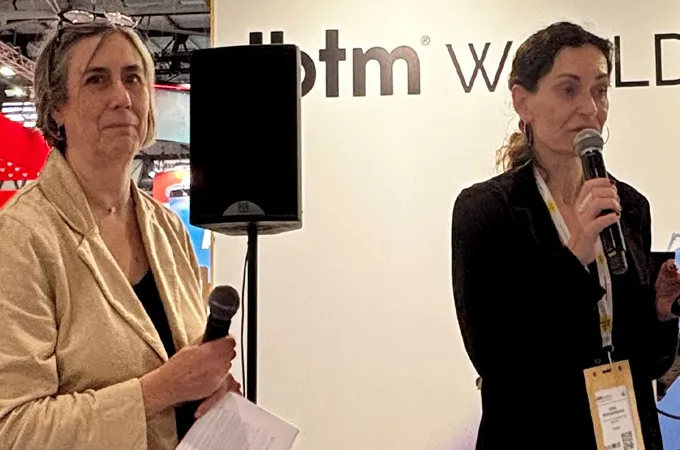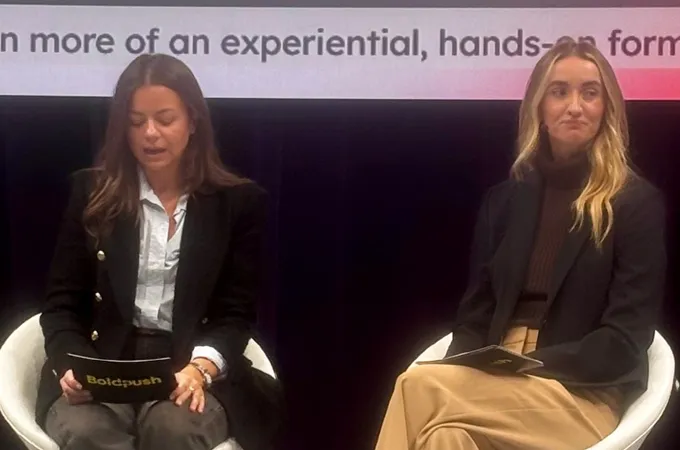
Artificial intelligence (AI) can help event professionals improve efficiency, streamline daily tasks and create more time for meaningful connections, according to insights shared during a panel discussion featuring two members of Google's CxO team at IBTM World 2026.
The session explored practical ways to integrate AI into
everyday event planning, focusing on effective prompting techniques, measuring
productivity gains and maintaining human oversight as the technology becomes
increasingly embedded in workplace processes.
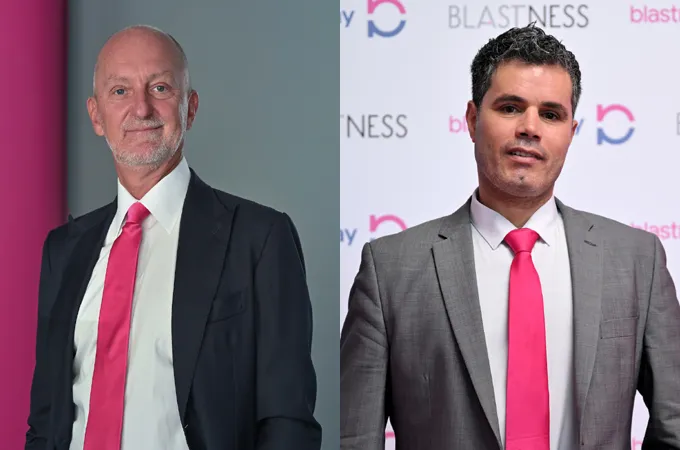
Tatum Dial, Global AI Event Lead and Executive Content
Coordinator at Google, encouraged event professionals to begin by introducing
AI into individual tasks rather than attempting to transform entire workflows
at once.
She also highlighted the CRIT framework as a method for
improving AI prompts, outlining four essential elements: Context, providing
relevant background information; Role, assigning AI a specific perspective;
Interview, encouraging AI to ask questions and identify missing information;
and Task, clearly defining the required outcome.
Dial also stressed the importance of measuring and
communicating AI's impact by tracking time saved and quantifying productivity
improvements to demonstrate its value to organisations.
Katherine DiSanto, Executive Engagement Manager, Executive
Events and CxO Engagement at Google, highlighted the importance of
experimenting with AI in everyday personal activities before applying
successful approaches professionally.
She also emphasised the need for human oversight, noting
that AI-generated information must be reviewed and verified to ensure accuracy
and quality.
Her guiding principle was to “Trust but verify”, reinforcing
the importance of maintaining human judgement when using AI-generated content.
DiSanto further encouraged event professionals to use the
time saved through automation to strengthen personal and professional
relationships, reconnect with colleagues and improve work-life balance.
The discussion highlighted a broader shift in how AI can
support the events industry, moving beyond task automation towards improving
the quality of work and workplace experiences.
The speakers' central message was that AI should complement rather than replace human expertise. By adopting the technology gradually, improving prompting skills and validating its outputs, event professionals can create more efficient workflows while dedicating greater attention to creativity, collaboration and meaningful human connections. -TradeArabia News Service