The World Travel & Tourism Council (WTTC), alongside its members Iberostar Group and Intrepid Travel, and the Ocean & Climate Platform (OCP), has announced the creation of the Ocean Catalyst Group, a new initiative aimed at accelerating private-sector action to protect coastal and marine tourism destinations.
The announcement was made during a COP31 Spotlight Event in
Antalya, Türkiye, on Ocean Day, bringing the initiative to the global ocean
agenda. The launch was accompanied by the introduction of the Coastal &
Marine Tourism Public-Private Sector Playbook, which provides practical
guidance for businesses and governments to strengthen the resilience and
sustainability of coastal destinations.
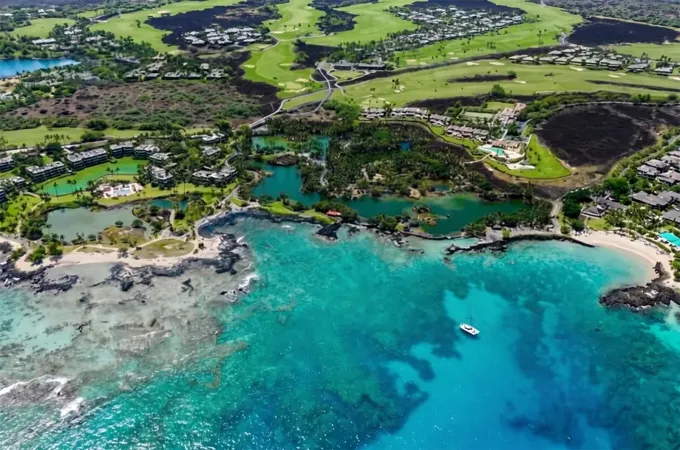
Coastal and marine tourism generated approximately US$3.3
trillion in global GDP and supported around 100 million jobs in 2023, including
supply-chain impacts. However, the sector's long-term prosperity depends on
healthy marine ecosystems, reliable energy and water supplies, and thriving
coastal communities.
The Ocean Catalyst Group is a voluntary private-sector
working group designed to strengthen collaboration between tourism businesses,
governments, financial institutions, insurance partners and other stakeholders.
It aims to identify shared priorities, develop partnerships and encourage
investment in coastal destinations to protect assets, maintain business
continuity, support livelihoods and safeguard visitor experiences.
Members will work towards common objectives while retaining
flexibility to participate in initiatives most relevant to their businesses.
Gloria Guevara, President and CEO of WTTC, said: “Coastal
and marine tourism is a vital part of the global Travel & Tourism sector.
The destinations and communities that depend on it are exposed to growing
environmental pressures, so taking action is essential. Bringing together
businesses, governments and financial institutions can accelerate investment
and strengthen resilience.
“Through the Ocean Catalyst Group and this new Playbook, we
are helping to turn shared ambitions into practical action, ensuring that
coastal tourism can continue to drive economic opportunity while protecting the
natural assets on which its future depends.”
Practical guidance for coastal resilience
Developed as an initiative of the Ocean Catalyst Group, the
Coastal & Marine Tourism Public-Private Sector Playbook aims to help
businesses move beyond individual sustainability initiatives towards coordinated,
destination-wide action.
The publication outlines key priorities and policy
recommendations, highlighting opportunities to accelerate renewable energy
deployment, cleaner transport and resilient infrastructure through stronger
public-private cooperation.
The initiative supports the objectives of the Coastal
Tourism Breakthrough, part of the Ocean Breakthroughs, a series of voluntary
2030 initiatives convened under the UN Climate Change High-Level Champions.
These initiatives focus on investment in community resilience and the
protection and restoration of coastal ecosystems.
Connecting tourism with renewable energy
The announcements were made during the COP31 Spotlight
Event, titled Delivering and Powering Resilient Coastal Destinations:
Accelerating Implementation through Ocean Breakthroughs. Organised by the
Coastal Tourism Breakthrough in collaboration with the Ocean Renewable Energy
Breakthrough, the event brought together representatives from tourism,
renewable energy, government and finance to explore practical solutions for
resilient and nature-positive coastal economies.
Discussions highlighted opportunities to align tourism
demand with renewable energy deployment, infrastructure investment and
supportive policy frameworks, helping accelerate the transition towards cleaner
and more resilient coastal destinations.
With COP31 taking place in Antalya, a major coastal tourism
region, the event also demonstrated the role tourism can play in advancing
global sustainability objectives.
The Coastal Tourism Breakthrough aims to integrate emissions
reduction with climate adaptation, ecosystem restoration and community
resilience, recognising that environmental protection is closely linked to the
economic and social wellbeing of coastal and island destinations.
Through the Ocean Catalyst Group and its new Playbook, WTTC and its partners seek to mobilise businesses and governments around practical action to protect marine ecosystems, strengthen local livelihoods and secure the long-term future of coastal tourism. -TradeArabia News Service