Back for its sixth edition, the PPP Mena Forum returns to Dubai at a defining moment for public-private partnerships in the Middle East and North Africa. Across the region, ambitious development programmes are moving from vision to delivery, placing renewed focus on how infrastructure and public services can be financed, structured and operated at scale, said the event organisers.
That shift is increasingly visible in the flow of private
capital. Private investment in infrastructure across Mena reached $54 billion
in 2023, up from $19 billion a year earlier, reflecting a broader move towards
models that align public-sector priorities with private-sector capital,
specialist expertise and long-term delivery capability.
Nowhere is that momentum more evident than in UAE. Dubai has
identified an AED40 billion ($10.8 billion) PPP portfolio comprising 30
projects across 10 strategic sectors, including water and sewerage, transport,
healthcare, waste management, smart cities, housing, culture and public
amenities.
Abu Dhabi too is advancing an equally significant programme,
with an AED55 billion PPP pipeline comprising 24 infrastructure projects
expected to come to market in 2026 and 2027.
Together, the announced pipelines in these two emirates
represent at least AED95 billion in PPP opportunities, underscoring the scale
at which private sector participation is being embedded in the UAE’s
infrastructure agenda.
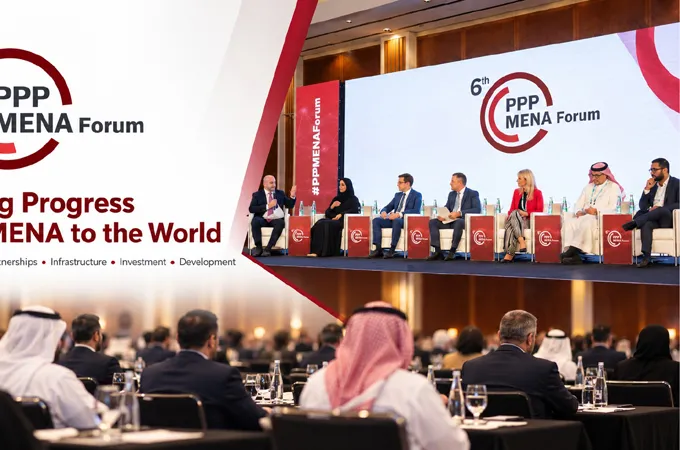
Against this backdrop, the 6th PPP Mena Forum 2026 kicks off
this month (November 10) at Palazzo Versace Dubai, bringing together the
government entities shaping project pipelines and the investors, developers,
lenders, contractors, operators and advisors positioned to finance and deliver
them.
Held under the theme “A New Era of Opportunity: Building a
Stronger, More Resilient Mena Through PPPs,” the two-day forum will focus on
the practical conditions required to move projects from policy and procurement
into bankable, investable and deliverable partnerships.
According to the organisers, the scope of PPP activity is expanding
well beyond the sectors traditionally associated with such partnerships.
While transport, power, water and utilities remain central
to the market, partnership models are increasingly being explored across
healthcare, education, housing, real estate, logistics, sports infrastructure,
culture and wider social infrastructure, thus reflecting the growing role of
PPPs in both economic and social development.
Among the largest projects is the AED25 billion Dubai
Strategic Sewerage Tunnels project, structured under a design, build, finance,
operate and maintain model.
A major focus of the Forum will be the evolution of
procurement and financing models, including project preparation, risk
allocation, bankability, contractual structures, and the role of innovation and
digitalisation in improving how projects are assessed, procured and delivered.
Regional case studies will provide practical perspectives on
what it takes to move complex projects from planning and financing through to
implementation.
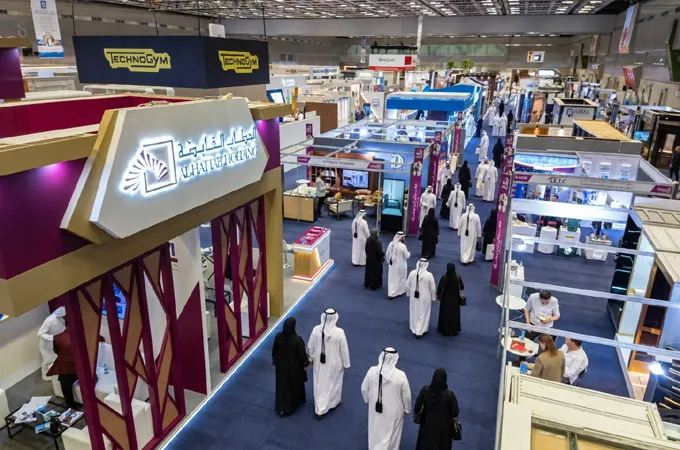
The scale of the Forum reflects the growing breadth of the
stakeholder ecosystem surrounding PPP development. More than 500 attendees are
expected to attend the event, including 150 government delegates, over 25 VIP
dignitaries and more than 70 expert speakers, alongside 15 government partners
and more than 50 sponsors and exhibitors.
The speaker and advisory line-up brings together senior PPP
and infrastructure specialists from regional and international markets,
including Andrew Thomas, Strategic Advisor PPP, WSP Middle East; Moustafa
Fahour OAM, Chief Executive Officer & Managing Director, Arada Capital;
Nasser Massoud, Founder & Managing Director, Concept Realisation and Chair
of the Social Sector PPPs Chapter at WAPPP; Nayef AlHaddad, Chairman of the
WAPPP Chapter for Middle East and North Africa; Mosaab R. Alburih, Chief Public
Private Partnerships Officer at Tatweer Buildings Company; and Dr Eyup Vural
Aydin, Chairman of the Istanbul PPP Center of Excellence.
Beyond policy dialogue, the 6th PPP Mena Forum is designed
to facilitate direct engagement between the institutions responsible for the
region’s infrastructure ambitions and the organisations capable of financing,
developing and delivering them, said the organisers.
As governments place greater emphasis on private-sector
participation, the Forum will examine where new opportunities are emerging,
what makes projects commercially viable, and how stronger public-private
collaboration can accelerate delivery across Mena, they added.