The United Arab Emirates (UAE) is stepping up preparations for sixth-generation (6G) communications, focusing on advanced network capabilities, artificial intelligence (AI), spectrum readiness and international collaboration as it looks towards the next phase of digital infrastructure development.
The country’s approach goes beyond preparing to deploy a new generation of wireless technology. It aims to contribute to the development of 6G itself, helping shape the standards, frequencies and applications that will define future networks.
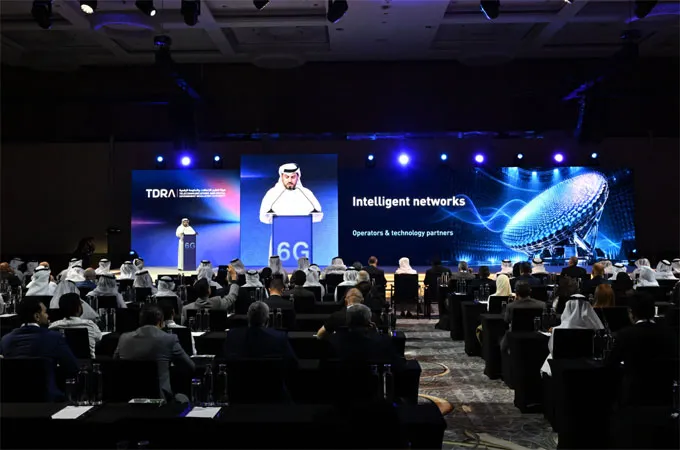
Eng Majed Sultan Al Mesmar, Director-General of the Telecommunications and Digital Government Regulatory Authority (TDRA), outlined this vision in his keynote address at 6G MENA 2026 – In the AI Era, in Abu Dhabi. He said the future of telecommunications would belong to those that anticipate technological developments, invest in them and help determine their direction.
He emphasised that the UAE views 6G as part of a broader transformation towards intelligent, flexible and secure digital infrastructure capable of supporting the economy, society and government.
Building the foundations for 6G
A central priority is preparing the technological and regulatory foundations needed to support next-generation networks. The UAE has already taken proactive steps through a forward-looking 6G roadmap, alongside advanced trials exploring the potential of higher-frequency spectrum.
Over five years, trials in the upper frequency range of the 6 GHz band have achieved speeds of up to 10 gigabits per second. These results provide valuable insights into the capabilities of advanced communications technologies and their potential role in future network development.
However, the objective is not simply to introduce faster connectivity. According to Al Mesmar, future networks must become more intelligent, secure and adaptable, responding to the evolving needs of individuals, businesses and national economies.
AI at the heart of next-gen networks
One of the key priorities for 6G development is the integration of AI into network design, operation and management. AI-native networks are expected to support more automated and adaptive infrastructure, improving efficiency, responsiveness and the ability to manage increasingly complex digital services.
These capabilities could help enable applications across smart cities, autonomous mobility, healthcare and industrial systems, where reliable, low-latency connectivity and intelligent coordination will be increasingly important.
Another priority is the development of integrated terrestrial and non-terrestrial networks, bringing together conventional communications infrastructure, satellites and direct-to-device connectivity. Such integration could extend coverage, improve resilience and support connectivity in areas that are difficult to reach through terrestrial networks alone.
Achieving these ambitions will require progress in spectrum planning, network security, resilience and internationally aligned technical standards.
A greater role in shaping global 6G standards
Al Mesmar stressed that 6G development must be a global undertaking, with meaningful participation from the Middle East and North Africa (MENA). The region, he noted, must contribute to shaping the technologies, spectrum frameworks, standards and use cases that will underpin future networks, rather than simply adopting solutions developed elsewhere.
This makes international cooperation and regional regulatory coordination important elements of the UAE’s approach. Discussions on spectrum availability, emerging technologies and common standards will help ensure that future networks address local market requirements and regional development priorities.