Saudi Arabia said its air defences intercepted and destroyed a Houthi drone south of Makkah before it could enter the prohibited airspace over the holy city, as the Kingdom faced a widening campaign of attacks by the Iran-aligned Yemeni group.
The drone was intercepted at 6:50 pm local time on Tuesday, the Saudi-led Coalition to Support Legitimacy in Yemen said. Coalition spokesman Major General Turki Al-Maliki said the Royal Saudi Air Defence Forces destroyed the aircraft south of Makkah before it entered the restricted zone around the holy city.
Al-Maliki described the incident as the second alleged Houthi attempt to target Makkah, following what Saudi authorities said was a ballistic missile launch towards the holy city in July 2017. He said the security of the Two Holy Mosques and pilgrims was a “red line” and warned that the coalition would take necessary and deterrent measures against the Houthis.
The incident came after Saudi Arabia activated emergency warnings in Makkah, Jeddah and Taif amid a sharp escalation in Houthi attacks. Tuesday's alerts in Makkah were reported to be the first such warnings during the latest escalation.
The latest attack adds a highly sensitive dimension to the conflict, with Makkah home to Islam's holiest sites and the focal point of the annual Hajj pilgrimage.
MBS meets Sisi
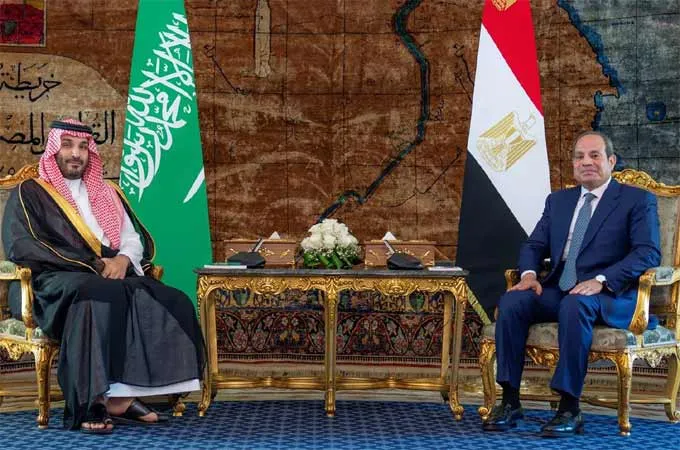
Against this backdrop, Saudi Crown Prince and Prime Minister HRH Mohammed bin Salman held talks with Egyptian President Abdel Fattah Al-Sisi in Cairo on Tuesday, with Red Sea security, freedom of navigation and regional stability featuring prominently in their discussions.
The two leaders reviewed Saudi-Egyptian strategic relations and discussed developments in the Middle East, particularly regional security, maritime security and freedom of navigation, according to the Saudi statement.
Al-Sisi reaffirmed Egypt's support for Saudi Arabia and other Arab states in confronting the current regional challenges and called for closer coordination between Cairo and Riyadh.
The meeting was particularly significant because the Houthis have been pushing to consolidate their control along Yemen's Red Sea coastline and around the Bab Al-Mandab Strait, one of the world's most important maritime chokepoints.
The renewed fighting has already disrupted shipping and threatens a key alternative route for Saudi oil exports at a time when the wider regional war has severely constrained traffic through the Strait of Hormuz.
Reuters reported that the Saudi-Egyptian discussions stressed the importance of maintaining freedom and security of navigation through the Bab Al-Mandab and Red Sea.
Riyadh warns of further action
Saudi Arabia's Cabinet subsequently condemned what it described as continued deliberate Houthi attacks against civilians and civilian infrastructure in the kingdom.
At a Cabinet meeting chaired by HRH Mohammed bin Salman in Jeddah, the Saudi government reaffirmed what it described as its right under international law to defend its sovereignty, territory, citizens, residents and vital interests.
The Crown Prince also briefed the Cabinet on a telephone call with Pakistani Prime Minister Shehbaz Sharif and on his meeting with US Central Command Commander Admiral Brad Cooper, with the latest regional developments among the issues discussed.
HRH Mohammed bin Salman had met Cooper in Jeddah on Monday, when the two sides reviewed bilateral relations and developments in the region.
Energy and shipping risks grow
The latest escalation is unfolding against an already severe disruption to regional energy flows. The Houthis' advance towards the Red Sea coast and Bab Al-Mandab has increased concern over the security of Saudi oil shipments, particularly after Saudi Arabia's East-West pipeline was taken offline following an attack.
The pipeline provides Saudi Arabia with an alternative route for moving crude to the Red Sea and bypassing the Strait of Hormuz. Its disruption comes as shipping through Hormuz has been sharply reduced by the wider US-Iran conflict, increasing the strategic importance of the Red Sea route.