Oil prices rose further on Tuesday as renewed Houthi attacks on Saudi Arabia added to growing concerns over energy supplies, with Brent crude gaining $1.58 to $107.30 a barrel and US West Texas Intermediate (WTI) rising $1.64 to $103.
The latest escalation came as Saudi Arabia accused Yemen's Iran-aligned Houthi militia of carrying out missile and drone attacks on civilian areas in the Kingdom, injuring 13 people and damaging homes and vehicles.
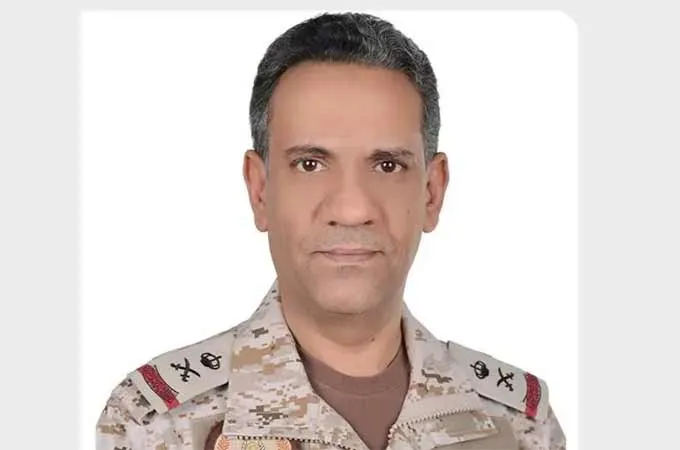
Saudi Arabia's official account of the attacks was issued by Major General Turki Al-Malki, spokesperson for the Coalition to Restore Legitimacy in Yemen. He said the Houthis had launched attacks on Monday against civilian areas in Khamis Mushait, Abha and Taif, using ballistic missiles and drones.
The attacks left 13 civilians with minor to moderate injuries, while seven homes and two vehicles were damaged, Al-Malki said. The Saudi authorities also issued emergency alerts in several areas as the attacks unfolded.
Al-Malki condemned what he described as the Houthis' "deliberate and repeated attacks" on civilian objects and civilians, saying the pattern demonstrated the group's "extremist ideology of escalation".
He said the coalition would respond "responsibly and firmly" to protect Saudi sovereignty, civilians and civilian infrastructure, invoking Article 51 of the UN Charter, the principle of self-defence and customary international humanitarian law.
"The Joint Forces Command of the Coalition will also take all necessary operational measures to deter this terrorist militia and confront its hostile and extremist approach," Al-Malki said.
The Houthis, meanwhile, claimed to have launched dozens of missiles and drones at military facilities around Khamis Mushait in southern Saudi Arabia, saying they had targeted aircraft hangars, radar systems, runways and ammunition depots in retaliation for Saudi airstrikes in Yemen.
The attacks mark a further expansion of the Yemen conflict at a time when the Houthis have been making rapid gains along Yemen's western coastline overlooking the Red Sea. Yemeni officials said Houthi forces were consolidating their positions along the coast, raising fresh concerns about the security of the Bab al-Mandeb Strait, one of the world's key maritime chokepoints.
The latest fighting comes against an increasingly fragile regional energy backdrop.
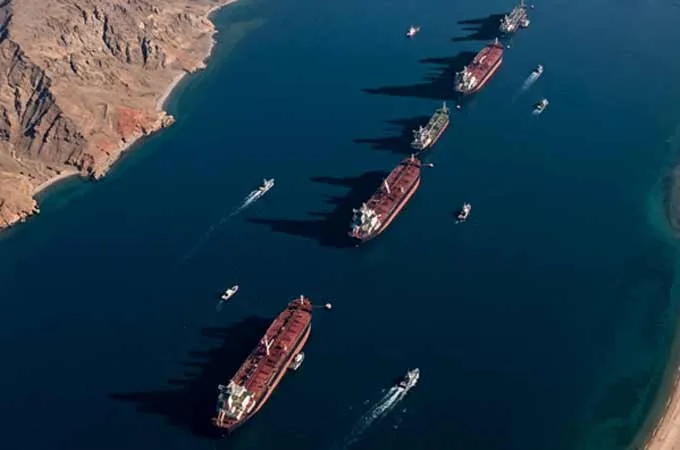
Saudi Arabia has temporarily shut its 1,200-km East-West oil pipeline, a critical alternative route for exporting crude from the Gulf to the Red Sea while traffic through the Strait of Hormuz remains severely disrupted. The pipeline can carry several million barrels of oil a day and normally allows Saudi Arabia to bypass Hormuz by moving crude to the Red Sea port of Yanbu.
The shutdown followed aerial attacks on the pipeline earlier this month. Saudi Arabia has described the closure as a precautionary measure, while reports have indicated significant damage to parts of the infrastructure.
The Houthis' growing presence along Yemen's Red Sea coast has also raised the prospect of renewed attacks on shipping through Bab al-Mandeb, the narrow passage connecting the Red Sea with the Gulf of Aden. Their recent territorial gains have brought them closer to another strategically important maritime route at a time when tanker traffic through Hormuz has already fallen sharply.
The renewed violence also presents a fresh challenge for US President Donald Trump, whose administration is already engaged in the wider conflict with Iran.
Reuters, quoting sources, reported that Washington has so far resisted Saudi requests for direct US military intervention beyond intelligence support. Trump said over the weekend that he had spoken with Saudi Crown Prince Mohammed bin Salman and that the Houthis had also contacted Washington, urging the United States to stay out of the Yemen conflict.
Saudi state media reported that Crown Prince Mohammed bin Salman met US regional commander Admiral Brad Cooper in Jeddah on Monday, underscoring the growing security coordination between Riyadh and Washington as the conflict spreads across the region.
The diplomatic track has also suffered a setback.
Gulf Arab states postponed planned talks with Iran, removing for now one potential channel for de-escalation as fighting intensifies across several fronts. The delay has heightened concerns that the conflict could broaden further, threatening not only regional security but also the oil and shipping infrastructure on which global energy markets depend.