The rapid expansion of solar photovoltaics (PV) is set to drive a sharp increase in decommissioned panels, highlighting the need for stronger circular economy practices to reduce waste and recover valuable materials, according to the International Renewable Energy Agency (Irena).
Solar PV currently accounts for about half of the world’s
total installed renewable energy capacity and is expected to remain central to
the global energy transition.
However, most solar projects have operating lifespans of 25
to 30 years, meaning a growing number of panels will reach the end of their
service lives in the coming decades.
Under Irena’s 1.5 deg C scenario, global end-of-life solar
PV panels are projected to exceed 25 million tonnes by 2050, equivalent to more
than 400 gigawatts (GW) of capacity.
Managing this volume will require significant logistics and
treatment infrastructure.
Irena estimates that collecting and processing end-of-life
panels over the next decade will require at least 120,000 heavy-duty truck
trips and more than 150 fully operational medium-sized treatment facilities.
The agency said adopting circular economy principles based
on reducing, reusing and recycling panels can help minimise waste while
creating economic opportunities through the recovery of valuable materials.
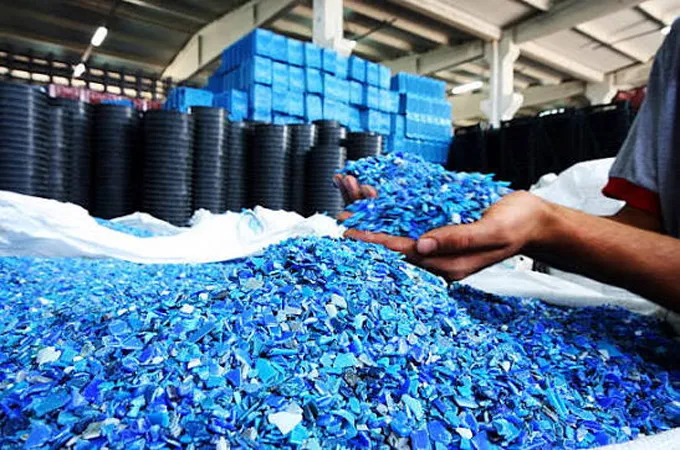
Current recycling technologies can recover more than 90 per
cent of materials from end-of-life solar panels, including copper, aluminium,
silver, silicon and glass.
With technological advances, recovery rates for valuable
minerals could approach 100 per cent.
Recovered materials can then be reintroduced into existing
markets and used to manufacture new industrial products.
Irena estimates that the annual market value of materials
recovered from end-of-life solar PV panels could reach $6 billion by 2040 and
exceed $20 billion by 2050.
The circular economy could also create jobs across
collection, repair, reuse and recycling activities.
Solar PV already accounted for 43 per cent of renewable
energy employment in 2024, representing more than 7.2 million jobs globally.
Irena noted that proper workforce training could generate
between 60 and 140 jobs for every 1,000 tonnes of materials collected for
e-waste reuse, based on research from a European social enterprise network.
In developing economies, circular economy activities could
also provide income opportunities for informal-sector workers.
However, the agency stressed that policies must address
potential health and safety risks, particularly for informal workers involved
in waste collection and recycling.
A just and inclusive approach should incorporate labour
protections, safety standards and environmental safeguards to ensure that the
economic benefits of solar PV recycling do not come at the expense of workers’
health.
Irena also highlighted the need for cooperation among
governments, industry, recyclers, workers and other stakeholders. Circular
economy strategies will need to reflect the economic structures and priorities
of individual markets while ensuring environmental and social objectives are
achieved.