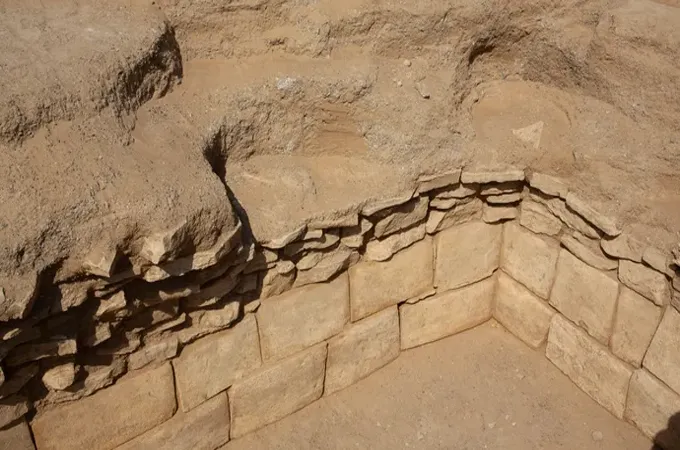
The Department of Culture and Tourism – Abu Dhabi (DCT Abu Dhabi) has uncovered a Late Bronze Age cemetery dating back to the Wadi Suq period (c. 2000-1300 BCE) at the Pre-Islamic Qattarah Necropolis in Al Ain.
The discovery provides new insights into ancient Arabian
Peninsula communities, their burial traditions and resourcefulness.
The excavated tomb, measuring around 11 by 2.5 metres, was
built using repurposed stone blocks from older Umm an-Nar funerary monuments
dating to c. 2700-2000 BCE.
The communal burial chamber was used for more than 1,000
years, containing the remains of hundreds of individuals along with pottery,
weapons and personal ornaments.
Archaeologists are conducting further studies, including DNA
and isotope analysis, to uncover details about ancient populations’ diets,
health, migration patterns and trade links.
DCT Abu Dhabi said the findings highlight Al Ain’s
significance as a UNESCO World Heritage Site and will eventually be displayed
in Abu Dhabi museums to showcase the UAE’s ancient heritage.
Mohamed Al Mubarak, Chairman of DCT Abu Dhabi, said: “The
unearthing of this tomb, spanning the Wadi Suq period and the Late Bronze Age,
offers a glimpse into the earliest chapters of the UAE’s rich history.
Dicoveries like these underscore the magnitude of our cultural legacy and the
importance of our commitment to its preservation and understanding. They deepen
our connection to the formative periods of our history and inspire future
generations to embrace the spirit of resourcefulness that has long defined our
community. As DCT Abu Dhabi continues its mission to safeguard the emirate's
diverse heritage, we reaffirm our dedication to uncovering and sharing the
stories of our land with the world.” -TradeArabia News Service