Oil prices surged on Tuesday, with Brent crude climbing above $85 a barrel for the first time in a month, as Iran's missile strike on two oil tankers and the United States' decision to reinstate a sweeping naval blockade of Iranian ports intensified a confrontation for control of the strategic Strait of Hormuz.
Brent crude rose more than 2% to trade above $85 a barrel after gaining nearly 10% on Monday, while US West Texas Intermediate (WTI) crude climbed to around $79.50 a barrel, extending the previous session's sharp rally.
The latest spike came after US President Donald Trump announced that Washington would resume its naval blockade of ships travelling to and from Iranian ports from Tuesday and introduce shipping fees on vessels transiting the Strait of Hormuz, marking a dramatic escalation in the US-Iran struggle for control of the waterway through which around a fifth of the world's oil supplies pass.
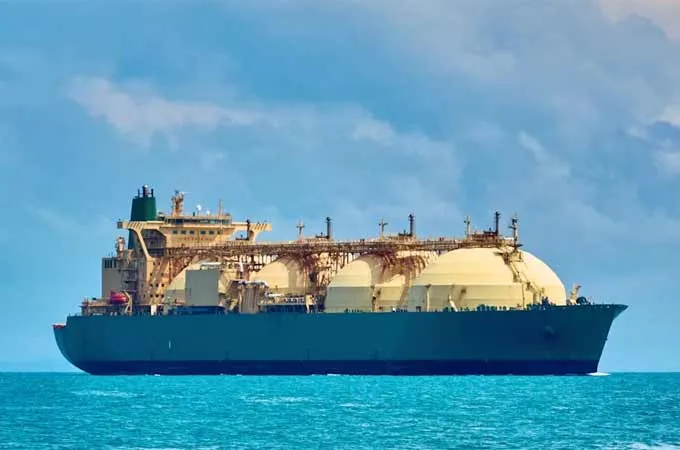
The market was further rattled after Iran struck two United Arab Emirates oil tankers - Al Bahiyah and Mombasa - with cruise missiles while they were transiting the southern shipping lane of the Strait of Hormuz in Omani territorial waters.
Indian crew member killed
The UAE strongly condemned what it described as an "Iranian hostile attack", saying one Indian crew member was killed and eight others were injured, including four seriously. The injured included six Indian nationals and two Ukrainians.
In a strongly worded statement, the UAE Ministry of Foreign Affairs said the attack was a flagrant violation of international law and UN Security Council resolutions protecting freedom of navigation.
"The targeting of commercial shipping and the use of the Strait of Hormuz as a tool of economic coercion or blackmail constitutes an act of piracy and poses a direct threat to regional stability and global energy security," the ministry said, urging Iran to cease hostilities and ensure the immediate and unconditional reopening of the waterway.
Iran's Islamic Revolutionary Guard Corps (IRGC) acknowledged striking two tankers, claiming the vessels had switched off their navigation systems, ignored warnings from Iranian authorities and attempted to pass through what it described as a "mined route." It did not identify the vessels.
Third day of attacks
The maritime attacks came as the ceasefire between Washington and Tehran effectively collapsed. US Central Command confirmed it carried out a third consecutive night of air strikes across Iran, targeting military facilities, coastal defence systems, missile and drone sites, and maritime infrastructure in Bandar Abbas, Bushehr, Chabahar, Jask, Konarak and the islands of Abu Musa, Kish and Qeshm.
CENTCOM said the operations were intended to further degrade Iran's ability to attack commercial shipping in the Gulf.
Iran responded by launching fresh missile and drone attacks across the region, including strikes on Bahrain. Air raid sirens sounded multiple times in the kingdom.
The conflict has also spilled into the wider region, with fresh exchanges between Saudi Arabia and Yemen's Iran-backed Houthi rebels, signalling the collapse of an informal truce.
Limited operation: Trump
Trump said the United States would ultimately control the Strait of Hormuz and described the military campaign as moving "very fast", while insisting it remained a limited operation despite expanding strikes.
In an interview with conservative radio host Hugh Hewitt, Trump said: “We’re going to hit them very hard tonight, and we’re going to hit them hard tomorrow.”
He also reiterated that countries benefiting from US military protection in the Gulf should compensate Washington.
"We're protecting a very rich portion of the world," Trump said. "We are going to be reimbursed for protection."
Shipping activity through the Strait of Hormuz has already begun to decline. Maritime tracking data showed the number of tankers transiting the waterway fell to its lowest level in two months as shipowners reassessed risks following the attacks and the renewed US blockade.