The durability of the US–Iran ceasefire and prospects for a permanent de-escalation are central to whether Gulf Cooperation Council (GCC) banking systems remain resilient to the impacts of the conflict, Fitch Ratings says.
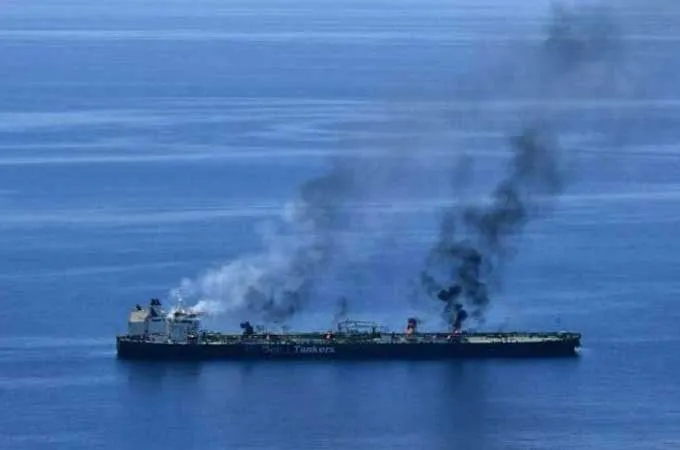
The June 17 Memorandum of Understanding (MoU) extended the ceasefire agreed on April 8 and set an extendable 60-day deadline for the US and Iran to reach a peace deal. It states that Iran should "make arrangements using its best efforts" to reopen the Strait of Hormuz to commercial shipping.
The MoU makes more extreme credit risks crystallising less likely and is aligned with Fitch’s working assumption that the strait’s closure would last around five months. But both sides have carried out military strikes since June 17, and prospects for a lasting peace remain uncertain, the report said.
GCC banks’ credit fundamentals have proved resilient to the conflict and can remain so in 2H26, assuming no resumption of military combat on a scale that could lead to lasting damage to key energy infrastructure or other GCC assets, or significantly prolong the closure of the strait.
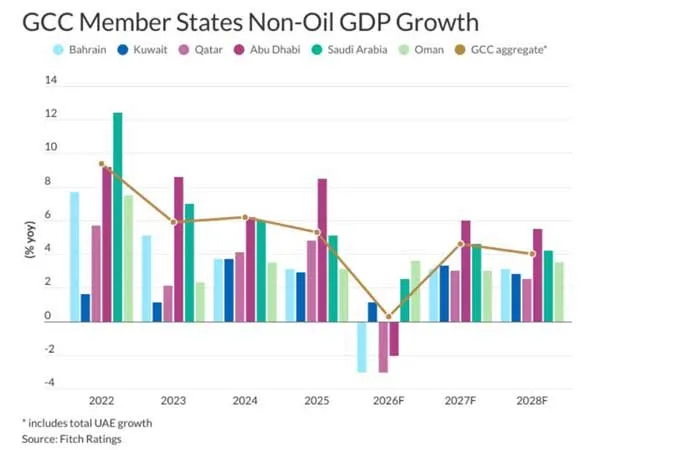
"If the ceasefire holds, effects on regional banks will mostly stem from the conflict’s second-round macro-economic effects, which are already being felt. We forecast non-oil GDP to contract in three of the six GCC member states this year, with only Oman forecast to post stronger non-oil growth than in 2025. Weaker non-oil growth will lead to lower loan growth than we anticipated at the start of 2026, contribute to moderate asset quality deterioration, and weaken profitability," the report says.
Adverse macro-economic impacts are reflected in Fitch’s ‘deteriorating’ sector outlook for Middle East banks, which we changed from ‘neutral’ in our mid-year update due to the US–Iran war. But they have not altered our view from the start of the conflict that GCC banking systems have good buffers against the resulting near-term credit risks.
GCC bank ratings are mostly driven by our expectations of sovereign support, and negative actions since the conflict began have been limited to Rating Watch Negative placements on Qatari banks affected by Qatar’s sovereign Rating Watch Negative.
The two main transmission channels from the conflict are asset quality and liquidity. Asset quality will be affected by weaker borrower performance in sectors including infrastructure, tourism, aviation, logistics, transport and real estate. Banks generally have limited exposure to tourism, and lending to small and medium enterprises, which may be less able than larger corporates to withstand asset quality pressures, is also a low share of total sector lending.
A deeper Dubai property market correction than we anticipated pre-conflict would likely put pressure on asset quality ratios, particularly at smaller UAE banks with higher real estate concentrations.
Funding and liquidity is a rating strength for the region’s banks, which are predominantly deposit-funded. Sticky government and government-related deposits account for 20%–30% of sector deposits. Moreover, after an initial pause in public debt issuance, market access has proven more resilient than initially expected at the start of the conflict, as seen in the recent resumption of some public issuance, particularly of subordinated instruments.
GCC banks have good reserve buffers, and forbearance will help them cope with the impact of the conflict, if necessary. We regard announced forbearance measures as preventative, intended to bolster confidence and limit the pass-through from temporary deposit volatility to lending to the real economy, not as reactions to acute banking stresses. This is consistent with the regional authorities’ strong record of support, it said.
"We expect the forbearance measures would be withdrawn if geopolitical conditions no longer justified them. However, general confidence in the region will remain a key consideration for the authorities. The war is likely to lead to a period of raised regional security risk in the Gulf region, and the longer-term effects on business environments and demographic trends are unclear," it says. -TradeArabia News Service
Contacts: