A new international report on sustainable energy progress has warned that the world remains significantly off track to achieve universal energy access by 2030, as major disparities persist between regions and financing gaps continue to hinder development.
According to Tracking SDG 7: The Energy Progress Report, 655
million people globally still lack access to electricity, while around two
billion continue to rely on polluting fuels and technologies for cooking,
exposing them to severe health risks.
Sub-Saharan Africa remains the most affected region, with
more than 560 million people without electricity and 970 million lacking clean
cooking solutions.
The report shows that while most regions are nearing
universal access, progress in Sub-Saharan Africa has slowed considerably.
It warns that the pace of electrification must triple to
achieve universal access by 2030, particularly in rural areas where the access
gap continues to widen.
Despite these challenges, the report highlights several
areas of progress in the global energy transition.
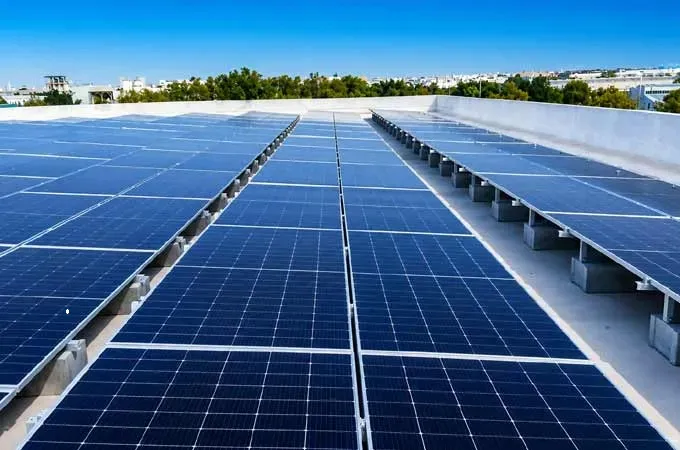
Renewable energy now accounts for over 30 per cent of global
electricity consumption, supported by record-installed capacity of 544 watts
per person.
International public financial flows for clean energy in
developing countries rose slightly to $24.6 billion in 2024, although funding
remains insufficient.
Energy efficiency also improved, reaching 3.76 megajoules
per US dollar, but at a pace still far below what is required to meet global
targets.
However, the report cautions that without urgent and
scaled-up action, the world will fall short of Sustainable Development Goal 7,
which aims to ensure affordable, reliable, sustainable and modern energy for
all.
It also notes that ongoing global energy market instability
could further strain progress and economic resilience.
Affordability remains a major barrier even where
infrastructure exists, with many households unable to cover connection costs or
basic energy services.
The report highlights the importance of targeted subsidies,
innovative financing models and least-cost electrification strategies to expand
access.
Clean cooking remains the largest energy gap, affecting
around two billion people globally.
Rural populations are disproportionately impacted, with only
56 per cent access compared to 89 per cent in urban areas.
Without stronger intervention, 1.8 billion people may still
rely on polluting fuels by 2030, contributing to an estimated 3 million
premature deaths annually due to household air pollution.
Renewable energy disparities also remain stark, with
low-income countries averaging just 33.6 watts of renewable capacity per person
compared to 1,224 watts in high-income countries.
Meanwhile, progress on energy efficiency is slowing, and
international financial flows to least developed countries fell to $3.7 billion
in 2024.
The report calls for stronger political leadership, improved
coordination and increased investment to accelerate clean energy deployment and
ensure no region is left behind in the global energy transition.
Dr Fatih Birol, Executive Director, International Energy
Agency, said: “Access to modern energy starts with two fundamentals: clean
cooking and electricity. Since 2010, 1.5 billion people have gained access to
clean cooking and 800 million have gained access to electricity, showing that
with the right policies, progress is possible. The IEA is working with
governments, industry and international partners to accelerate the investment
and policy action needed to achieve universal access worldwide, particularly
for clean cooking. While SDG7 is an energy goal, its benefits extend far beyond
the energy sector – improving health, expanding economic opportunity,
strengthening security and building more resilient communities.”
Francesco La Camera, Director-General, International
Renewable Energy Agency, said: “Recent global energy shocks have made one thing
clear: countries with strong renewable energy capacity are better positioned to
withstand economic and supply disruptions. Accelerating the deployment of
cost-competitive domestic renewables must now be central to strengthening both
energy security and economic resilience, while pursuing SDG 7. To achieve this,
the international community must prioritise affordable and tailored financial
support, particularly for least developed countries facing the greatest barriers
to access.”
Li Junhua, Under-Secretary-General for Economic and Social
Affairs, United Nations Department of Economic and Social Affairs, said: “We
have seen encouraging progress in expanding access to affordable, reliable and
clean energy in recent years. However, this year’s report shows that millions
of people still lack access, making clear that progress is not keeping pace
with the ambition of Sustainable Development Goal 7, and that disparities
across countries remain significant. The current global energy crisis presents
an opportunity to accelerate the transition to clean energy in support of
energy security. Seizing this opportunity will require substantial scaling-up
of international support and investment. We cannot afford complacency. The time
to act with greater urgency and ambition is now.”
Valerie Levkov, Vice President for Infrastructure,
World Bank Group, said: “Energy security and affordability have become global
priorities, and this will remain a defining challenge for years to come.
Electricity demand is growing rapidly, yet millions of people still live
without access to electricity, with Sub-Saharan Africa bearing the greatest
burden and missing out on opportunities for economic growth, jobs, and
development. We have the solutions to accelerate progress—proven technologies,
effective financing models, and strong partnerships—but constrained public
budgets mean we must also mobilize much greater private sector investment.
Working together, we can deliver reliable, affordable energy to the people who
need it most.”
Dr Tedros Adhanom Ghebreyesus, Director-General, World Health Organization, said: “Universal access to clean and sustainable energy is not merely an energy challenge; it is a fundamental health imperative. Household air pollution from cooking fuels costs millions of lives, causes long-term disease and disability, and harms our environment. It disproportionately burdens displaced populations and women and girls who spend hours gathering fuels, exacerbating inequality for the most vulnerable. Amid an unprecedented crisis in energy security, a transition to clean cooking is essential to promote health, gender equality, mitigate climate change and to reduce costs for households and governments.” -OGN/TradeArabia News Service