Global energy investment is projected to reach $3.4 trillion in 2026, a slight increase year-on-year, according to a new IEA report.
The 2026 edition of the IEA’s annual World Energy Investment report said around $2.2 trillion is expected to go to grids, storage, low-emissions fuels, nuclear, renewables, efficiency and electrification in 2026, while around $1.2 trillion is set to be invested in oil, natural gas and coal.
It noted that despite higher oil prices, oil investment is expected to decline for a third consecutive year in 2026, falling below $500 billion. The report finds that uncertainty over the duration of the price spike, long project lead times, supply chain constraints and tighter offshore rig markets are limiting near-term spending responses outside the Middle East.
At the same time, natural gas investment is projected to rise to $330 billion, the highest level in a decade, supported by a wave of new LNG export projects, particularly in the United States and Qatar.
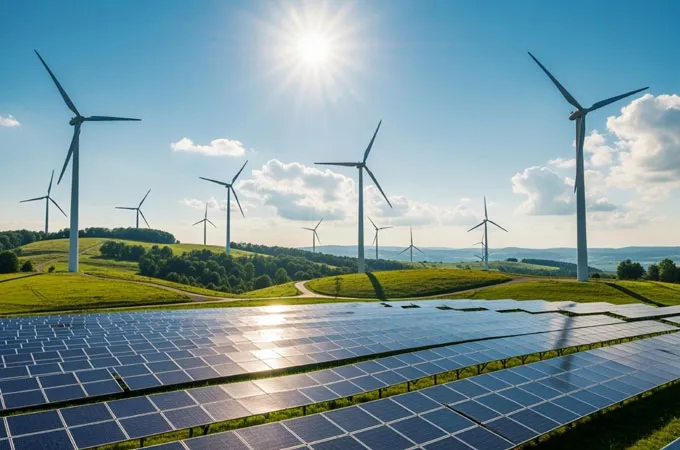
The report highlights growing interest among fuel-importing countries in energy sources available domestically including renewables, nuclear power and, in some cases, coal. Investment in renewable power projects is expected to total around $665 billion in 2026, with $365 billion going toward solar alone.
While annual investment growth in renewables has moderated following several years of rapid expansion, low-emissions sources still account for more than 70% of total power generation investment globally. Nuclear investment is continuing its resurgence, exceeding $80 billion annually, with close to 80 gigawatts of new nuclear capacity under construction across 15 countries.
Coal investment, meanwhile, is set to rise to $180 billion in 2026, the highest level since 2012, with China accounting for almost 70% of global coal supply spending. The report notes that some Asian countries affected by the current crisis may seek to keep existing coal-fired power plants operating for longer to bolster energy security.