Global energy demand grew at a slower pace in 2025 than the year before, but electricity consumption continued to rise much faster than overall demand – with solar PV becoming the largest contributor to growth in global energy supply for the first time, according to a new International Energy Agency (IEA) report.
The latest edition of
the IEA’s Global Energy Review provides a comprehensive
global assessment of trends across the energy sector in 2025.
Based on the latest
data, it covers energy demand, electricity generation and use, energy
technology deployment, and energy-related carbon dioxide (CO2) emissions.
The report shows that
overall global energy demand growth slowed to 1.3 per cent in 2025, slightly
below the previous decade’s average of 1.4 per cent and significantly lower
than in 2024.
The main reasons for
this slowdown were lower global economic growth, less extreme temperatures in
some regions, and rapid uptake of more efficient technologies.
At the same time,
global electricity demand increased by around 3 per cent – well over twice the
rate of overall energy demand growth.
Although electricity
demand growth was slower than in 2024, reflecting factors such as lower cooling
demand in India and Southeast Asia amid less severe heatwaves, it remained
above the average of the past decade.
Electricity demand
growth was driven by multiple sectors across buildings and industry – and
boosted by fast-growing demand from electric vehicles and data centres.
All major fuels and
technologies expanded to meet rising demand, but at very different rates. Solar
PV was the single largest contributor to growth in global energy supply in
2025, accounting for more than 25 per cent of the increase – the first time on
record that a modern renewable source has led global primary energy supply
growth.
Natural gas took the
next largest share, at 17 per cent, reflecting its role in power generation in
many countries.
Overall, renewable
sources and nuclear met nearly 60 per cent of all growth in energy demand – and
power generation from these sources exceeded total growth in electricity
demand.
Global oil demand rose
by 0.7 per cent, in line with IEA projections. This reflected continued growth
of electric vehicles, which constrained demand for road fuels.
Electric car sales in
2025 increased by over 20 per cent to more than 20 million units – making
up around one in four new car sales worldwide.
Strong renewables growth reduced coal use in
power generation in China, while coal demand increased in the US as high natural gas
prices drove gas-to-coal switching in electricity generation.
Overall, the rate of
coal demand growth slowed in 2025.
“Global energy demand
continued to increase in 2025 against a complex economic and geopolitical
backdrop, with one trend unmistakeable: the expanding electrification of
economies,” said IEA Executive Director Fatih Birol. “Electricity
consumption is growing much faster than overall energy demand – and one energy
source is growing much faster than any other. Solar PV accounted for over a
quarter of all of the world’s energy demand growth – more than any other
source, for the first time – followed right after by natural gas. In today’s
rapidly shifting landscape, countries that prioritise resilience and
diversification will be best placed to manage volatility and deliver secure and
affordable energy in the years ahead.”
Beneath the global
totals, trends diverged sharply across major economies. Energy demand
growth in the United States rose to its second-highest level this century –
excluding post-recession recovery years – boosted by strong electricity demand
from data centres, robust industrial activity and also colder winter
temperatures.
Meanwhile, China
accounted for the largest overall share of global energy demand growth last
year, but its growth rate dropped sharply to 1.7 per cent as renewables
displaced coal, which is less efficient, and broader energy efficiency gains
strengthened.
At the same time,
growth in global energy-related CO2 emissions slowed in 2025, rising by
around 0.4 per cent. According to the report, China’s emissions declined
in 2025, supported by a surge in renewables and other low-emissions
technologies.
India’s energy-related
CO2 emissions were flat for the first time since the 1970s – excluding the
Covid-19 pandemic – with the effects of an unusually strong monsoon season
playing a significant role in curbing emissions growth.
By contrast, in
advanced economies, an especially cold winter pushed fossil fuel use and
emissions higher.
Taken together, these
developments meant that emissions from advanced economies grew faster (+0.5 per
cent) than those from emerging and developing economies (+0.3 per cent) for the
first time since the 1990s.
In the electricity
sector, the additional 600 terawatt-hours of solar PV generation worldwide in
2025 marked the largest structural increase ever recorded in a single year for
any electricity generation technology, contributing to a decline in coal-fired
electricity generation globally.
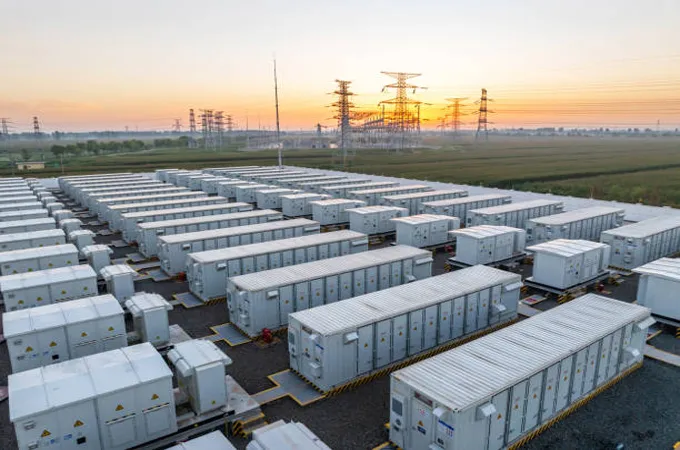
Battery storage was
the fastest-growing power sector technology in 2025.
The roughly
110 gigawatts of new battery storage capacity added during the year
exceeded the largest-ever annual capacity additions for natural gas.
Meanwhile
over 12 gigawatts of nuclear power reactors began construction in
2025, amid renewed momentum for nuclear projects in several regions.
Cumulative deployment
of low-emissions technologies since 2019 now avoids annual fossil fuel
consumption equivalent to the entire energy demand of Latin America.
In the aggregate, use
of technologies such as solar PV, wind power and heat pumps now displaces
natural gas demand equivalent to half of all global annual LNG exports. -OGN/TradeArabia News Service