Oman Airports, Oman Air, and SalamAir revealed during a joint media briefing held today in Muscat that they achieved positive performance in 2025.
This performance was
driven by revenue growth, enhanced operational efficiency, and the expansion of
destination networks and services, reflecting the entry of Oman's aviation
ecosystem into a new phase of growth and strengthening its presence on the
regional and international aviation map, reported Oman News Agency.
The three companies
emphasised that their strategic roadmap for the 2026–2030 period focuses on
building an integrated aviation ecosystem that supports sustainable growth and
enhances global connectivity, contributing to solidifying the Oman's position
as an emerging regional hub in the aviation and tourism sectors.
Said Al Maawali,
Minister of Transport, Communications and Information Technology, stated in his
speech during the briefing that the aviation sector is a key pillar for
achieving the objectives of Oman Vision 2040 and undertakes a crucial role in
enhancing the competitiveness of the Omani economy regionally and globally.
He clarified that the
government is working with a strategic vision to rebuild the aviation sector
and boost its competitiveness.
He stated that the
transformation plan, since its inception in September 2023, has brought about a
qualitative shift in cost control, performance improvement, productivity
enhancement, and financial revenue optimisation.
He confirmed that Oman
Air achieved operating profits in 2025 for the first time in approximately 15
years and reduced the level of government-guaranteed debt by roughly RO 92
million ($239 million) since the beginning of the transformation plan in
September 2023.
Al Maawali pointed to
the improvement in operational efficiency and the strengthening of
international confidence in Omani capabilities.
Oman Airports expanded
regionally by providing operational and consultancy services for the Karbala
Airport project in Iraq.
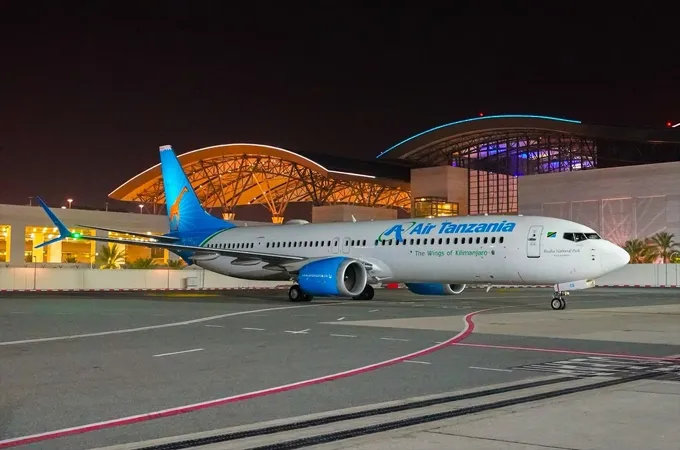
Furthermore, Transom
expanded internationally by delivering air cargo, ground handling, and
hospitality services in Tanzania.
Meanwhile, Oman Air
joined the "Oneworld" alliance, granting it access to over 900 global
destinations, and five new destinations were launched.
Regarding the Muscat
Airport City project, he explained that work has commenced on this project as a
cornerstone for transforming Oman into a regional air logistics hub, in
cooperation with several entities.
Several projects are
currently in the establishment and construction phases, such as storage and air
cargo facilities.
He noted that the
project will broaden the economic scope of the aviation sector beyond flights
and passengers, providing an integrated environment that combines logistical,
commercial, and tourism services within a single interconnected ecosystem.
He added that the
government's acquisition of SalamAir comes within the framework of a strategic
direction aimed at reorganising the aviation sector and enhancing its
competitiveness on sound foundations.
He affirmed that both
Oman Air and SalamAir will continue to operate independently, administratively
and financially, retaining their respective fleets and commercial activities.
The performance of
both companies will remain subject to the oversight of the Civil Aviation
Authority to ensure competitiveness and consumer protection.
Travel destinations
for each company will be managed and promoted while adhering to their
respective classification frameworks: SalamAir as a low-cost carrier and Oman
Air as a full-service carrier.
This is in addition to
working toward integration to expand the national air connectivity network and
increase the number of destinations and passengers.
During the briefing,
the Minister of Transport, Communications and Information Technology announced
that work is underway to establish the first integrated aircraft maintenance
workshop.
Efforts are also
ongoing to establish and develop a domestic aviation network connecting the
governorates, as well as to build and upgrade several domestic airports,
particularly in tourist areas such as Al Jabal Al Akhdar, Masirah Island,
Sohar, and other locations across the governorates of Oman.
He emphasised that
these airports and the domestic aviation network will enhance internal air
connectivity, open new horizons for the tourism sector, and bring essential
services closer to citizens, in addition to paving the way for future
connecting routes with nearby regional and international areas.
The Minister added
that the focus in the upcoming phase is on enhancing financial sustainability,
increasing growth, and expanding regionally and internationally. The aviation
sector is expected to undertake a vital role in enabling the growth of economic
diversification sectors, such as tourism and logistics, and in strengthening
Oman's position as a regional and international destination for travel and
tourism, as well as a gateway for logistical services.
Al Maawali emphasised
that Oman has undertaken a positive role
amidst the impacts of current geopolitical conditions on the region's aviation
and port sectors.
This was achieved by
ensuring the continuity of supply chains across the region and facilitating air
traffic for passengers through an increased number of flights and accommodating
a large number of airlines and private jets.
Regarding prices on
the Salalah–Muscat route, he indicated that Oman Air fares for Muscat–Salalah
reached RO 54 during the Khareef Dhofar season and RO 64 year-round.
As for SalamAir's new
fares for the Muscat–Salalah route, they reach RO 9.99 for a one-way trip
without luggage, RO 18.99 as the lowest one-way fare with a 20-kilogram bag, RO
27.99 as the lowest round-trip fare without luggage, and RO 35.99 as the lowest
round-trip fare with a 20-kilogram bag.
For his part, Saud Al
Hubaishi, Chief Operating Officer at Oman Airports, stated that the company
recorded growth in passenger traffic, reaching approximately 15.2 million
passengers across various airports in the Oman, alongside a 4 percent increase
in air cargo volumes.
This performance is an
indicator reflecting the growing demand for travel and the enhanced efficiency
of operational processes.
He added that Oman
Airports continued to support the expansion of its route network by attracting
new airlines and deepening partnerships with existing carriers.
In addition, the
company advanced the development of strategic destinations in coordination with
Oman Air, contributing to connecting Oman with more regional and international
markets.
On his part, Con
Korfiatis, CEO of Oman Air, explained that the company achieved positive
results within the comprehensive transformation programme launched in 2023.
The airline reported
an EBITDA of approximately RO 3.2 million for 2025, positive for the first time
in 15 years.
The airline also achieved
an RO 27 million reduction in bank loans, marking the first decline in debt
levels since 2009.
He noted that the
company carried nearly 5.8 million passengers in 2025, an increase of 7 percent
over 2024, achieving an 82 percent load factor and a year-on-year growth in
direct (point-to-point) travel traffic of 34 percent.
He emphasised that
these results were achieved thanks to strategies optimising the network and
maximising fleet utilisation efficiency.
The CEO of Oman Air
stated that the airline witnessed significant expansion in international
destinations in 2025 through the launch of direct routes to Amsterdam, Baghdad,
Copenhagen, and Taif, in addition to a new direct route connecting Salalah and
Moscow.
This is alongside the
announcement of 5 additional routes for 2026. He explained that the airline
currently serves 45 destinations with a fleet of 33 aircraft, which is planned
to grow to 39 aircraft by 2029.
Adrian Hamilton-Manns,
CEO of SalamAir, stated that the company continues to reinforce its role as the
national low-cost carrier, recording strong operational and financial
performance in 2025.
The airline
transported more than 3.4 million passengers and operated over 22,000 flights
across a network comprising more than 40 destinations, maintaining an on-time
performance rate of 83 percent.
He pointed out that
SalamAir generated approximately RO 137 million in revenue during 2025,
reflecting its role in supporting the aviation and tourism sectors, and
enhancing air connectivity through expansion into new markets in Africa, Asia,
and Europe.
The SalamAir CEO
explained that the airline's expansion plans included entering emerging markets
in Africa, Asia, and Europe, introducing destinations such as Port Sudan,
Nairobi, Kigali, Vienna, and Medan.
This was alongside executing plans to expand the fleet to 18 aircraft in 2026 and 25 aircraft by 2028, to support plans for growth and expansion of the operational network.