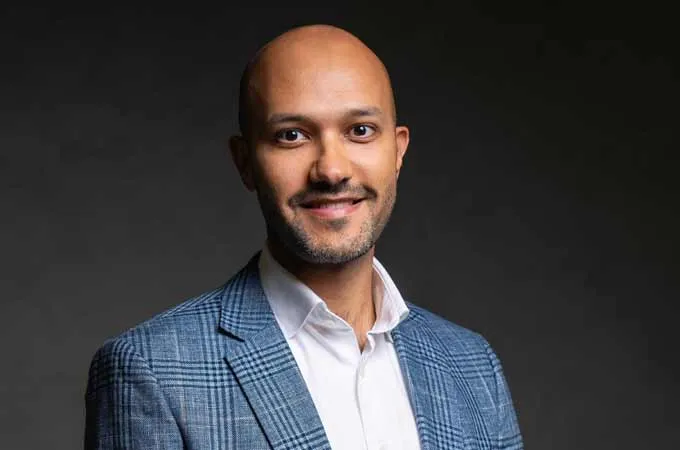
Markets are already beginning to trade as if the Iran conflict will de-escalate — even though there is no formal resolution yet, says the CEO of one of the world’s largest independent financial advisory and asset management organisations.
Nigel Green of deVere Group’s warning comes as oil prices slipped back below $90 a barrel, from $120 at its peak, after comments from US President Donald Trump suggesting the war with Iran could end “very soon,” although he indicated to reporters the conflict would likely continue beyond the coming week.
The shift in sentiment rippled quickly across global markets.
US stocks closed higher, with the S&P 500 and Nasdaq both gaining ground as investors moved back into risk assets.
Asian markets followed the move in early trading, with major indices in Japan, South Korea and Hong Kong rebounding after several sessions of caution driven by conflict fears.
The reaction across asset classes suggests investors are already positioning for a cooling of tensions in the Middle East, even though there has been no diplomatic breakthrough and fighting rhetoric continues on both sides.
“Markets are beginning to trade the end of the conflict before it has actually happened,” says Green. “Oil dropping back below $90 and equities pushing higher tells us investors are already pricing a scenario in which tensions cool and supply disruptions remain limited.
“Financial markets are extremely forward-looking but, in situations like this, they can move ahead of geopolitical reality.”
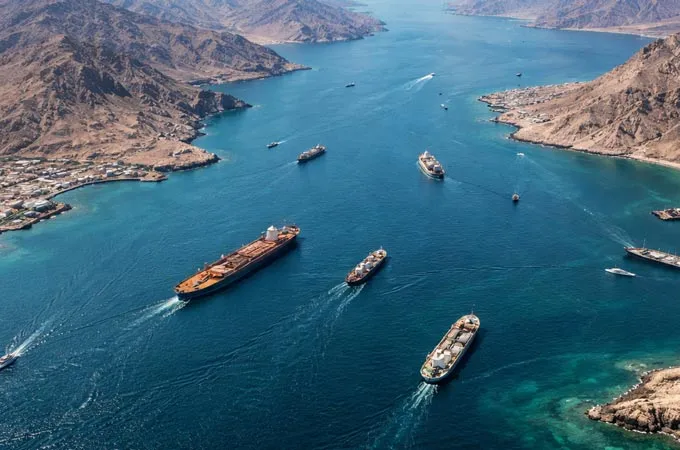
Energy markets, in particular, have been highly sensitive to the conflict because of Iran’s central role in global oil supply. Iran produces roughly 3.2 million barrels of oil per day and sits close to the Strait of Hormuz, the narrow shipping corridor through which around 20% of the world’s oil consumption passes.
Any threat to that route drives rapid spikes in crude prices. Earlier stages of the conflict pushed traders to price in the risk of supply disruption, lifting Brent by more than 12% in a matter of days before the latest reversal.
The speed of the price swing illustrates how quickly geopolitical risk premiums can build and disappear in modern energy markets.
Green says the market response also shows how political signalling now plays a powerful role in shaping investor expectations.
“A single set of comments from the US President was enough to send oil sharply lower and equities higher,” he notes.
“Markets interpret political messaging almost instantly, often adjusting prices well before the underlying situation has materially changed.”
However, the strategic outlook remains uncertain.
Iran’s Islamic Revolutionary Guard Corps responded forcefully to Trump’s remarks, stating that the end of the war is “in Iran’s hands.”
The statement highlights the reality that the conflict’s trajectory will ultimately depend on decisions made in Tehran as much as in Washington.
The deVere CEO says investors could also be underestimating the significance of a major political shift inside Iran.
“Markets may be underestimating the influence and decision-making approach of Iran’s new Supreme Leader, Mojtaba Khamenei, and his willingness for a longer war to drain American financial and military resource, and those of its allies,” he notes.
“Leadership transitions inside the Iranian system can reshape strategic thinking, military priorities and diplomatic positioning.
“The global investment community has limited experience of how the new Iranian leadership will respond moving forward.”
The Supreme Leader holds ultimate authority over Iran’s armed forces and the Islamic Revolutionary Guard Corps, meaning key decisions around escalation or restraint flow directly through that office.
Uncertainty surrounding the new leadership structure introduces an additional variable that markets may not yet be fully pricing.
Green adds that the broader geopolitical backdrop has become markedly more unstable in recent weeks, creating conditions where sudden shifts in sentiment can trigger sharp market moves.
“Whatever happens next in this conflict, the global environment has become significantly more unstable and more volatile in a short period of time,” he explains.
“Markets might currently be leaning toward a de-escalation scenario, but investors need to remember how quickly geopolitical realities can change.”
He points out that global investors are increasingly responding to political signals, military developments and diplomatic messaging in real time.
Algorithmic trading systems and high-speed information flows mean geopolitical developments now feed directly into asset pricing within minutes.
The deVere CEO concludes: “The reality is that markets often move first and verify later. Current price action suggests investors believe the worst escalation risks are limited.
“However, if events unfold differently, markets would be forced to reassess those assumptions very quickly.” - TradeArabia News Service