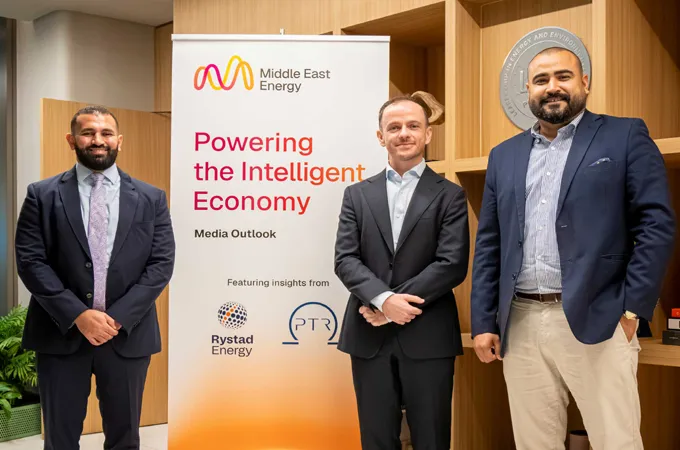
Middle East Energy has hosted its Middle East Energy Outlook roundtable in Dubai, bringing together media representatives, industry experts and knowledge partners to examine the growing UAE–Asia energy corridor and its role in strengthening global energy resilience and developing future-ready power infrastructure.
The discussions focused on rising electricity demand,
increasing pressure on power infrastructure and the need for more resilient
supply chains as countries across the Middle East and Asia expand generation
capacity and modernise their electricity networks.
The roundtable explored how stronger commercial partnerships
between the UAE and Asian manufacturers could help address regional
infrastructure requirements by improving access to reliable equipment,
manufacturing capabilities and technical expertise. It also examined
opportunities for regional investors and project developers to benefit from
closer cooperation with Asian technology providers and suppliers.
Mark Ring, Group Director at Middle East Energy, joined
Hassan Zaheer, Managing Partner and Chief Operating Officer at PTR Inc., Amr
Mahmoud, VP - Supply Chain Research, MENA, and Nishant Kumar, Senior Renewables
and Power Analyst, MENA, both at Rystad Energy, to discuss developments shaping
power infrastructure, generation investment and regional energy security.
Opening the discussion, Ring highlighted the importance of connecting
investment, manufacturing and infrastructure to meet the changing requirements
of the global energy sector.
Mark Ring, Group Director at Middle East Energy, said:
"The future of the energy sector will depend on how effectively we connect
the different parts of the power value chain, from generation and transmission
to distribution, storage and supporting technologies. The UAE–Asia corridor
presents significant opportunities to strengthen these connections, bringing
together Asian manufacturing capabilities, regional investment and the
expertise needed to deliver future-ready infrastructure. Through Middle East
Energy, we aim to facilitate these partnerships and provide a platform for the
industry to explore the solutions and collaborations that will support its next
phase of growth."
Rising power demand drives infrastructure investment
The roundtable examined how industrial expansion, growing
digital infrastructure and the electrification of economic activities are
increasing electricity consumption across the Middle East and Asia. These
developments are creating greater demand for reliable generation, transmission
and distribution capacity.
Particular attention was given to the contribution of Asian
manufacturers and technology providers in supporting regional infrastructure
development. Middle East Energy 2026 demonstrated the scale of these
capabilities through the participation of Chinese companies, including TBEA and
China Electrical Equipment Group, alongside Indian manufacturers such as
Kirloskar, Axelon Cables and Powerinst.
Their participation showcased expertise across power
transmission and distribution, transformers, cables, switchgear, renewable
energy and electrical infrastructure, while highlighting opportunities for
investment and partnerships with UAE stakeholders.
Hassan Zaheer shared insights into the equipment, software
and technologies required to develop more resilient and future-ready power
grids. He highlighted the importance of securing reliable suppliers across
Asian markets, particularly India and China, and creating stronger connections
between manufacturers and regional investors.
Hassan Zaheer, Managing Partner & COO at PTR Inc., said:
"Building resilient and future-ready power grids requires more than
investment in infrastructure. Alongside network expansion, access to reliable
equipment manufacturers, advanced technologies, software and resilient supply
chains will be increasingly important. Asia, particularly markets such as India
and China, offers significant manufacturing and technology capabilities that
can support the UAE's evolving infrastructure requirements. Stronger
collaboration between these markets creates an opportunity for UAE investors
and industry stakeholders to connect with suppliers to bring innovative
solutions into the region."
The discussion also highlighted the growing importance of
grid modernisation as electricity systems become more complex and incorporate
changing energy sources. Advanced equipment, digital technologies and
dependable supply chains will be essential to expanding network capacity and
improving operational reliability.
Renewables and the changing energy mix
Rystad Energy contributed a broader outlook on renewable
energy and power generation, examining developments shaping the energy mix
across the UAE, the wider Middle East and Asian markets.
The presentation considered the evolving role of renewable
energy in meeting future electricity demand, the expansion of generation
capacity and investment opportunities across the energy value chain.
Participants discussed how renewable deployment, alongside conventional power
sources and supporting infrastructure, will influence the development of
regional electricity systems.
Amr Mahmoud, VP - Supply Chain Research, MENA at Rystad
Energy, said: " The current geopolitical climate has resulted in regional
players seeking resilience through infrastructure consolidation, asset
diversification and local supply chain strengthening. Digitalisation and AI
will also play a key role in how this resilience will be navigated."
Nishant Kumar, Senior Renewables and Power Analyst, MENA at
Rystad Energy, highlighted the strategic importance of cooperation between
Asian manufacturing centres and Middle Eastern investment markets.
He said: "The UAE-Asia corridor is emerging as a
critical axis for the region’s energy transition, not just as a demand story,
but also as a capital and supply chain story. Power demand across the Middle
East and Asia is set to grow sharply over the coming decades, and meeting it
will require sustained investment across the full value chain, from generation
to storage to grid infrastructure. At the same time, Asia’s manufacturing and
engineering base, particularly in China and India, continues to underpin the
cost competitiveness of solar, battery and grid technologies being deployed
across the region. The UAE’s position at the intersection of these flows,
capital moving in both directions, equipment and technology moving from Asian
manufacturing hubs into regional projects and a strategic location connecting
markets - supports the development of more resilient regional energy system.”
The discussions underlined the UAE's growing role as a
strategic gateway connecting Asian manufacturing capabilities with investment
opportunities and infrastructure development across the Middle East and
international markets.
Asia offers an established base of equipment manufacturers,
technology providers and energy suppliers, while the UAE provides access to
regional markets, capital and international partnerships. Strengthening these
connections is expected to support the delivery of large-scale energy projects
and improve supply chain resilience.
Middle East Energy 2027 to build on industry dialogue
The Middle East Energy Outlook roundtable forms part of the
event organiser's ongoing engagement with manufacturers, utilities, investors
and technical experts on developments shaping electricity markets.
The discussions also provide context for Middle East Energy
2027, scheduled to take place from 11–13 May 2027 at Dubai Exhibition Centre,
Expo City Dubai, following 50 years at Dubai World Trade Centre.
The exhibition will bring together international
manufacturers, suppliers, buyers and energy decision-makers across power
generation, transmission and distribution, energy efficiency and storage.
Its relocation to Dubai Exhibition Centre will provide an
expanded setting for companies to develop partnerships, showcase technologies
and explore business opportunities in response to the Middle East's growing
electricity infrastructure requirements.
The event is expected to continue facilitating international industry collaboration as governments and businesses invest in modernising power networks, expanding renewable energy capacity and developing more resilient energy systems. -OGN/TradeArabia News Service