Global hospitality leaders remain optimistic about the industry's growth prospects through 2027 despite geopolitical instability and other external challenges, with international travel, artificial intelligence (AI) and customer loyalty expected to reshape the sector, according to a new survey by Global Hotel Alliance (GHA).
The annual report, Growth,
Disruption and the Forces Reshaping Global Hospitality, which gathered
responses from 30 hotel brand CEOs worldwide, found that 67% of respondents are
optimistic about the global hospitality industry through 2027.
Four in five expect like-for-like hotel
revenues to increase next year, while 47% forecast growth of at least 5%.
However, geopolitical
instability and conflict remain major concerns, with 90% identifying them as
among the biggest external challenges facing their businesses over the next
five years.
“We are operating in
an uncertain geo-political environment but, as an industry, we have learned to
stay agile and adapt to changing circumstances. And, most importantly, the
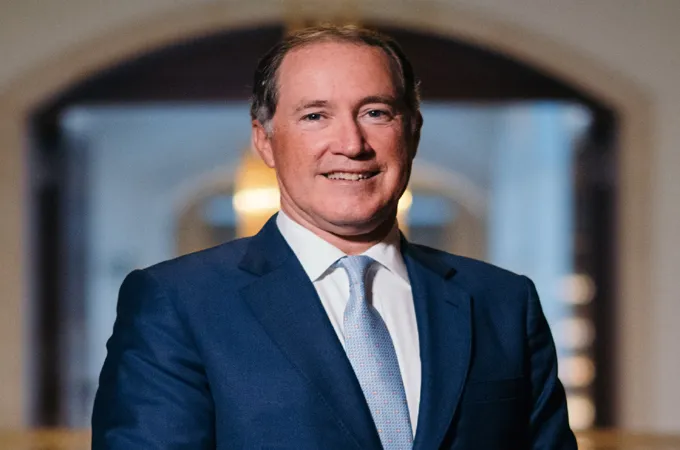
travel community is proving more resilient, and so we remain optimistic,” said Chris
Hartley, CEO of Global Hotel Alliance. “International travel demand is rising,
particularly in the leisure segment, and the strength of our alliance – driven
by our loyalty platform, GHA DISCOVERY – positions our brands to capitalise on
this momentum, particularly as many emerging growth markets are yet to reach
their full potential.”
Hartley discussed the
report's findings during a panel discussion in London last month with Simon
Naudi, Group CEO of Corinthia Hotels; Gonzalo Aguilar, CEO of Minor Europe and
The Americas; and Choe Peng Sum, CEO of Pan Pacific Hotels Group.
International
travel and emerging markets drive growth
The survey highlights
international travel as a major growth driver for the hospitality sector in
2027. Around 73% of CEOs expect international travel to outperform domestic
demand, while 90% anticipate an increase in international leisure travel.
Eight in ten also expect growth in bleisure
travel, which combines business trips with leisure activities.
The United States
remains the market most widely expected to generate international travel
growth, cited by 53% of respondents.
India follows closely
at 50%, while China and the United Kingdom are both identified by 40% of CEOs.
The Middle East accounts for 37%, followed by Southeast Asia at 30%.
India's growing
importance reflects its expanding economy and outbound travel market, with
increasing numbers of travellers seeking international experiences.
“The US accounts for
around one-third of our customers and will continue to be a key market for
Corinthia,” said Simon Naudi, Group CEO Corinthia Hotels. “At the same time, we
see significant growth opportunities in Asia, particularly in India and China,
where rising numbers of affluent travellers are looking to Europe as a
destination.”
Regional findings also
indicate differences in expected travel demand. Among Asia-Pacific operators,
India and Southeast Asia are the leading anticipated source markets, both cited
by 64% of respondents, followed by China at 55%.
In Europe, the United
States leads at 77%, while hotel operators in the Middle East and Africa
identify India and the United Kingdom as their leading international growth
markets, both at 56%.
AI expected to
reshape hotel bookings
Artificial
intelligence is expected to significantly change how travellers discover,
select and book accommodation, with 87% of surveyed CEOs predicting that AI
assistants will be among the most influential hotel-booking channels by 2030.
This places AI
assistants ahead of hotel brand websites and applications, cited by 50% of
respondents, loyalty platforms at 47% and online travel agencies (OTAs) at 30%.
Traditional search engines are expected to account for just 10%.
The findings suggest
that hotel-owned digital channels and loyalty platforms could become
increasingly important as AI-driven travel discovery develops, allowing
operators to convert recommendations into direct bookings and build stronger
relationships with customers.
“Our brand CEOs expect
hotel-owned digital channels and loyalty platforms to carry considerably more
influence than OTAs by 2030. That suggests direct channels could become even
more important in converting AI-driven discovery into bookings and building a
relationship with guests beyond the initial transaction”, added Hartley.
Beyond bookings, AI is
expected to influence several areas of hotel operations. Marketing and
personalisation lead the list, cited by 73% of CEOs, followed by revenue
management at 67%, distribution at 60% and internal productivity at 60%.
Overall, 90% of
respondents believe AI will either fundamentally reshape hospitality or have a
positive impact on the industry.
Gonzalo Aguilar, CEO
of Minor Europe and The Americas, said: “Technology, including AI, gives us the
opportunity to take repetitive tasks away from our teams and allow them to
focus on what matters most: looking after our guests. Ultimately, hospitality is
about service and human connection. The hotels that use technology to make the
guest experience more seamless while giving their teams more time to deliver
personalised service will be best positioned for the future,”
Despite the growing
influence of technology, destination and location remain the leading factors
expected to influence hotel booking decisions in 2030, cited by 70% of
respondents. AI recommendations follow at 67%, while experiences and events
account for 63%.
Loyalty emerges as
a key growth opportunity
Customer loyalty and
direct relationships are also emerging as important priorities for hotel
operators, particularly independent brands seeking to strengthen their
competitiveness.
The survey found that
83% of CEOs consider loyalty critical or very important to revenue growth over
the next three years. Looking further ahead, 67% identified loyalty and direct
customer relationships as among the biggest opportunities for independent hotel
brands over the next five years, ranking ahead of all other options in the
survey.
Recognition of
membership and status is expected to be the most important feature of
successful loyalty programmes by 2030, cited by 70% of respondents.
Personalisation follows at 57%, while rewards account for 47%.
Choe Peng Sum, CEO of
Pan Pacific Hotels Group, said: “Loyalty is the best way to look after your
customers. When they choose to come back, it shows that they value the
experience you have created for them. That, ultimately, is what loyalty is all
about.”
The findings indicate
that loyalty programmes are evolving beyond traditional points and rewards
systems, with personalised recognition and ongoing guest engagement expected to
play a greater role in attracting repeat visitors.
As AI becomes more
integrated into travel planning, hotels will increasingly need to combine
digital capabilities with personalised service and distinctive experiences to
maintain customer relationships.
“The collective
insights of our CEOs offer a valuable barometer of sentiment across the global
hospitality industry. The responses suggest a future in which high-tech and
high-touch hospitality become increasingly intertwined. AI can help hoteliers
better understand guests, anticipate their preferences and remove friction from
the booking journey. But the qualities that make travel meaningful – personal
connection, local character and memorable experiences – remain fundamentally
human,” concluded Hartley.
The report points to an industry preparing for significant technological and commercial changes while maintaining confidence in international travel demand, with adaptability, customer loyalty and personalised hospitality expected to underpin future growth. -TradeArabia News Service