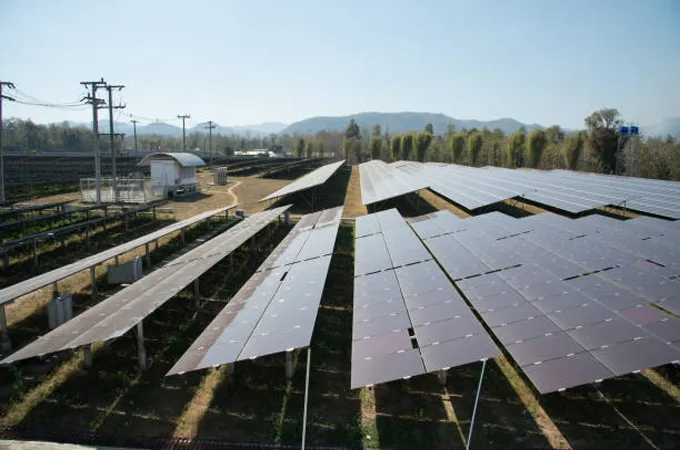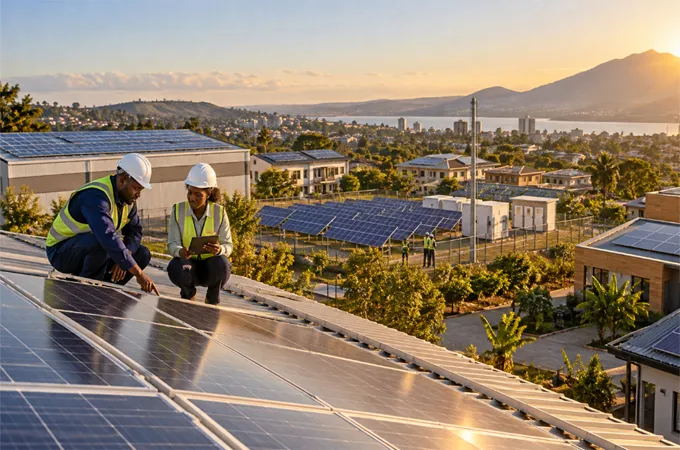
Africa is on track to install a record 17 gigawatts (GW) of solar capacity in 2026, with around three-quarters expected to come from distributed systems that remain underrepresented in official statistics, according to analysis by Ember published in October.
Solar installations are forecast to rise about 45 per cent
year on year, following increases of 51 per cent in 2025 and 25 per cent in
2024.
Ember expects 36 of Africa’s 54 countries to record their
highest annual solar additions this year.
South Africa’s share of the continent’s installations is
projected to fall below 20 per cent for the first time since 2019, as solar
deployment accelerates across other major markets.
Ember estimates six countries will each add at least 1 GW in
2026: South Africa at 3.3 GW, Egypt at 2 GW, Nigeria and the Democratic
Republic of the Congo (DRC) at 1.7 GW each, Algeria at 1.4 GW and Morocco at 1
GW.
Growth is particularly rapid in several emerging markets.
Ember estimates year-on-year increases of more than 100 per cent in 19
countries, including 544 per cent in the DRC, 282 per cent in Zimbabwe, 176 per
cent in Egypt and 117 per cent in Zambia.
The expansion reflects rising deployment of commercial
rooftop systems, estate projects and solar-plus-storage facilities, in addition
to large utility-scale projects.
As a result, customs data and installer surveys can provide
a more complete picture of deployment than some national capacity registers.
Africa’s broader electricity-access efforts are also
progressing. In June 2026, the World Bank Group and African Development Bank
said Mission 300 had connected more than 50 million people across 40 countries
since July 2023.
Tanzania, Nigeria and Ethiopia were among the leading
beneficiaries, while Kenya connected about two million people and Malawi around
1.9 million.
Despite the progress, access targets remain challenging.
The International Energy Agency has estimated that universal
electricity access in Africa requires around $15 billion annually, compared
with less than $2.5 billion committed for new connections in sub-Saharan Africa
in 2023.
Kowatek Solar said the Ember figures reflect growing Nigerian demand for purpose-built solar-and-storage systems as businesses increasingly move away from emergency generators. -OGN/TradeArabia News Service